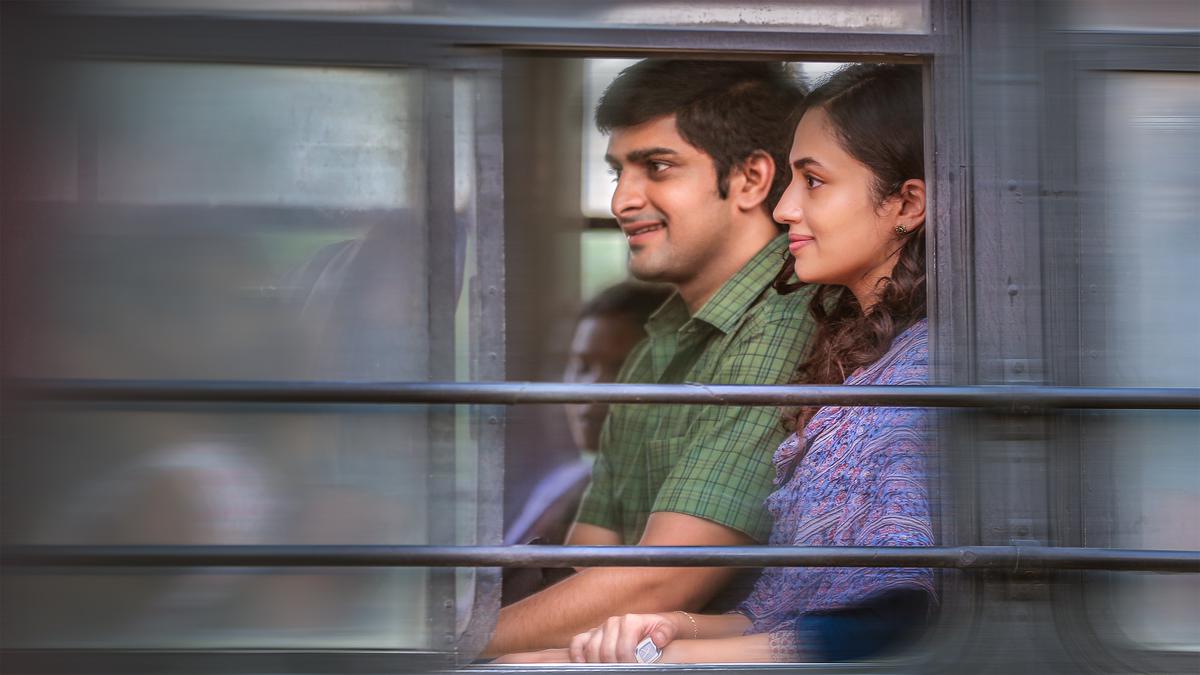
‘Phalana Abbayi Phalana Ammayi’ movie review: Slice-of-life romance drama
The Hindu
Writer-director Srinivas Avasarala ventures into a niche zone and succeeds to an extent, helped by Malvika Nair and Naga Shaurya’s performances
Nearly a decade ago when Srinivas Avasarala debuted as a writer and director with the breezy rom-com Oohalu Gusagusalade, Telugu movie buffs were charmed by the uncanny humour, music and smart writing of the characters. That wasn’t a formulaic Telugu film but it found its audience. This time, he has attempted to present a conversational relationship drama with the vibe of Richard Linklater’s romance trilogy Before Sunrise, Before Sunset and Before Midnight. Avasarala’s story of a certain boy and a certain girl (hence the title Phalana Abbayi Phalana Ammayi), starring Naga Shaurya and Malvika Nair, is narrated in a close-to-reality manner without crowd-pleasing moments. This works in some portions and there is plenty to appreciate.
Sanjay (Naga Shaurya) and Anupama (Malvika Nair)’s journey of friendship, romance and tussles unfolds over a 10-year period and is presented in seven chapters, shifting between their engineering college days in Visakhapatnam and higher studies in London. The non-linear screenplay leaves a few questions unanswered in different chapters, to return to it later.
When Sanjay, a fresher, is about to be ragged, Anupama bails him out; she is a second-year student. Is she a year older than him? The story does not dwell on it since it is not perceived to be a big deal. When the two opt for a live-in relationship in London, again the story does not make a big deal of it. Avasarala acknowledges the changes in urban romance in recent years and knows that what would have raised eyebrows a decade ago would be less scandalous today. He is more concerned about the relationship conflicts as these protagonists grow older.
We initially see Sanjay and Anupama as buddies; the undercurrent of romance is understood by their close friends though. The conflicts begin to show up when they get past the ‘we are just best friends’ phase. Humour pervades the initial campus days in Vizag and London. There’s a friend called Valentine Ravi (Abhishek Maharishi dons the part; there’s a reason, albeit silly, why he is named so) referencing Padamati Sandhya Ragam and trying to romance a white girl , only to realise later that his true love is someone else he has known all along. In the Sanjay-Anupama story, the third character is introduced at an earlier stage (Avasarala himself donning a character named Giri) though he becomes significant only much later.
The London portions — the student apartments, house parties, supermarket visits — are presented in a non-filmi style. Sunil Kumar’s cinematography and the use of sync sound aids in the realistic presentation.
Choosing not to give in to cinematic moments, be it in the conflict points as well as the humour, can be a double-edged sword. Talk about coming-of-age relationship romance drama that spans a few years and Gautham Menon’s Yeto Vellipoyindhi Manasu comes to mind, in Telugu. But that film was in a more mainstream space, fashioned like a musical, with ample scope for drama between characters.
Here, except for one song staged at a pub, the rest are a gentle nudge to push the story forward. Avasarala also does away with the usual ‘interval block’. There’s tension but not in the way you would expect. The handheld style of camera movements capture the meltdown between Sanjay and Anupama; a heated exchange is punctuated by an uncomfortable silence before Kalyani Malik’s score accentuates the emotional drama. This is a musical film of a more subtle kind and Kalyani Malik delivers it in an inimitable style, presenting signature melodies that he is known for, and pushing it further to accentuate the tension in the romance.


From traditional handicraft items from Manipur to a variety of dress materials from across state by women Self-Help group members are on display at the stalls at the National SARAS mela in Karavali Utsava ground in Mangaluru. The nine-day long mela began on Friday.

India participated as an observer at the Board of Peace meeting, reaffirming its support for a viable Palestinian state.

T.N. Deputy Chief Minister inaugurates CREDAI FAIRPRO 2026, showcasing over 500 real estate projects from 80 developers in Chennai.

Andhra Pradesh prioritizes Guntur Mirchi Yard's development with a new committee focused on quality yields and farmer support.

Navy delegates from 50 countries explore natural dyeing and local crafts at Sankalpa Art Village during the International Fleet Review.

Farmers complained about indiscriminate stone quarrying taking place in Madurai district, particularly at Kallanai in Kalligudi taluk. They urged authorities to take necessary action to stop the indiscriminate quarrying activities and protect the environment

Madras High Court dismisses Ramadoss's petitions to freeze 'mango' symbol, emphasizing resolution through civil court, not writs.

After more-than-two-year wait, the flyover at Goripalayam junction will be commissioned on Saturday. As of now, the main arm of the new flyover, named after freedom fighter Netaji Subash Chandra Bose, will help to decongest vehicular movement from Tamukkam junction till Nelpettai junction on East Veli Street.

PAC criticizes the government for poor execution and financial delays in the ₹4,455 crore SANKALP skill development scheme.

Coimbatore is emerging as a leading hub for Global Capability Centres in Tamil Nadu, driven by strong educational infrastructure and investment.

Peace talks between fishermen from Rameswaram and Karaikal aim to resolve fishing territory disputes and ensure maritime harmony.

Telangana's Food Safety Department inspects 122 establishments in a statewide drive, enforcing compliance on cereal products and safety standards.

The Greater Bengaluru Authority expands to 86 members, enhancing representation with key political figures included.