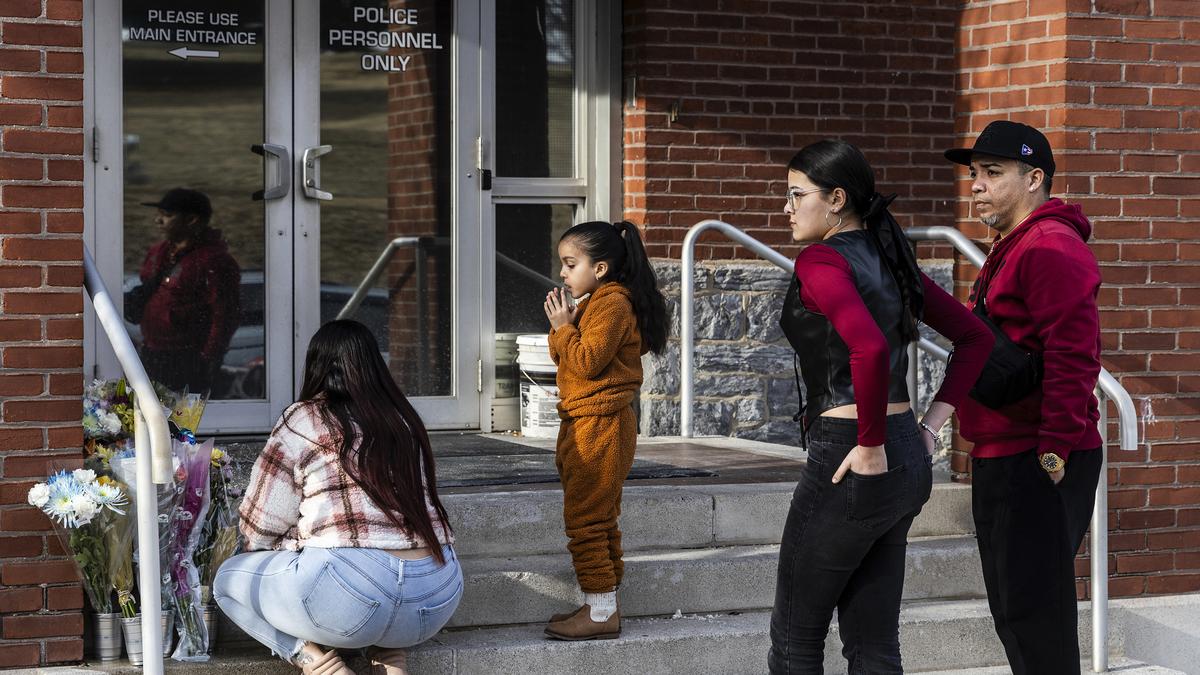
Officer killed after gunman took hostages at Pennsylvania hospital
The Hindu
Pennsylvania hospital hostage situation ends in shootout, leaving one officer and the gunman dead.
A man armed with a pistol and carrying zip ties entered a Pennsylvania hospital's intensive care unit on Saturday (February 22, 2025) and took staff members hostage before he was killed by police in a shootout that also left an officer dead, authorities said.
Three staffers at UPMC Memorial Hospital, including a doctor, a nurse and a custodian, and two other officers were shot and wounded in the attack, York County District Attorney Tim Barker said. A fourth staff member was injured during a fall, Barker said.
Gunfire erupted after officers from several different agencies went to engage the shooter, who Mr. Barker identified as Diogenes Archangel-Ortiz, 49. He said Archangel-Ortiz was holding at gunpoint a female staff member hostage who had her hands tied with zip ties when police opened fire.
"This is a huge loss to our community," Mr. Barker said at a press conference following the shooting. "It is absolutely clear, and beyond any and all doubt, that the officers were justified in taking their action using deadly force."
The officer who died in the shooting was identified as Andrew Duarte of the West York Borough Police Department.
"We all have broken hearts and are grieving at his loss," West York Borough Manager Shawn Mauck told The Associated Press.
Mr. Duarte was a law enforcement veteran who joined the West York Borough Police Department in 2022 after five years with the Denver Police Department in Colorado, according to his LinkedIn profile. He described receiving a “hero award” in 2021 from Mothers Against Drunk Driving for his work in impaired driving enforcement for the state of Colorado.


Iran rejects a U.S. ceasefire proposal, outlining five conditions for peace amid ongoing conflict with Israel.

Gulf states warn the UN of an existential threat from Iran's strikes, calling for condemnation and monitoring of the situation.

Matt Brittin, ex-Google executive, appointed as BBC's new director general amid ongoing $10 billion lawsuit from Trump.

Pakistan's PM Sharif briefs Saudi Crown Prince on mediating U.S.-Iran talks and reaffirms support amid regional tensions.

Iranian military ridicules Trump's ceasefire claims, asserting U.S. negotiations are merely self-deceptions amid strategic failures.

Denmark's recent election results leave Prime Minister Mette Frederiksen's future uncertain amid a fragmented parliamentary landscape.

An explosion at Valero's Port Arthur refinery caused a temporary shutdown but resulted in no reported injuries.

Anduril and Palantir Technologies are working together to develop software for U.S. President Donald Trump’s Golden Dome antimissile shield initiative, a source familiar with the matter said

A federal judge weighing the merits of the Pentagon’s designation of rising Silicon Valley star Anthropic as a security threat repeatedly questioned the government’s reasons for vilifying the company

When the conflict in West Asia, which began with the U.S. and Israel’s attack on Iran on February 28, escalated into a regional war, analysts said that the war would last as long as Iran had missiles or until the Gulf nations ran out of interceptors. However, with “emergency” military sales, piling monetary costs and a strained supply chain, is the U.S. becoming too constrained in its effort to keep the war going — both militarily and monetarily?

U.S.-Israel war on Iran LIVE: Follow The Hindu for updates on the West Asia conflict on March 25, 2026

Jair Bolsonaro to serve his sentence at home due to health issues, monitored by police, with a review in 90 days.

A New Mexico jury finds Meta liable for harming children's mental health, marking a significant shift in accountability for tech companies.