Not all cognitive decline is dementia and not all dementia is Alzheimer’s stress clinicians this brain awareness month Premium
The Hindu
Dementia prevalence in India is rising, with experts emphasizing comprehensive evaluations, reversible causes, and global therapy advances.
The estimated dementia prevalence in India is 7.4% among adults aged 60 and older. This translates to about 8.8 million Indians currently living with dementia. The prevalence is projected to increase significantly in the coming years, with estimates suggesting a rise to 1.7 crore (17 million) by 2036.
And it is also increasingly recognised in India as a condition far more complex than memory loss. Dementia represents a progressive decline in cognitive abilities, including language, executive functioning, behaviour, and the capacity to perform daily tasks. Alzheimer’s disease remains the most well-known form of dementia, but it is only one of many. Indian clinicians are now focusing on comprehensive evaluations to identify reversible causes, clarifying diagnoses using advanced biomarkers, and staying informed about global advances in therapy -- all while staying grounded in clinical realities and patient context.
According to Prabash Prabhakaran, director and senior consultant- neurology, SIMS Hospital, Chennai, dementia is often misunderstood as only memory loss, whereas one of the earliest signs could be executive dysfunction --such as a person forgetting how to prepare a familiar dish . He also emphasises the importance of looking for apraxia, which is the loss of learned motor skills, along with changes in gait and bladder control. A distinctive pattern like “magnetic gait,” where a person shuffles slowly and cannot lift their feet properly, may offer clues pointing to specific subtypes such as Normal Pressure Hydrocephalus. Even in patients with clear signs of cognitive decline, Dr. Prabhakaran warns against over-reliance on imaging or biomarker tests in isolation, stressing that without a robust clinical picture, these tools can mislead more than help.
One of the most critical steps in dementia care in India is to rule out reversible causes before settling on a diagnosis like Alzheimer’s. This clinical vigilance ensures that treatable conditions are not missed. For instance, vitamin B12 deficiency is a common cause of cognitive issues, especially among vegetarians, and can be easily corrected with supplements. Hypothyroidism is another frequently overlooked condition that can mimic dementia and is reversible with thyroid hormone replacement.
Dr. Prabhakaran shares that cases of Normal Pressure Hydrocephalus -- where dementia presents alongside gait instability and bladder dysfunction -- can sometimes be reversed almost miraculously by draining around 30 ml of cerebrospinal fluid. There are also rarer possibilities like autoimmune dementia, which constitutes about two to three percent of cases. In such instances, antibody testing for approximately 23 known markers is now available in India. Familial dementia and vasculitis-related cognitive disorders also fall into this category of conditions where early detection can dramatically change outcomes. As Dr. Prabhakaran puts it, “Even if just one patient benefits from identifying a reversible cause, the clinical effort is worth it.”
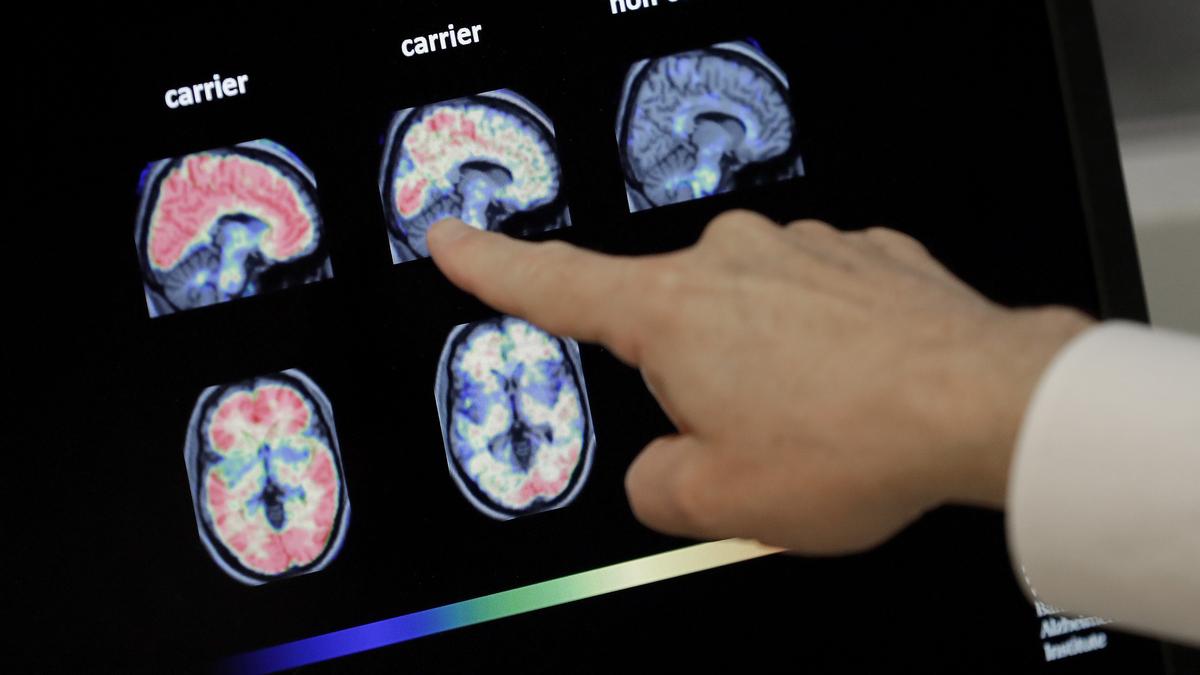
Imaging continues to be a helpful tool, not for confirmation but for exclusion. MRI scans are used to rule out brain masses, hydrocephalus, and vascular insults. While certain patterns of brain atrophy, particularly in the temporal and parietal lobes, may suggest Alzheimer’s disease, these findings are supportive rather than definitive. FDG-PET scans, which measure glucose metabolism, can reveal hypometabolism in specific brain regions, often correlating with suspected Alzheimer’s pathology. However, PET scans are advised only when there is already a strong clinical suspicion -- they are not used as screening tools.
A major advancement in recent years is the use of blood-based biomarkers that measure levels of tau protein and beta-amyloid -- proteins central to Alzheimer’s disease pathology. These are available in India but remain expensive and are not part of routine diagnostics. Dr. Prabhakaran explains that these tests are best used in specific scenarios: when the clinical presentation is ambiguous, when there is mild cognitive impairment, or in cases of early-onset or rapidly progressing dementia. He cautions against using biomarkers indiscriminately, underscoring that their role should always be hypothesis-driven.


Residents of Tiruttani constituency seek enhanced support for livelihoods, highlighting issues in agriculture, weaving, and temple management.

Opposition MPs and activists voice strong concerns against proposed amendments to the Transgender Persons Act at a Delhi hearing.

Telangana Chief Minister Revanth Reddy intends to shape the party’s future with young faces

Iran-Israel war: Follow the latest updates from The Hindu on the West Asia war, on March 22, 2026

Karnataka plans delegation to Union government for Mahadayi basin project clearances and seeks water release from Maharashtra.

Ekante Bliss hosted a walkathon in Tirupati to promote health, community engagement, and support social impact initiatives.

Maharashtra raises commercial LPG supply by 20% to 50% of pre-crisis levels, benefiting hotels and food-related businesses.

Mumbai police arrest eighth suspect in Rohit Shetty residence firing case, linking the incident to the Shubham Lonkar gang.

Governor Arlekar emphasizes that justice must embody human values, fairness, and accessibility for all citizens at VIT conference.

Justice Bhuyan emphasizes the judiciary's role as impartial, condemning reckless criminal cases and advocating for dissent and fair bail practices.

Vijay announces candidates for all 30 Puducherry Assembly segments as TVK prepares to contest independently on April 9.

Kerala LDF ministers declare assets nearing ₹2 crore each amid upcoming elections, revealing financial details and legal challenges.

Sunil Ambekar of RSS discusses organisational changes and initiatives to unify India and address social challenges in an exclusive interview.