Nepal goes to polls amid domestic upheaval and regional power plays
The Hindu
Nepal's March 5 election aims to restore democracy amid recent protests and regional geopolitical tensions.
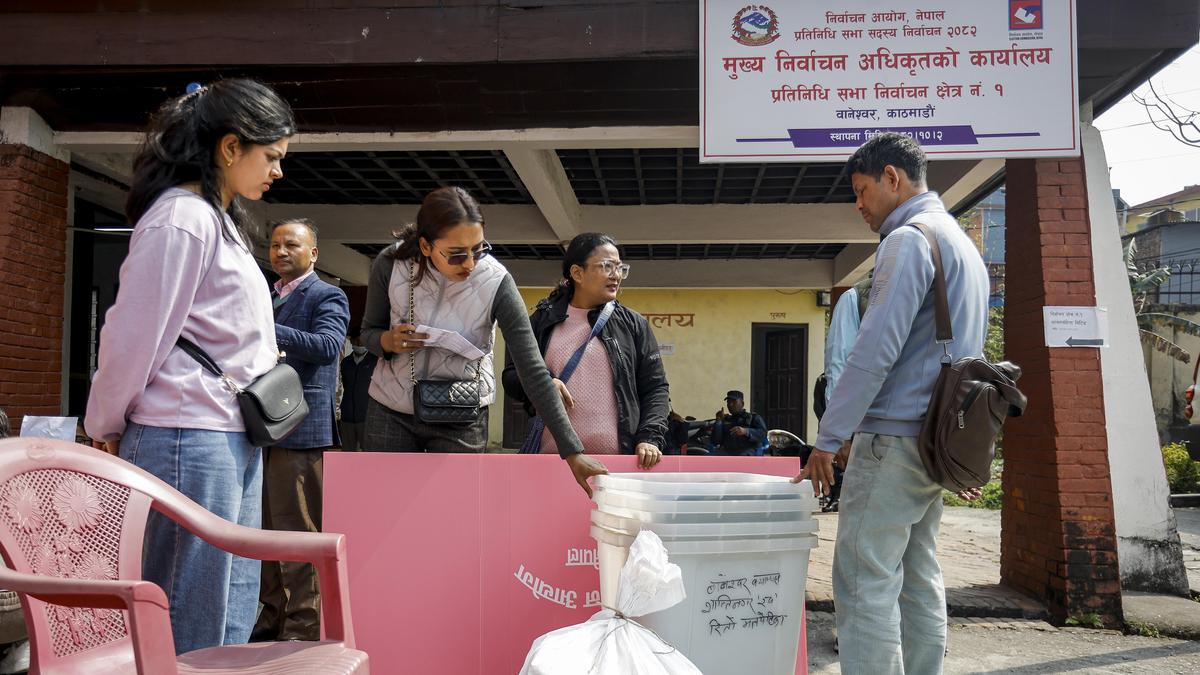
Nepal is voting on Thursday (March 5, 2026) in its first election since last September’s Gen Z protests that toppled the K.P. Sharma Oli government and led to the dissolution of the House of Representatives.
The sudden eruption of the movement — marked by the unprecedented participation of thousands of young people — and the killing of 19 youth in police firing left the country in shock. The international community, too, was caught off guard. In total, 77 people lost their lives during the two days of protests, making it one of the most violent episodes in Nepal’s recent political history.
After Mr. Oli of the Communist Party of Nepal (Unified Marxist-Leninist) resigned, an interim government was installed — a move some say breached constitutional boundaries. The March 5 election, hence, is expected to restore constitutional order and bring the democratic process back on track. Yet uncertainty persists over who will ultimately lead the next government.
With a clear majority for any single party highly unlikely, analysts predict a return to a hung Parliament and coalition politics — hallmarks of Nepali democracy in recent years.
“A fractured Parliament, probably the most likely scenario, means that coalition negotiations will play a key role in shaping what comes next,” said Sanjay Upadhya, a U.S.-based Nepali author of the book Nepal and the Geostrategic Rivalry between China and India. “The journey ahead is twofold. Not only do parties need to find common ground, but they also have to manage differences within their ranks.”
Nepal’s economic dependence on India remains substantial, with more than two-thirds of its trade conducted with its southern neighbour. The two countries share an approximately 1,800-km-long porous border, which citizens of either country can cross without a visa or passport.


Senate Republicans reject a war powers resolution to halt U.S. military action against Iran, highlighting deep partisan divisions.

Nepal's March 5 election aims to restore democracy amid recent protests and regional geopolitical tensions.

Russia accuses Ukraine of using sea drones to attack and sink a tanker carrying liquefied natural gas in the Mediterranean.

Nepal deploys over 300,000 security personnel for the March 5 polls, ensuring safety and minimal invalid ballots through voter education.

U.S. military strikes Iranian warship off Sri Lanka, prompting rescue operations for sailors amid escalating tensions.

Explore the escalating Iran-Israel conflict, detailing key events and retaliatory actions over the first five days of war.

Thailand's election commission certifies results, paving the way for a new parliament and government formation.

The U.K. charters a repatriation flight for stranded nationals amid West Asia conflict, enhancing security with a Royal Navy deployment.

Iran seeks to quickly appoint a new Supreme Leader following Khamenei's death, amid threats from Israel regarding potential assassinations.

Israel escalates air strikes in Lebanon, killing 11 and targeting Hezbollah amidst ongoing conflict and civilian evacuations.

Spain's Prime Minister Sanchez defends anti-war stance on Iran amid Trump's trade threats, emphasizing global responsibility and values.

In the present-day context, when both regional and global order is being reshaped, Iran’s growing confrontation with the United States and Israel continues to shape the current regional security narrative.

Iran's judiciary chief threatens those who say or do anything' in support of U.S.-Israeli airstrikes
Iran's judiciary chief threatens severe penalties, including death, for supporting U.S.-Israeli airstrikes amid rising tensions.