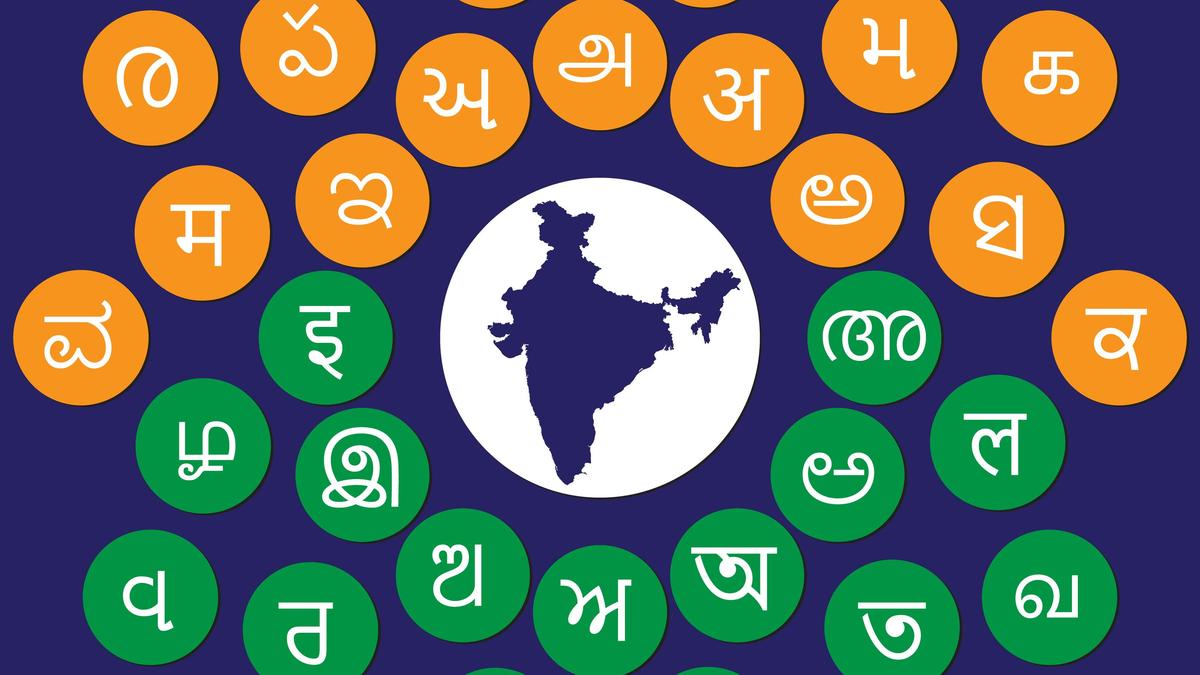
Multilingual classrooms: Can NEP 2020 bridge the policy-practice gap?
The Hindu
Multilingual classrooms: Can NEP 2020 bridge the policy-practice gap?
At 8:15 a.m. at a South Delhi school, students shuffle into their classroom, chatting in a lively mix of Hindi, Punjabi, English, and even Bhojpuri. The teacher begins the lesson in Hindi, but, halfway through, a child asks a question in Bengali while another answers in English. A few quietly exchange words in Urdu. Within 10 minutes, the classroom has been through five languages. This small but powerful moment captures the promise of multilingual education and the challenge of making it real across India’s vast schooling system.
Urban classrooms are melting pots where children carry the languages of their homes, streets, and playgrounds into school. For decades, this multilingual reality has been treated as a problem, something to be managed, streamlined, or even silenced. The National Education Policy (NEP) 2020 suggests otherwise; it asks us to treat multilingualism as a resource, not a hurdle. But can policy truly meet practice in classrooms like this?
A child’s first language is not just words; it is dreams, thoughts, imagination, and identity. When early education begins in that language, comprehension deepens, confidence grows, and dropout rates fall. Yet, for millions of Indian children, the classroom language has remained alien, creating a silent barrier to learning.
NEP 2020’s bold call for mother-tongue instruction till at least Class 5 reflects global research, which shows children learn best when they start in familiar languages. For India, this is also a question of justice; ensuring that a Tamil-speaking child in Chennai or a Punjabi-speaking child in Delhi isn’t left behind simply because the textbook speaks a different tongue.
The NEP 2020 doesn’t just talk about language; it places it at the heart of equity. A child in rural Jharkhand should not be disadvantaged just because she doesn’t know Hindi or English on her first day of school. Similarly, a child in Delhi who juggles Punjabi at home, Hindi with friends, and English in school deserves to see this multilingualism as an asset, not a burden. So, between the words of the policy and the realities of a classroom, lie layers of complexity. In practice, the challenges are daunting:
If Delhi shows the challenge of urban multilingualism, the South offers lessons in balancing local pride with global aspirations. Andhra Pradesh introduced bilingual textbooks in Telugu and English, allowing children to anchor themselves in their mother tongue while gradually accessing English. Tamil Nadu has historically defended Tamil’s centrality in education but, in recent years, many schools have adopted a pragmatic bilingual approach. Karnataka has experimented with Kannada-medium instruction alongside English sections, reflecting the social demand for both.


DMDK nominates L.K. Sudhish for Rajya Sabha elections, marking its first representation in the Upper House.

Hyderabad's restored Bam Rukn-ud-Daula Lake and Nalla Cheruvu will be inaugurated on March 6

Multilingual classrooms: Can NEP 2020 bridge the policy-practice gap?

AIADMK's M. Thambi Durai and PMK's Anbumani Ramadoss file nominations for Rajya Sabha elections in Chennai.

Karnataka forms a 28-member Elephant Task Force in Dakshina Kannada to address human-elephant conflict, and enhance safety.

CBI investigates Puducherry counterfeit drugs case, uncovering illegal manufacturing and distribution affecting public health and national security.

Congress renominates Phulo Devi Netam, a senior tribal leader from Bastar, for the Rajya Sabha elections in Chhattisgarh.

Tamil Nadu bans private schools from hosting political or divisive events, ensuring a focus on education and student welfare.

Hyderabad's TIMS Sanathnagar hospital will alleviate surgery wait times by addressing long-pending cases as it opens soon.

Newwave Art Collective in Hyderabad is using art for public dialogue. The group is having their first show at State Art Gallery.

Nvidia CEO Jensen Huang said that the opportunity to invest $100 billion in OpenAI is probably not in the cards

What does it take to design gloves, masks and uniform that factor in the various challenges faced by workers on the waste beat? Indore, Bengaluru and Pune have an answer

Congress nominates Kamarvir Boudh, a SC leader, for Rajya Sabha from Haryana, aiming to balance party dynamics.