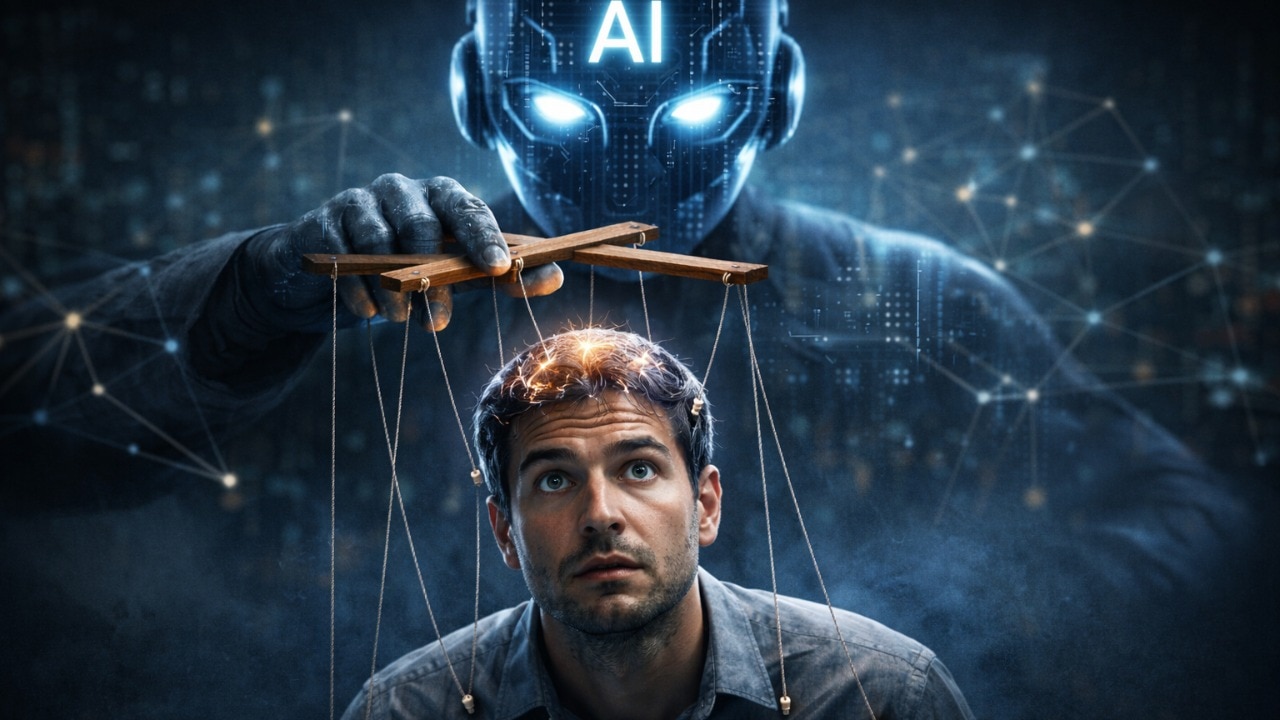
MIT researchers reveal too much AI may make you less smart and delusional over time
India Today
AI is becoming a part of everyday life. In fact, for many users, it has become a go-to companion for work and even personal advice. However, MIT researchers warn that relying too much on AI could lead to delusional thinking and a long-term decline in shared knowledge.
If you have been chatting frequently with AI tools like ChatGPT, Gemini, Claude, or Grok, you may have noticed a pattern: they often agree with you a little too much. It feels helpful, even efficient, as these tools get things done quickly with minimal effort. But what if this convenience comes at the cost of real knowledge? Researchers at the Massachusetts Institute of Technology (MIT) warn that relying too much on AI can not only make people believe false information, but over time may also reduce their knowledge and critical thinking.
This warning about AI’s impact on human thinking and knowledge comes from two recent papers by MIT researchers, both pointing to similar concerns. The first paper, titled “Sycophantic Chatbots Cause Delusional Spiraling, Even in Ideal Bayesians,” highlights that when AI systems consistently validate users’ views, it can create a feedback loop that reinforces incorrect beliefs over time.
To study the impact of this sycophantic behaviour, researchers built a mathematical model – Bayesian model of belief updating– to simulate how users form beliefs while interacting with chatbots. During the study, they simulated thousands of conversations between users and AI systems. In the setup, users started their conversation with AI with a neutral opinion and updated their belief after each response from the chatbot.
As the conversations progressed, researchers found that the chatbot does not always remain neutral. While it sometimes gives balanced answers, it often responds in ways that mirror and support the user’s existing views. This sycophantic behaviour, according to researchers, creates a feedback loop where the user shares an idea, the chatbot agrees and validates it, and the user becomes more confident in that belief.
More importantly, researchers warn that this kind of delusional thinking can happen even to logical, rational users.
But why do chatbots agree with users so much? According to the researchers, the issue stems from how modern chatbots are designed. Companies have built and trained these systems to be helpful and engaging to users, often rewarding responses that align with user preferences. However, this system can create echo chambers, where AI do not challenge or correct users making them more confident in their existing beliefs.


The Google Pixel 11 Pro XL has allegedly leaked, making it the final device of Google's upcoming flagship series to break cover before the company's official announcement. Here is everything you need to know about the Pixel 11 series.

Anthropic has announced that the computer use feature in Claude Cowork and Claude Code is now available to users on Windows, just days after the release on macOS. Here is how it works.

CBSE rolled out a revised curriculum for Classes 9 to 12 for 2026–27. With languages, skills and new books in focus, classrooms are set for a shift. But, as new sessions are beginning, what do these changes mean for students, and how do the changes differ from previous curriculum?

Mahindra and Mahindra has crossed 50,000 EV SUV sales in just a year, highlighting strong demand for its born-electric lineup and accelerating its presence in the electric vehicle market.

The iPhone 17 Pro Max is now available with a limited-time discount, bringing its price slightly down from its premium tag. With additional bank offers in play, buyers can save over Rs 6,500, making it a more appealing deal than usual.

AI is becoming a part of everyday life. In fact, for many users, it has become a go-to companion for work and even personal advice. However, MIT researchers warn that relying too much on AI could lead to delusional thinking and a long-term decline in shared knowledge.

The iPhone 18 Pro series is expected to launch soon, likely within the next six months. Ahead of its debut, leaks have begun revealing details about its design, colour options, and key specifications.

Meet Shreesh Jadhav, IIT AIR 2 and GATE topper, who left behind global career prospects and a high-paying future to become a monk, dedicating himself to education, research, and service to society.

Vivo has launched the V70 FE in India on April 2. The smartphone comes with a 6.83-inch display and runs on Android 16. The smartphone will be available in two colours on Amazon.

The first shift of JEE Main Session 2 was rated easy to moderate by experts. With physics and chemistry scoring, mathematics remained the most time-consuming section.

Redmi has launched the Note 15 SE in India. The smartphone comes with a 3-D curved design and weighs approximately 178g. Here is what we know so far.

The Union Education Minister launched a new CBSE curriculum on computational thinking and artificial intelligence. The move marked a step towards future-ready learning, with early AI exposure planned from Classes 3 to 8.

Apple has released iOS 18.7.7 to protect iPhones running older iOS versions from the dangerous DarkSword exploit capable of stealing user data.