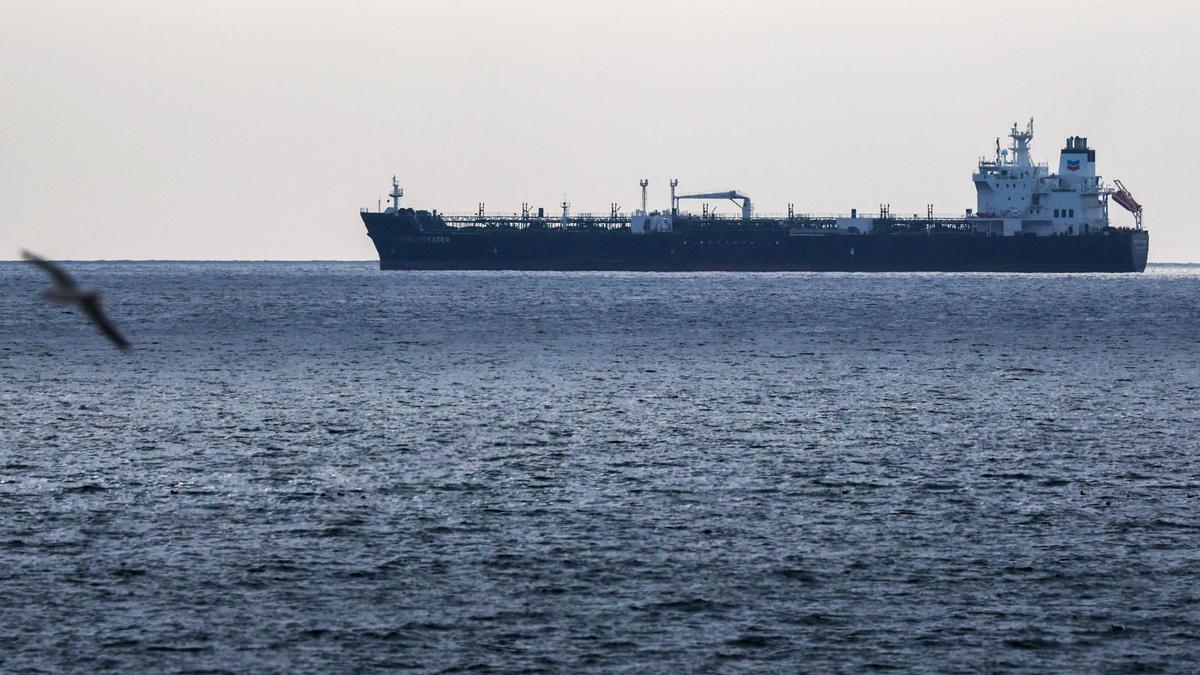
Merchant ships continue to be stranded upstream of Strait of Hormuz
The Hindu
With the conflict in West Asia escalating, merchant ships continue to be stranded upstream of Strait of Hormuz, even as the world awaits the rollout of the U.S. government’s promise of deploying its Navy to escort the ships and funding war risk insurance for the vessels.
With the conflict in West Asia escalating, merchant ships continue to be stranded upstream of Strait of Hormuz, even as the world awaits the rollout of the U.S. government’s promise of deploying its Navy to escort the ships and funding war risk insurance for the vessels.
On Thursday, Sonangal Namibe, a crude oil carrier whose owners and managers are based in Houston, Texas, as per Equasis database, became the ninth ship attacked in the region since the conflict started. Skylight, a ship sanctioned by the U.S. for Iranian links and manned mostly by Indian crew, was also among the ships attacked. Insurance companies are seeking to renegotiate their coverage of ships serving the Persian Gulf.
War risk insurance policies that can cover ship transit through the Strait of Hormuz come with premiums of 1% to 3% of the vessel cost itself, says David Osler, Law and Insurance Editor of Lloyds List Intelligence. This means vessels transiting the Strait of Hormuz will now need to pay weekly insurance premiums of nearly the same amount they would pay for an entire year, he says.
Insurance premiums have registered increases across the world since the recent conflict started. Ships on the Persian Gulf route may have to pay 10 times or 15 times more for insurance coverage, which is a basic requirement for any merchant ship to embark on a voyage. Experts talk of affiliative risk – vessels may have owners formally based in neutral countries and the ships may fly flags of other nations but if they have links with not just Iran but also the U.S. and Israel, then they may have to pay much higher premiums.
Governments such as the U.K. have historically footed the bill for such war risk insurance policies. In December of last year, Denmark passed a law providing war risk insurance for its ships to safeguard energy supplies.
One fifth of the world’s oil and gas supplies pass through the strait.


India's Petroleum Minister assures no energy shortage, emphasizing sufficient fuel stocks and stable supply amid global challenges.

Indian markets fell over 1% as West Asia conflict and rising crude oil prices hit investor sentiment amid foreign fund outflows.

PM Modi urges farmers to enhance India's agricultural exports by focusing on high-value crops and natural farming for global competitiveness.

Govt directs refiners to boost LPG production, ensuring supply prioritization for domestic consumers through public sector oil companies.

U.S. “allowing” India to import Russian oil will help mitigate price spikes and delays, say analysts
U.S. allows India to import Russian oil for 30 days to ease price spikes, prompting political backlash against Modi’s government.

India engages with multilateral agencies and U.S. DFC for shipping insurance to ensure secure fuel supplies amid ongoing conflicts.

Stock markets decline as geopolitical tensions in West Asia and foreign fund outflows dampen investor sentiment and U.S. equity weakness.

Rupee gains 2 paise to 91.62 against the U.S. dollar amid geopolitical tensions and foreign fund withdrawals.

U.S. grants India a 30-day waiver to purchase Russian oil to stabilize global supply amid West Asian conflicts.

Suspended flights and shipping surcharges are crippling South Indian exporters, disrupting vital supply chains for perishable goods.

Bank of Baroda raises ₹10,000 crore through Green Infra Bonds, marking a milestone in India's ESG bond market.

Stock markets rebound as Sensex rallies 899 points, driven by global equity gains and ending a three-day decline.

Sebi mandates custodians to separate regulated and unregulated services through distinct units, enhancing governance and risk management standards.