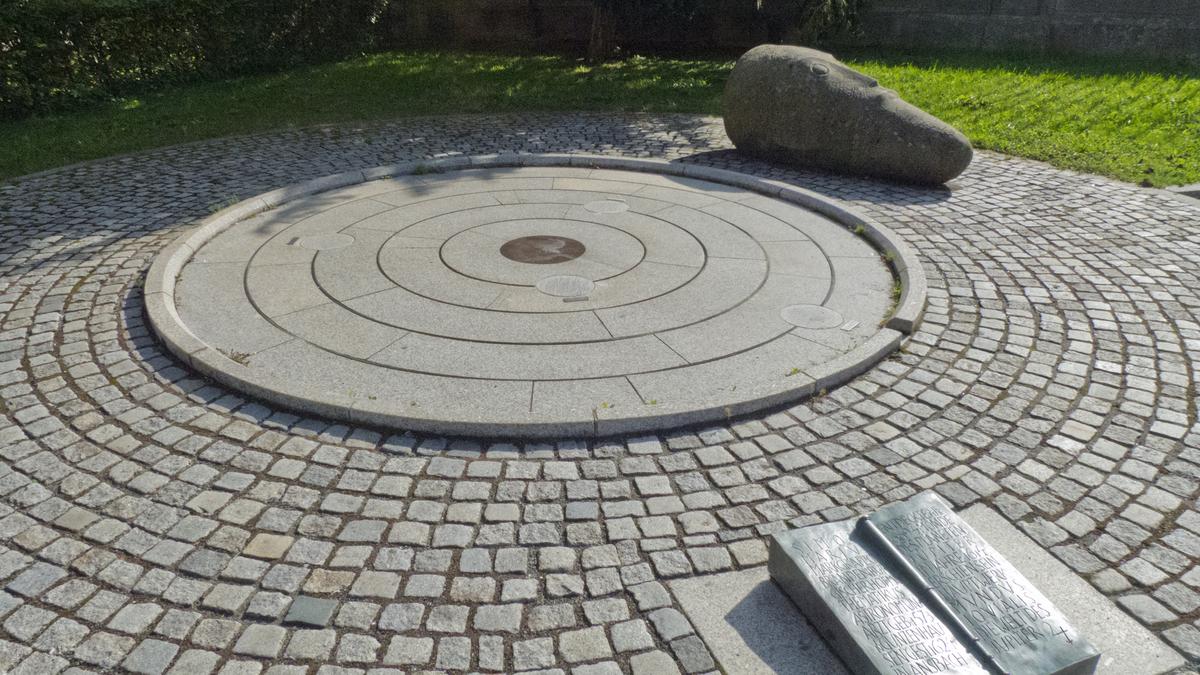
Marius, the man who named Jupiter’s Galilean moons
The Hindu
German astronomer Simon Marius is best remembered for his disputes with Galileo Galilei over priority for discovering Jupiter’s four major moons. This, despite the fact that Marius definitely made other significant contributions during his time, including being the first to use a telescope to observe the Andromeda Galaxy on December 15, 1612. A.S.Ganesh hands you the details, without taking sides…
Plagiarism is a big area of concern that is rearing its ugly head worldwide. The act of representing someone else’s ideas, thoughts, language, or expression as original work, plagiarism not only discourages creativity, but also steals from the actual creators. In a world with artificial intelligence (AI) that we live in, more checks and balances are currently being sought after as it has become easier than ever to plagiarise.
Plagiarism, however, hasn’t been a concern just now and has probably been around for as long as ideas and expressions have been exchanged. Charges of plagiarism, when proven, can tarnish a person’s reputation, dealing them a blow from which they can probably never stand up again. On some occasions, just the charges are enough to sideline someone, even if they aren’t proven beyond doubt. German astronomer Simon Marius was at the receiving end of one such episode over 400 years ago.
An astronomer, mathematician, physician, and calendar maker, Simon Mayr was born in Gunzenhausen in 1573. Marius was his Latinised name for the international scientific community, as was the fashion of the times.
The story goes that when George Frederick, Margrave of Brandenburg-Ansbach, heard young Marius singing, the regent took a liking to him. As a result of this, Marius was enrolled in the Fürstenschule at Heilsbronn, where he studied until 1601. Even though his plans to study at Königsberg didn’t fruition, he managed to meet celebrated Danish astronomer Tycho Brahe at Prague in 1601.
His career also took shape through the time he spent south of the Alps, as he studied medicine in Padua until 1605 before becoming a medical practitioner. It was probably during his time at Padua that his path first crossed with Galileo Galilei and the two men might have met. From 1606, until his death in 1624, Marius served as the court mathematician at Ansbach in Germany.
Having settled in Ansbach in 1606, Marius’ first attempts to construct a telescope weren’t successful owing to the poor quality of the glass. By 1609, however, he possessed a Belgian spyglass, thanks to his friend and military man Johannes Philipp Fuchs von Bimbach.
As someone who had already observed the comet of 1596 and established the position of a supernova in 1604 with his unaided eye, Marius didn’t need telling twice to employ the telescope for astronomy. He took a look at Jupiter using this on December 29, 1609 according to the Julian calendar in use in his region (January 8, 1610 according to the Gregorian calendar) and saw “… four tiny stars, sometimes behind, sometimes in front of Jupiter, aligned in a straight line with the planet.” If this were true, Marius had, in fact, independently discovered the four major moons of Jupiter.


Test your knowledge with the quiz on Science films at the Oscars through history

Set between the Siwalik hills and the plains, Butwal offers travellers a mix of regional cuisine, pilgrimage trails to Lumbini and the comfort of Hyatt’s new hospitality landmark

Explore 2026's wallpaper trends in India, highlighting botanicals and handmade designs that enhance modern homes with nature-inspired aesthetics.

Mercedes-Benz CLA 250+ with EQ Technology review: design, performance, range and features explained. Discover how the new electric CLA combines advanced AI, long range, fast charging and futuristic styling for the next generation of luxury EVs.

AI tool for sparrow conservation

BTS’s comeback with ‘Arirang’ marks a major global music event. When does the album release, and where can you watch their concert live stream? We have all the details

The 2026 U.S. cholesterol guidelines urge starting screening and treatment at 30 to prevent cardiovascular disease effectively.

Olam Festival 2026 in Thiruvananthapuram returns March 27-29 with 120+ vendors, music, art, and cultural zones.

A few storytellers in Thiruvananthapuram share their journeys, challenges, and evolving methods on World Storytelling Day, inspiring young minds.

76-year-old Kurian Jacob from Kerala triumphs with seven medals, including five golds, at the Open Masters Games in Abu Dhabi.

Explore the nature of the human mind as an emergent property of brain activity and complex neural interactions.

CERN's Large Hadron Collider discovers the Xi-cc-plus particle, enhancing understanding of quantum mechanics and baryon behavior.

Vibha Batra’s latest book, Spotless (Hachette India) is a novel in verse for young adults