Madras High Court judge requests Tamil Nadu government to consider extending conjugal rights to prisoners
The Hindu
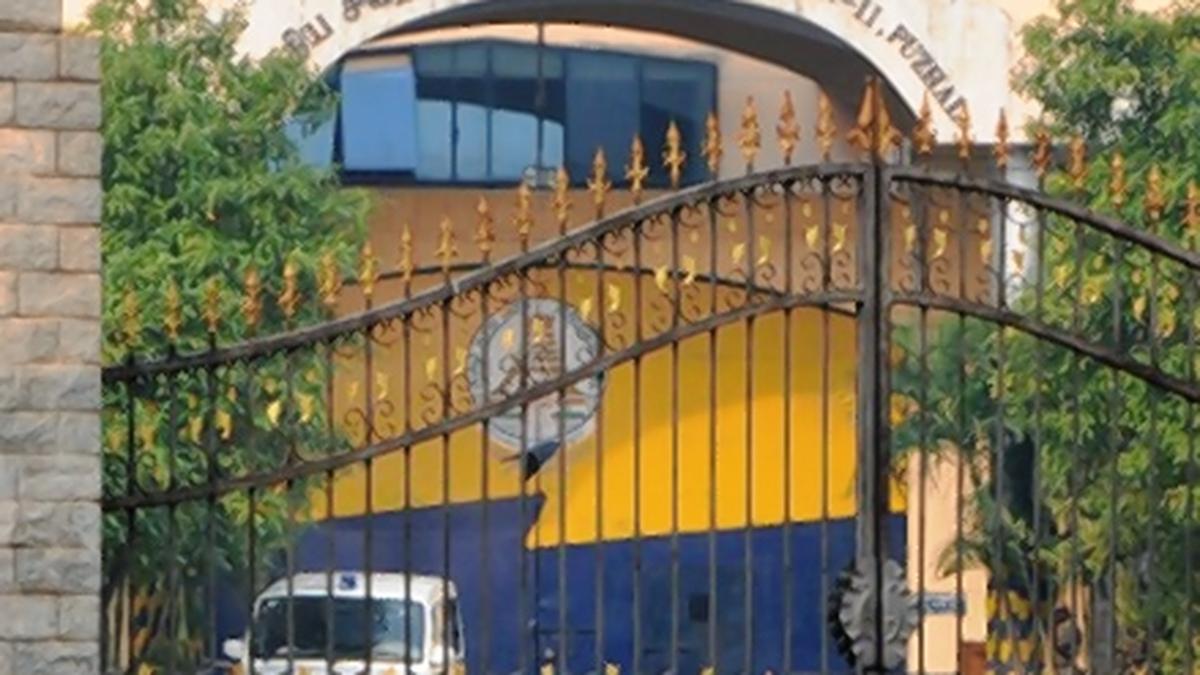
Madras High Court’s Justice S.M. Subramaniam, the portfolio judge for Tiruvallur district which houses the State’s biggest central prison at Puzhal, has requested the State government to consider the possibility of allowing prisoners to have conjugal relationship with their spouses within the precincts of prisons.
Madras High Court’s Justice S.M. Subramaniam, the portfolio judge for Tiruvallur district which houses the State’s biggest central prison at Puzhal, has requested the State government to consider the possibility of allowing prisoners to have conjugal relationship with their spouses within the precincts of prisons.
The request has been made along with several other suggestions and recommendations made by the judge, with respect to prison reforms across the State, after a surprise inspection at the Puzhal Central Prison along with the Tiruvallur Principal District Judge as well as the Chief Judicial Magistrate on July 8 this year.
After the inspection, the judge presided over a review meeting attended by Tamil Nadu State Legal Services Authority (TNSLSA) Member Secretary A. Nazir Ahmed, Director General of Prisons and Correctional Services Amaraesh Pujari and a host of other authorities at the High Court buildings on July 25.
Then, the judge expressed anguish over as many as 38 prisoners in Puzhal having not been released, despite obtaining bail, because they were unable to provide sureties. He directed the TNSLSA to get the bail orders modified so that those prisoners could be released on furnishing own bond as per a Supreme Court directive.
The TNSLSA was also directed to obtain details of all prisoners, who could not afford private lawyers, and provide legal assistance to them. He also insisted that the foreign nationals lodged in various prisons in the State must be allowed to contact their relatives and friends without denying the visitation rights to them.
Justice Subramaniam also insisted that prisoners suffering from chronic diseases and the physically challenged must be considered for premature release and that escort facilities for taking the sick prisoners to government hospitals should be provided before 8 a.m. because the outpatient services close by 11 a.m. every day.
The judge also made it clear that the escort party should not raise any objections if the government doctors were of the view that any prisoner must be admitted as an in-patient for treatment. The decision of the doctors should be final on such issues and the police or prison personnel could have no say on such matters, he added.


Abhishek Banerjee challenges BJP's Suvendu Adhikari in Nandigram, pledging community health initiatives if Trinamool Congress wins.

Rising LPG shortages in Karnataka boost firewood demand, reviving an informal market as households and hotels seek alternatives.

Against the backdrop of intense poll activity, a 400-metre stretch of an arterial road in the outskirts of Chennai (technically in Madurapakkam panchayat under Tambaram assembly constituency) presents a salute to the idea of res publica, which underpins India’s system of governance, where citizens have a say, at least before a government is securely ensconced in the seat of power. A Republic Day initiative shines bright every night

Fadnavis claims zero FIR in Ajit Pawar crash is a defamation attempt by Karnataka against Maharashtra's investigation efforts.

Set to unfold as a one-day pop-up on April 5, the Easter Sadya brings together both vegetarian and non-vegetarian menus, offering a peek into the food traditions of the Syrian Christian (Nasrani) community. While the traditional Sadya is often associated with dishes such as sambar, avial, and rice, this version expands to include community-specific festive dishes.

BJP nominates mother of R.G. Kar victim Abhaya to contest from Panihati in West Bengal Assembly elections.

Veteran Malayalam actor-director E.A. Rajendran passes away at 71, leaving behind a rich legacy in the film industry.

Dakshina Kannada Zilla Panchayat has rolled out digital mode of water bill generation and collection in 23 gram panchayats on a pilot basis for the first time in Karnataka. This is set to be extended to the remaining 200 panchayats shortly, according to the Zilla Panchayat Chief Executive Officer Narwade Vinayak Karbhari.

Bengaluru police questioned a man carrying ₹6 lakh for medical expenses at Vidhana Soudha, later releasing him after verification.

BJP accuses Bengaluru's Congress government of corruption in e-Khata issuance, halting infrastructure projects due to financial mismanagement.

Misinformation in Hyderabad sparks panic buying, causing disruptions as residents react to unfounded rumors of an impending lockdown.

Bengaluru Metro extends services until 2 a.m. on March 28 for IPL match, ensuring convenient travel for spectators.

A bus truck-collision in Andhra Pradesh's Markapuram district, killing several. Catch LIVE updates here!