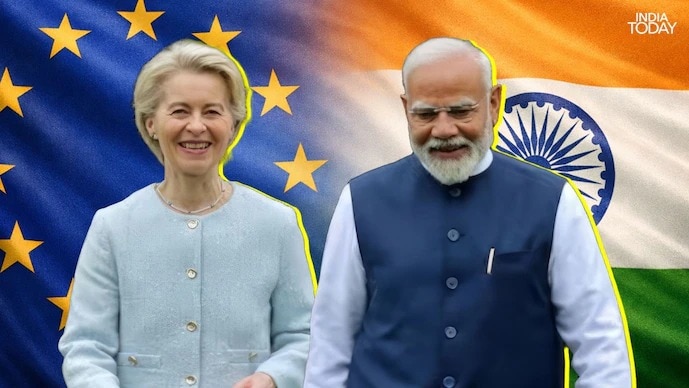
Lower auto tariffs, wider market access: What the India-EU trade deal may look like
India Today
India-European Union trade negotiations have reached a decisive stage, with New Delhi offering major tariff cuts on European cars and both sides signalling readiness to seal a politically significant deal that could reshape trade, investment and supply chains.
India and the European Union are closer than ever to clinching a landmark free trade agreement (FTA), with negotiators in New Delhi racing to finalise the last remaining issues.
Senior EU leaders are in the capital for high-level meetings, and officials on both sides say an “agreement in principle” could be announced any day. After nearly two decades of stalled attempts, this is the most decisive moment the talks have seen.
The biggest new development is the tariff package India has put on the table. The government is ready to slash import duties on European cars, a move that would have been politically unthinkable a few years ago.
Many high-end models currently face duties as high as 110 per cent. Under the proposal being discussed, some of those cars would see that fall to 40 per cent immediately. Over time, duties for a limited number of premium vehicles could slip towards 10 per cent. This alone changes the equation for European automakers and the Indian auto market.
Officials say several technical chapters are now closed, and only a small set of politically sensitive issues remain. The mood in the negotiating rooms, according to sources, has turned sharply optimistic. If leaders decide to seal the deal this week, it would mark one of India’s boldest market openings in decades.
New Delhi wants better access to the European market for sectors like textiles, garments, gems, engineering goods and processed foods. Many of these industries lost tariff advantages when EU rules changed recently.


Early signals from the derivatives market suggest a positive start. GIFT Nifty futures were trading at 23,257 at around 08:11 am, indicating that the Nifty 50 may open above Friday's closing level of 23,151.10.

The acquisition signals a major consolidation in India's online education space, bringing together two leading edtech players under a unified, AI-driven growth strategy.


This is the second story in Lock & Key, a series examining how India's bank locker system works and what customers should know before trusting their valuables to a steel vault.


IndiGo to impose Rs 425-Rs 2,300 fuel surcharge on flights from March 14


Quick commerce has become the go-to option for instant groceries and food deliveries. But with LPG prices rising and supply concerns growing, the cost pressure may be building behind the scenes. Could this soon make your quick commerce orders costlier? Let's have a look.

Sensex has declined over 6,000 points or roughly 7.5% in a little over two weeks as global tensions and rising oil prices triggered selling in equities.


Speaking in Parliament, Union Petroleum and Natural Gas Minister Hardeep Singh Puri said India has adequate fuel stocks, and there is no cause for concern over availability.

Industry sources told India Today TV that airline operators are now paying additional insurance charges for every aircraft flying into the Middle East, significantly increasing the cost of operations on these routes.