Japan’s ivory market is no longer a threat to elephant populations – here’s why
The Hindu
Ivory poaching has led to a 70% decline in African elephant numbers over the past 40 years.
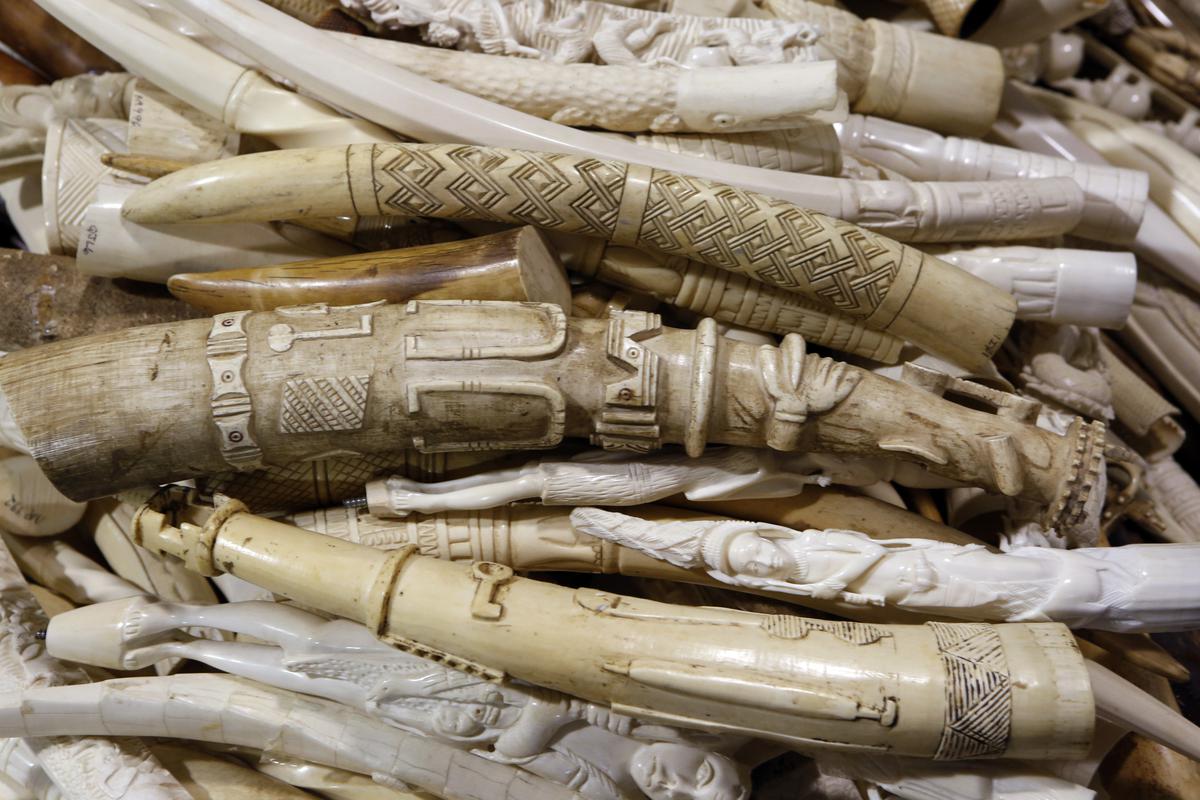
Elephants feature heavily in mythology, religion and popular culture. Yet they are hunted for their ivory tusks. Ivory poaching has led to a 70% decline in African elephant numbers over the past 40 years.
Ivory has always been a prized commodity. It has served a variety of purposes, from use in traditional medicines to musical instruments. More recently, ivory is carved into jewellery and ornaments and used primarily for decoration.
But the international ivory trade was banned under the Convention on International Trade in Endangered Species (Cites) in 1989. One hundred and eighty-four countries are now bound by this agreement. However, some legal domestic markets persist, undermining efforts to stop the ivory trade. Over 42 tonnes of illegal ivory were seized worldwide in 2019, the fourth highest annual tally in the past 30 years.
Yet Japan, which between 1979 and 1989 was responsible for roughly one-third of the global ivory trade and still possesses a legal domestic market, has seen a dramatic reduction in ivory demand. By 2014, the annual value of the Japanese ivory industry was just 13% of what it was in 1989.
Various factors have been heralded for reducing Japanese ivory demand, but a lack of data on ivory purchases and consumer motivations has limited research into the cause of this change. We conducted a study to determine which factors were influential in reducing Japanese ivory demand.
For this, we carried out an impact evaluation. We compiled a list of 35 potentially important factors that could have led to a fall in Japanese demand for ivory. These included the Cites international ivory trade ban, pressure from leading conservationists, Japan’s economic recession, and targeted demand reduction campaigns.
We then interviewed 35 people with expertise in the Japanese ivory trade, including academics, NGO workers, members of the Japanese government and ivory traders and carvers. We asked them, based on their expert knowledge, whether they thought each of the factors may have affected ivory demand, and how.


Vibha Batra’s latest book, Spotless (Hachette India) is a novel in verse for young adults

In its first edition, the Madras Art Salon spotlights the works of journalist and artist Narayan Lakshman at The Botanical Club, a social space in the British Deputy High Commission, Chennai

Cholesterol enhances melanoma cell invasion by making nuclei squishier, revealing a potential treatment target in cancer progression.

The designers reinterpret the Swedish artist’s symbolic forms and colour energy through contemporary resortwear silhouettes

Discover the inspiring legacy of Bibha Chowdhuri, a pioneering woman in physics and a trailblazer in STEM history.

Discover the inspiring legacy of Bibha Chowdhuri, a pioneering woman in physics and a trailblazer in STEM history.

Ashdeen’s Spring 2026 collection features saris inspired by the designer’s Parsi gara archive

Red ochre burials, ritual markings and myths across cultures show that red repeatedly marks liminal thresholds such as puberty, sacrifice and death; anthropologists argue that the colour functions as a technology of collective ritual and value, binding communities through shared symbolic acts

India approves 23 institutions for quantum labs under the National Quantum Mission, aiming to advance quantum technology and research.

India approves 23 institutions for quantum labs under the National Quantum Mission, aiming to advance quantum technology and research.

The Gaza conflict exacerbates environmental damage, emitting millions of tonnes of CO2 and threatening climate stability in West Asia.

Chefs and cookery experts share smart kitchen hacks, hybrid cooking methods and appliance tips to help households reduce LPG use without compromising on food

Discover groundbreaking research on Titan's lakes, bat vaccinations, and the unique aroma of ripening bananas in just one minute.