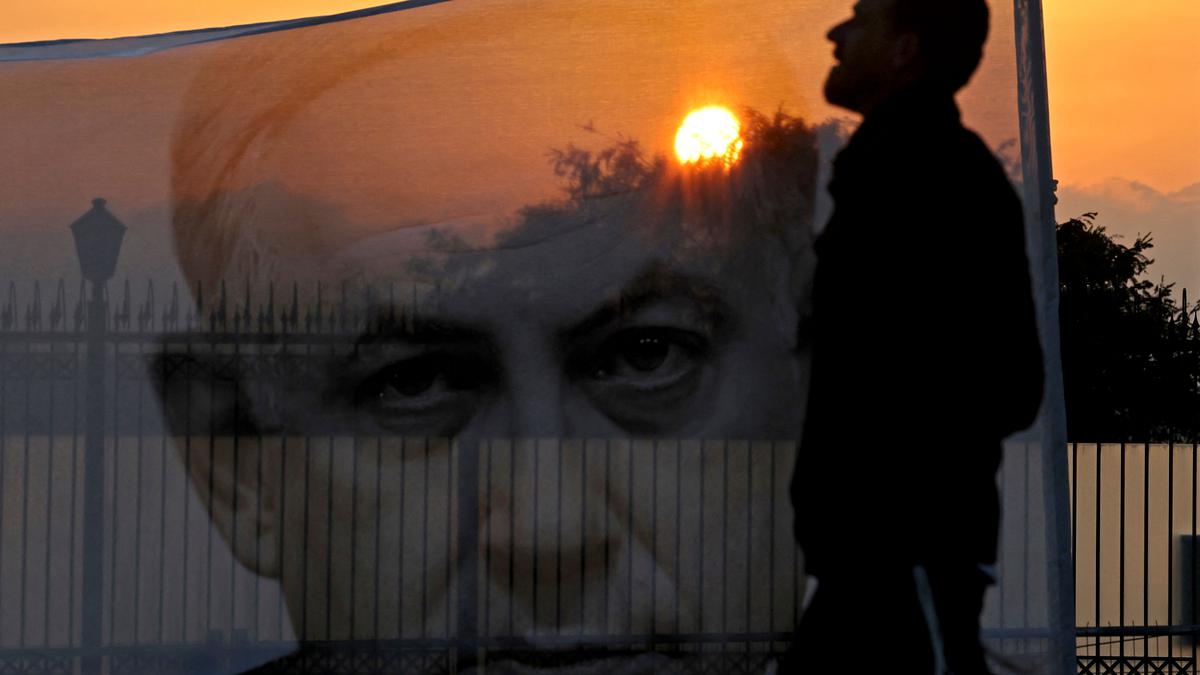
Israel President urges consensus after judicial changes pass
The Hindu
Israel’s president has called on Prime Minister Benjamin Netanyahu’s coalition to seek dialogue and compromise after it pushed ahead with controversial judicial overhaul in a turbulent parliamentary session overnight
Israel's President on Tuesday called on Prime Minister Benjamin Netanyahu’s coalition to seek dialogue and compromise after it pushed ahead with a controversial judicial overhaul in a turbulent parliamentary session overnight.
Isaac Herzog said it was a “difficult morning” following the late-night parliamentary vote that saw two contentious pieces of legislation — part of sweeping changes that have prompted vocal criticism in Israel and abroad — pass a preliminary hurdle.
Critics say the judicial overhaul underway will concentrate power in the hands of the ruling coalition in Israel's Parliament, the Knesset, and erode the democratic system of checks and balances. Netanyahu and his allies insist the changes will better curb an overly powerful Supreme Court.
"Many citizens across Israeli society, many people who voted for the coalition, are fearful for national unity,” Mr. Herzog said at a conference organized by the Yedioth Ahronoth newspaper. He urged Mr. Netanyahu and his allies to enable dialogue to reach a consensus on judiciary reform.
Mr. Herzog's remarks came the morning after tens of thousands of Israelis protested outside the Knesset ahead of the vote, the second mass demonstration in Jerusalem in recent weeks. Israeli Palestinians, a minority that may have the most to lose by the overhaul, have mostly stayed on the sidelines, due to discrimination they face at home and Israel’s ongoing 55-year occupation of their Palestinian brethren in the West Bank.
After more than seven hours of debate that dragged on after midnight, Mr. Netanyahu and his allies passed two clauses in the package of proposed changes that seek to weaken the country's Supreme Court and further empower ruling parliamentary coalitions.
With a 63-47 vote, the Knesset approved measures that give the governing coalition control over judicial appointments and curtail the Supreme Court’s ability to review “Basic Laws” that have a quasi-constitutional role in Israel, which doesn't have a formal constitution. The Bills still require two additional readings in parliament to pass into law.


Gulf states warn the UN of an existential threat from Iran's strikes, calling for condemnation and monitoring of the situation.

Matt Brittin, ex-Google executive, appointed as BBC's new director general amid ongoing $10 billion lawsuit from Trump.

Pakistan's PM Sharif briefs Saudi Crown Prince on mediating U.S.-Iran talks and reaffirms support amid regional tensions.

Iranian military ridicules Trump's ceasefire claims, asserting U.S. negotiations are merely self-deceptions amid strategic failures.

Denmark's recent election results leave Prime Minister Mette Frederiksen's future uncertain amid a fragmented parliamentary landscape.

An explosion at Valero's Port Arthur refinery caused a temporary shutdown but resulted in no reported injuries.

Anduril and Palantir Technologies are working together to develop software for U.S. President Donald Trump’s Golden Dome antimissile shield initiative, a source familiar with the matter said

A federal judge weighing the merits of the Pentagon’s designation of rising Silicon Valley star Anthropic as a security threat repeatedly questioned the government’s reasons for vilifying the company

When the conflict in West Asia, which began with the U.S. and Israel’s attack on Iran on February 28, escalated into a regional war, analysts said that the war would last as long as Iran had missiles or until the Gulf nations ran out of interceptors. However, with “emergency” military sales, piling monetary costs and a strained supply chain, is the U.S. becoming too constrained in its effort to keep the war going — both militarily and monetarily?

U.S.-Israel war on Iran LIVE: Follow The Hindu for updates on the West Asia conflict on March 25, 2026

Jair Bolsonaro to serve his sentence at home due to health issues, monitored by police, with a review in 90 days.

A New Mexico jury finds Meta liable for harming children's mental health, marking a significant shift in accountability for tech companies.

Modi and Dissanayake discuss energy cooperation, West Asia conflict, and global supply chain disruptions in a recent phone call.