Israel-Iran conflict: As war intensifies, Keralite expatriates in Gulf face anxiety over limited shelter facilities
The Hindu
As conflict escalates, Keralite expatriates in the Gulf face anxiety over limited shelter facilities amid Iranian airstrike threats.
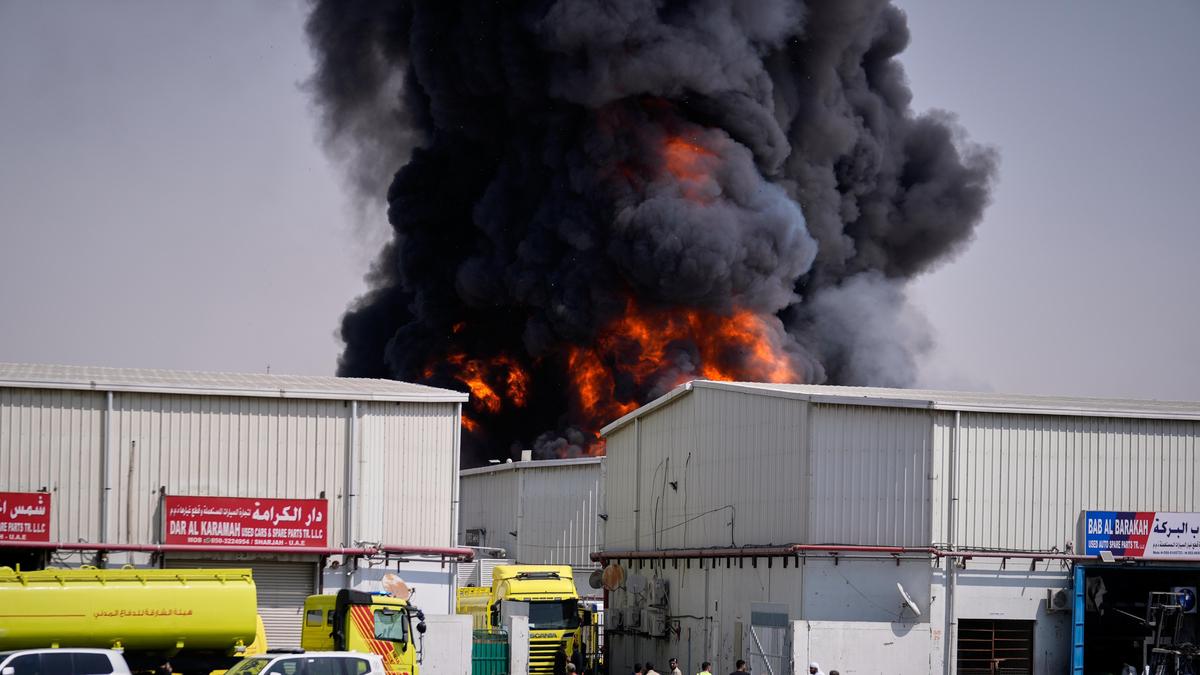
The escalation of violence in West Asia and U.S. President Donald Trump’s claim that the conflict with Iran could last for around four weeks have raised concerns among Indians working in West Asian cities, as most cities in different GCC countries have a very limited number of basement shelters or designated bomb shelters in buildings, even as sirens warned of Iranian air strikes in retaliation for the U.S. attack.
Speaking to The Hindu, Ajith Kolassery, Chief Executive Officer of NoRKA-Roots, the Kerala government agency working for the welfare of non-resident Keralites (NRKs), said: “We have received over 600 complaints at the help desk set up by the NoRKA Global Contact Centre shortly after the war began. The complaints range from air traffic suspension to inadequate shelter facilities in affected cities. People who were forced to take shelter at Al Juffair in Bahrain following Iran’s retaliatory strike complained that the number of shelters was limited and that inadequate facilities made life miserable.”
A representative of the Kerala Muslim Cultural Centre (KMCC) in Kuwait told The Hindu that hardly 10%–15% of buildings in the country have basement shelters, forcing residents to take refuge in interior rooms of flats and apartments when sirens warn of imminent threats.
According to George Cheruvathur, a Keralite working in Doha, “We could see the lights and hear the sounds of missiles being intercepted before reaching their targets. A Keralite identified as Hisham, a native of Thrissur, was injured in Doha along with 15 others the other day after being hit by missile shrapnel that landed in multiple locations across Qatar. The fact is that proper shelter is available only in a few designated places, while other buildings remain vulnerable,” he said.
On the other hand, the situation appears more organised in Israel. According to Borgian Solomon, a Keralite and former joint secretary of the Israel Malayali Association who has been working in Israel for the past 18 years, even small children in Israel are trained on how to take shelter and follow procedures during air strike warning sirens. Despite ongoing attacks and counterattacks between Israel and Iran, people in cities are not as panicked as elsewhere, as such situations have become part of daily life, including for migrants, he said.
“Israel has a well-defined system, while most GCC countries have limited experience in handling such incidents. Repatriation is almost impossible in the current milieu, and we have been engaging with Keralites in West Asia through diaspora networks to instil confidence among them,” Mr. Kolassery added.


The film is a sequel to the critically acclaimed 2018 period-horror drama which was helmed by Rahi Anil Barve and Anand Gandhi

Padianallur residents urge the government to develop parks and playgrounds on poromboke lands amid rapid urbanization.

Coimbatore Writers’ Community is a space for writers to connect and share

DMK sets March 3 deadline for Congress to finalize seat-sharing for upcoming elections, urging swift negotiations ahead of nominations.

As conflict escalates, Keralite expatriates in the Gulf face anxiety over limited shelter facilities amid Iranian airstrike threats.

Nasscom advises member companies to defer travel to West Asia and implement work-from-home arrangements amid the ongoing crisis.

Delhi court grants bail to nine IYC workers, deeming their protest a symbolic political critique rather than a criminal act.

Over 4.18 lakh students will take SSLC exams in Kerala, with Plus Two exams following; results expected in May.

Ramadan in Coimbatore: Celebrate with haleem and mohabbat ka sharbath for iftar

Watch webinar on design careers and opportunities within the orange economy, hosted by The Hindu.

Andhra Pradesh Government takes swift action to assist stranded Telugu citizens in Gulf nations amid escalating tensions and airport disruptions.

Eight Mangaluru residents stranded in Dubai seek assistance to return home amid escalating tensions in the West Asia.

Rajya Sabha polls: No deadlock in MVA talks; lone seat should go to Sena UBT, says Aaditya Thackeray
Aaditya Thackeray asserts no deadlock in MVA talks, claiming Shiv Sena UBT deserves the lone Rajya Sabha seat in Maharashtra.