Is mind-reading now a reality?
The Hindu
A new study has decoded data from non-invasive brain scans and used them to reconstruct language and meaning from stories that people hear, see, imagine
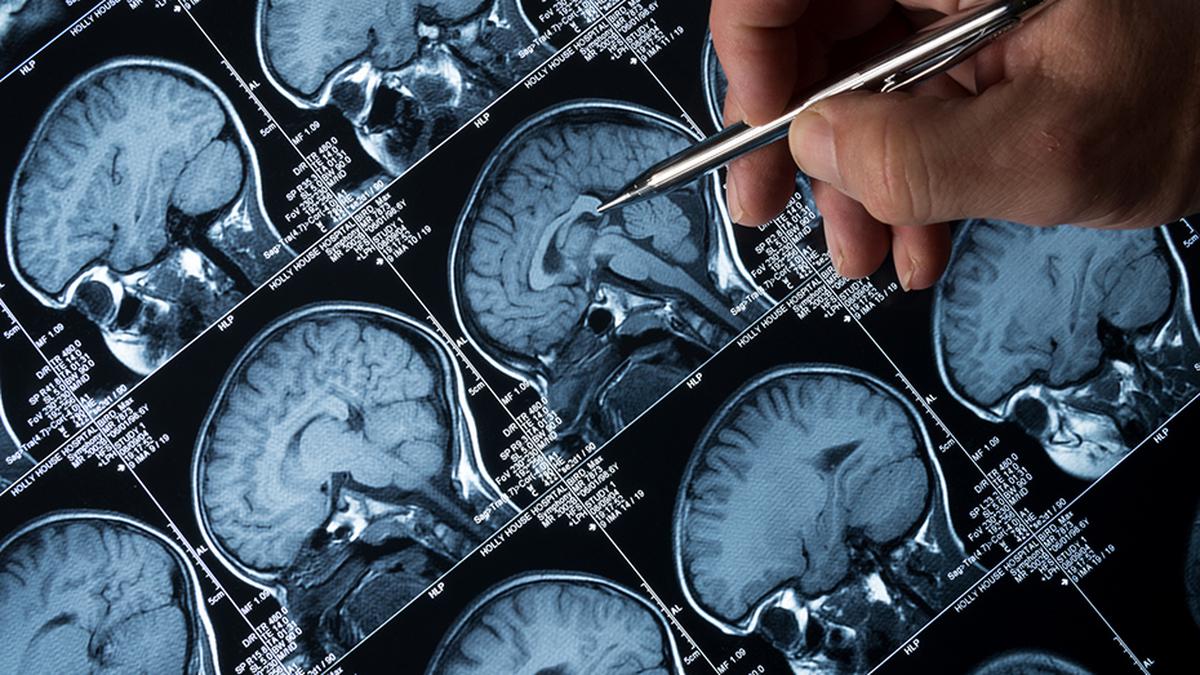
The technology to decode our thoughts is drawing ever closer. Neuroscientists at the University of Texas have for the first time decoded data from non-invasive brain scans and used them to reconstruct language and meaning from stories that people hear, see or even imagine.
In a new study published in Nature Neuroscience, Alexander Huth and colleagues successfully recovered the gist of language and sometimes exact phrases from functional magnetic resonance imaging (fMRI) brain recordings of three participants.
Technology that can create language from brain signals could be enormously useful for people who cannot speak due to conditions such as motor neurone disease. At the same time, it raises concerns for the future privacy of our thoughts.
Language decoding models, also called “speech decoders”, aim to use recordings of a person’s brain activity to discover the words they hear, imagine or say.
Also Read | An India-UK study is trying to find out how the brain develops as we grow
Until now, speech decoders have only been used with data from devices surgically implanted in the brain, which limits their usefulness. Other decoders which used non-invasive brain activity recordings have been able to decode single words or short phrases, but not continuous language.
The new research used the blood oxygen level dependent signal from fMRI scans, which shows changes in blood flow and oxygenation levels in different parts of the brain. By focusing on patterns of activity in brain regions and networks that process language, the researchers found their decoder could be trained to reconstruct continuous language (including some specific words and the general meaning of sentences).


Vibha Batra’s latest book, Spotless (Hachette India) is a novel in verse for young adults

In its first edition, the Madras Art Salon spotlights the works of journalist and artist Narayan Lakshman at The Botanical Club, a social space in the British Deputy High Commission, Chennai

Cholesterol enhances melanoma cell invasion by making nuclei squishier, revealing a potential treatment target in cancer progression.

The designers reinterpret the Swedish artist’s symbolic forms and colour energy through contemporary resortwear silhouettes

Discover the inspiring legacy of Bibha Chowdhuri, a pioneering woman in physics and a trailblazer in STEM history.

Discover the inspiring legacy of Bibha Chowdhuri, a pioneering woman in physics and a trailblazer in STEM history.

Ashdeen’s Spring 2026 collection features saris inspired by the designer’s Parsi gara archive

Red ochre burials, ritual markings and myths across cultures show that red repeatedly marks liminal thresholds such as puberty, sacrifice and death; anthropologists argue that the colour functions as a technology of collective ritual and value, binding communities through shared symbolic acts

India approves 23 institutions for quantum labs under the National Quantum Mission, aiming to advance quantum technology and research.

India approves 23 institutions for quantum labs under the National Quantum Mission, aiming to advance quantum technology and research.

The Gaza conflict exacerbates environmental damage, emitting millions of tonnes of CO2 and threatening climate stability in West Asia.

Chefs and cookery experts share smart kitchen hacks, hybrid cooking methods and appliance tips to help households reduce LPG use without compromising on food

Discover groundbreaking research on Titan's lakes, bat vaccinations, and the unique aroma of ripening bananas in just one minute.