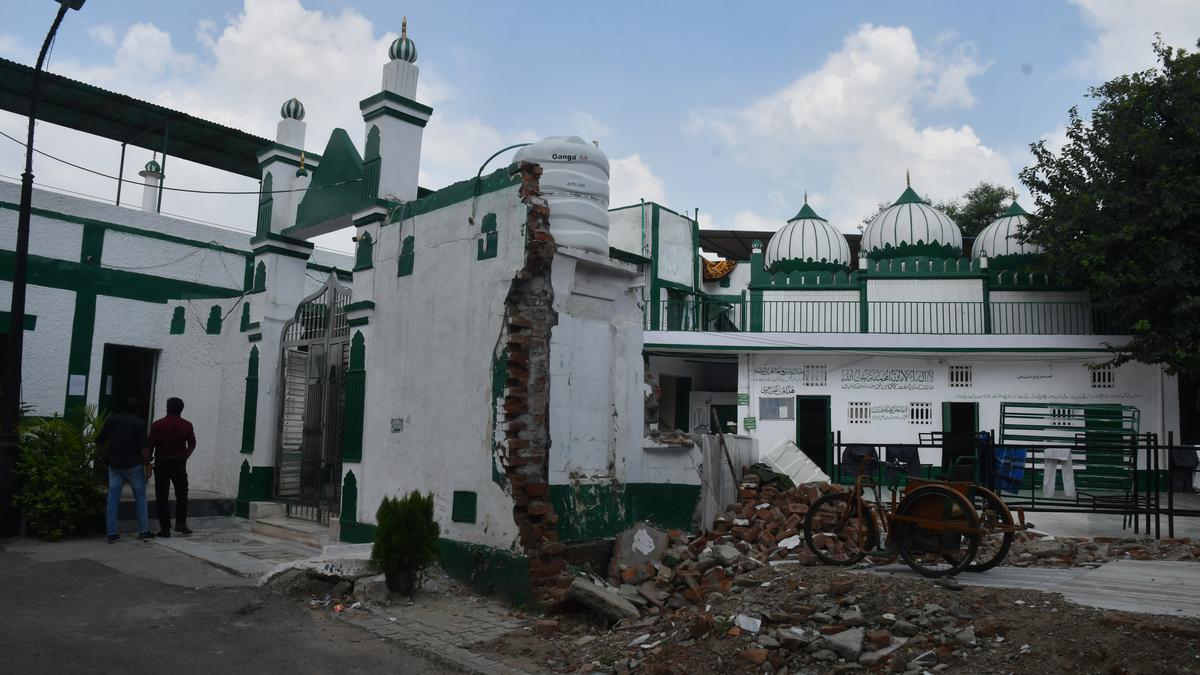
Indian Railways issues ‘removal of encroachment’ notice to two mosques in the heart of Delhi
The Hindu
The Delhi Waqf Board stated the mosques were Waqf Board property, and the notices were “surprising”.
The Indian Railways has issued a notice for “removal of encroachment” to two mosques in the heart of New Delhi. A Northern Railway spokesperson said that the structures were on railway land along the main route between Delhi and Ghaziabad.
The Masjid Bengali Market in the Bengali market area, and the Taqia Babar Shah mosque near Tilak Bridge have received the notice, and have been instructed to vacate the premises with 15 days.
The notice pasted on the mosques, which do not bear any official stamp, seal or signatures state: “Railway property has been illegally invaded upon. You must voluntarily dismantle any unlicensed structures, including temples, mosques or shrines within 15 days of receiving this alert or the railway administration will take legal action.”
The Delhi Waqf Board stated the mosques were Waqf Board property, and the notices were “surprising”. The mosques are said to be over 250 years old, and were handed over to the Waqf Board by the British before Independence.
The Centre is engaged in a legal tussle with the Waqf Board to acquire multiple Waqf Board properties.
In April this year, municipal corporation officials from Delhi demolished a portion of a mosque and razed the main hall and rooms constructed there. The hall was a madrassa where about 120 underprivileged children lived and studied.


Abhishek Banerjee challenges BJP's Suvendu Adhikari in Nandigram, pledging community health initiatives if Trinamool Congress wins.

Rising LPG shortages in Karnataka boost firewood demand, reviving an informal market as households and hotels seek alternatives.

Against the backdrop of intense poll activity, a 400-metre stretch of an arterial road in the outskirts of Chennai (technically in Madurapakkam panchayat under Tambaram assembly constituency) presents a salute to the idea of res publica, which underpins India’s system of governance, where citizens have a say, at least before a government is securely ensconced in the seat of power. A Republic Day initiative shines bright every night

Fadnavis claims zero FIR in Ajit Pawar crash is a defamation attempt by Karnataka against Maharashtra's investigation efforts.

Set to unfold as a one-day pop-up on April 5, the Easter Sadya brings together both vegetarian and non-vegetarian menus, offering a peek into the food traditions of the Syrian Christian (Nasrani) community. While the traditional Sadya is often associated with dishes such as sambar, avial, and rice, this version expands to include community-specific festive dishes.

BJP nominates mother of R.G. Kar victim Abhaya to contest from Panihati in West Bengal Assembly elections.

Veteran Malayalam actor-director E.A. Rajendran passes away at 71, leaving behind a rich legacy in the film industry.

Dakshina Kannada Zilla Panchayat has rolled out digital mode of water bill generation and collection in 23 gram panchayats on a pilot basis for the first time in Karnataka. This is set to be extended to the remaining 200 panchayats shortly, according to the Zilla Panchayat Chief Executive Officer Narwade Vinayak Karbhari.

Bengaluru police questioned a man carrying ₹6 lakh for medical expenses at Vidhana Soudha, later releasing him after verification.

BJP accuses Bengaluru's Congress government of corruption in e-Khata issuance, halting infrastructure projects due to financial mismanagement.

Misinformation in Hyderabad sparks panic buying, causing disruptions as residents react to unfounded rumors of an impending lockdown.

Bengaluru Metro extends services until 2 a.m. on March 28 for IPL match, ensuring convenient travel for spectators.

A bus truck-collision in Andhra Pradesh's Markapuram district, killing several. Catch LIVE updates here!