India’s strategic future lies in universities, innovation hubs, says IGCAR former Director
The Hindu
India's strategic future hinges on universities and innovation hubs, as emphasized at the Young Researchers’ Conclave in Vijayawada.
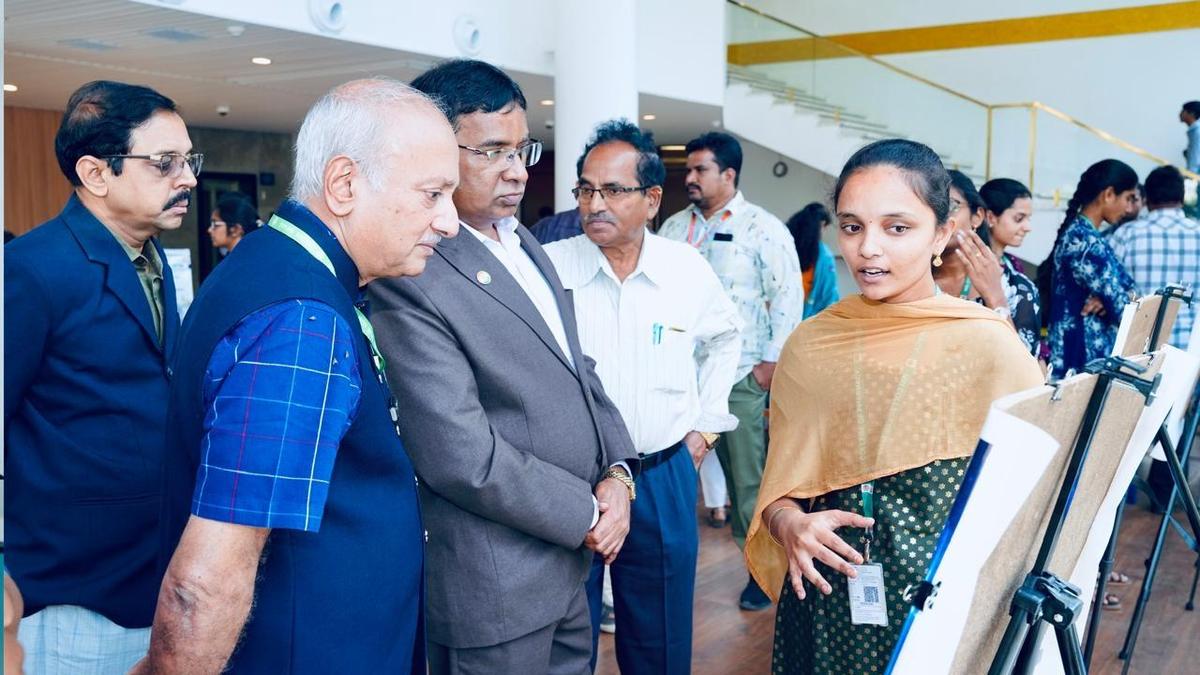
Former Director of Indira Gandhi Centre for Atomic Research (IGCAR), Kalpakkam, B. Venkataraman, on Thursday, emphasised that India’s strategic future will be shaped not only in national laboratories but also in universities, campuses and innovation hubs.
Speaking at a Young Researchers’ Conclave held as part of the Defence Science Conclave 2026, jointly organised by the NRI Institute of Technology and Pharmacy, Vijayawada and the Academy for Science, Technology and Communication (ASTC), Hyderabad, he drew parallels between nuclear and missile technologies and highlighted the shared challenges of materials’ performance, reliability under extreme conditions and the critical role of advanced non-destructive evaluation techniques in ensuring mission readiness.
He said scientific progress must be accompanied by effective science communication to counter misinformation and build public confidence.
Referring to the legacies of Dr. Suri Bhagavantam and Dr. A.P.J. Abdul Kalam, he urged young researchers to adopt interdisciplinary approaches, treat failures as valuable data, and focus on communicating the societal impact of their work.
The event brought together eminent scientists from DRDO, senior academicians, researchers, and students, creating a platform for dialogue between experienced defence professionals and young innovators.
Former DRDO Distinguished Fellow I. V. Murali Krishna highlighted the transformative role of geospatial technology in defence, particularly in Intelligence, Surveillance and Reconnaissance (ISR). He redefined GIS as “Geographic Intelligence Systems,” underscoring that geospatial intelligence lies at the core of modern defence systems.


Anna University partners with Ramco Systems to create an advanced ERP lab for enhanced industrial engineering education.

NDA announces candidates for 12 Kozhikode seats in Kerala Assembly polls 2026 as UDF and LDF ramp up campaigning.

As India formulates its next steps in the Israel-U.S.-Iran war, it is necessary to consider not only what it will mean for the whole region but also its own ties with each neighbour

CITU criticizes the Centre's privatization efforts for VSP, alleging employee removal over production increase and financial mismanagement.

Visakhapatnam Customs House's short film "Right Turn" wins Honourable Jury Mention at the 10th Indian World Film Festival.

Economist Arvind Subramanian advises CM Revanth Reddy on strengthening Telangana's finances during a meeting in Hyderabad.

Supreme Court emphasizes stakeholder consultation for legal education reforms, hesitant to change five-year law course duration.

Authorities in Andhra Pradesh are set to tranquillise a roaming tiger near Annavaram temple for safety and conservation.

MEA criticizes USCIRF for bias, urging focus on vandalism of Hindu temples in the U.S. over selective criticism of India.

Bengaluru's Urban Development aims to beautify underutilized flyover spaces, enhancing city aesthetics and improving green cover initiatives.

Indian Navy warships escort merchant vessels in the Gulf of Oman, ensuring safe passage amid regional tensions under Operation Sankalp.

A rare crab species exhibiting both male and female traits was discovered in Silent Valley, revealing unique biological characteristics.

Gujarat court convicts five in 2016 Una flogging case; punishment announcement scheduled for March 17, 2026.