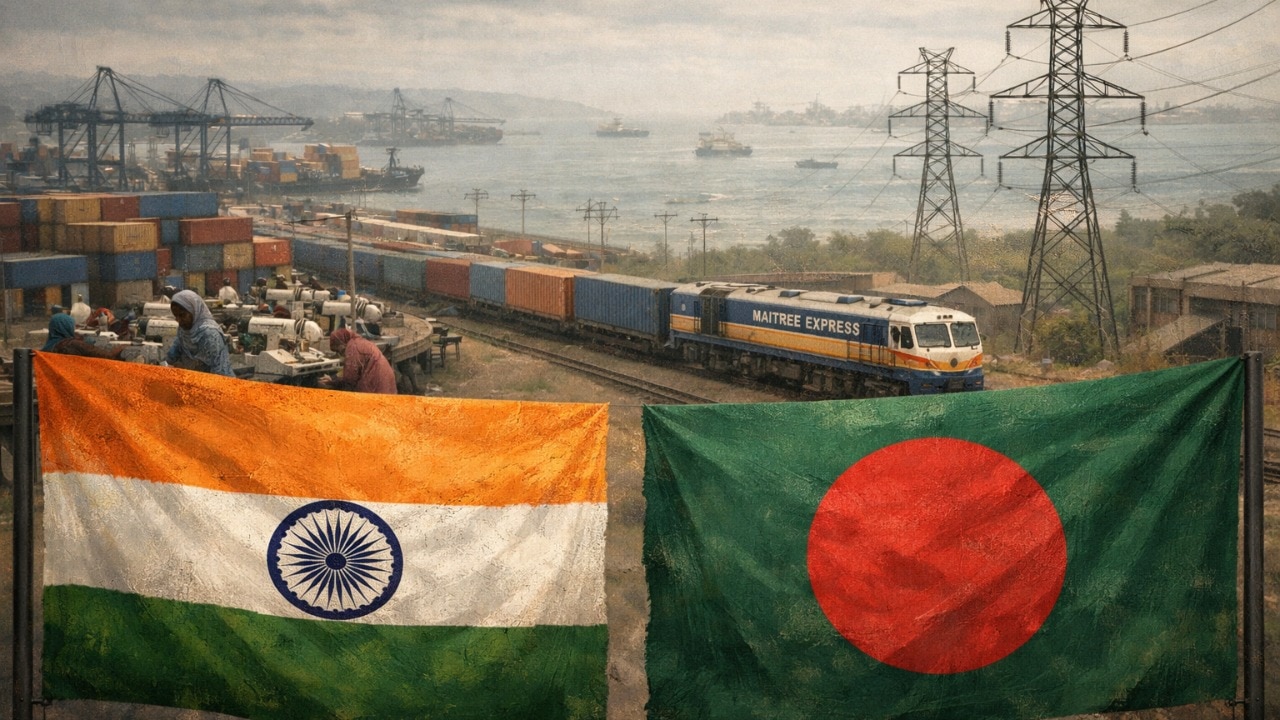
India helped Bangladesh weave a success story. It'll now fight it out in Europe
India Today
India didn't just help Bangladesh in its 1971 Liberation War but supported it throughout its development journey. India helped Bangladesh build the ready-made garments sector, which helped pull millions out of poverty. Some say India sacrificed its own textiles industry for that. Now, that very sector will see competition from Indian exports, especially in the European markets.
India's role in Bangladesh's liberation in 1971 is well known. But New Delhi's support for the new nation emerging from the wreckage of Pakistani rule, extended beyond helping it gain independence. New Delhi stepped in almost immediately with humanitarian assistance, reconstruction support and diplomatic backing for the stabilisation of the new nation with over 80% of its population living in extreme poverty. After helping Bangladesh weave a success story and pull millions out of poverty through its textiles sector, India is all set to take the Battle of the Weaves to Europe.
The textiles sector in Bangladesh has been in the doldrums after the fall of the Sheikh Hasina regime in August 2024. The EU-India trade agreement, touted as the Mother of all Deals, is all set to be inked later this year. It will reduce tariffs on Indian garment exports in the European market, and help them compete with the Bangladeshi exports. But before delving into it, let's first have a look at how the Delhi-Dhaka partnership changed.
In the first six months of 1972 alone, India extended aid worth $220 million (equivalent to about $1.6 billion today), making it Bangladesh's single-largest donor at the time. But the sense of warmth that once defined ties between the two neighbours has clearly faded.
After the fall of Hasina's regime, Bangladesh drifted towards positions that hardened on-ground narratives and bilateral frictions with India. India expressed concerns over looser border controls and a rise in illegal crossings. This unease deepened as attacks on Hindu minorities and pro-India voices went largely unchecked. This reinforced the perception that the interim dispensation of Muhammad Yunus, who was reportedly brought in by an Islamist plot, was unwilling to confront forces hostile to India.
Dhaka rejected Indian security requests, while publicly distancing itself from the pro-India orientation of the Hasina years. Hasina's exile in India also did not go down well with the Yunus regime. Long-standing water disputes, particularly over the Teesta, have resurfaced. Bangladesh has tried to internationalise the issue, framing India as an obstructive nation. At the same time, anti-India narratives gained ground in politics and the media. Economic and strategic outreach to China and Pakistan has deepened much to India's displeasure.
Over the decades, India-Bangladesh ties matured into a dense web of economic, strategic and cultural cooperation. India has since extended billions in concessional lines of credit to Bangladesh, funding dozens of major infrastructure projects. Annual grants of Rs 200–300 crore in recent years further supported social and economic initiatives in Bangladesh. This was not a case of India having no expectations at all. New Delhi sought a civilisational partner and a peaceful eastern neighbourhood, coming from the memory of what it had witnessed during the BNP-Jamaat-e-Islami rule in Bangladesh from 2001 to 2006.


For years, Ram Setu has been invoked as "national heritage" in political discourse. But an RTI response reveals that, in official records, its status remains "nil".


Two LPG tankers tracked by India Today's OSINT team have taken the new route via Larak-Qeshm to cross the Strait of Hormuz.

What began as an abuse complaint has snowballed into a massive scandal involving rape allegations, hidden camera evidence, fraud and even murder claims, as more victims come forward against a Nashik godman.

From April 2026, the Delhi government is planning to recover over Rs 38,000 crore in dues to discoms.

The bill could increase total Lok Sabha seats to 816, reserving 273 for women, marking a major push to enhance female representation in Parliament based on the 2011 census.

Students told the Mahila Congress that the LPG shortage had disrupted their daily meals. They said the hostel administration had altered the menu, reduced one meal and discontinued evening tea in recent days.

India's consumer courts promise quick justice, but rising backlogs and staff shortages tell a different story. As cases pile up, the gap between what the system offers and what it delivers is widening.

A second patient died within 72 hours at RG Kar Hospital, with his family alleging that a lack of stretcher and basic facilities forced the critically ill man to walk 100 metres, leading to his death.

As Parliament prepares to bring amendments to the Transgender Act, activists warn the proposed changes risk rolling back years of hard-won rights.

A high-speed boat crash in the Maldives has left two Indians missing, including a celebrated rally figure, even as Gautam Singhania returns home. Search teams continue efforts amid mounting concern and unanswered questions.

A prominent seer, Pranavananda Swamiji, alleged that mutts backing Karnataka Deputy Chief Minister DK Shivakumar to take over the top post were denied any allocation in the state budget presented by Chief Minister Siddaramaiah. He reiterated his support for Shivakumar to take over as the chief minister.

India's original Dhurandhar, Ravindra Kaushik, rose from acting at college theatres, to infiltrating the Pakistan Army as a RAW Agent. He provided critical intelligence on Pakistani troop movements and the country's nuclear programme, but died a lonely death after his betrayal and subsequent capture by the ISI.