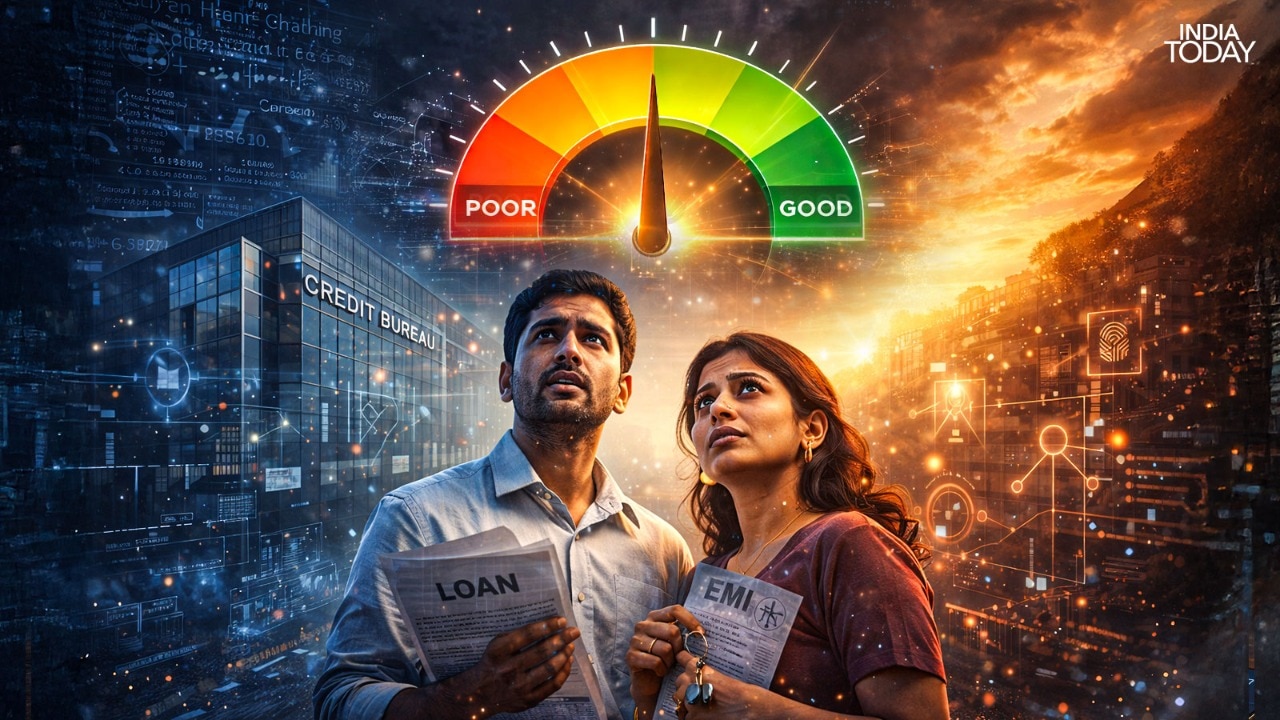
India built Aadhaar, UPI. Is it time for Indian Cibil too?
India Today
A three-digit number may look small on paper. But for millions of Indians, it quietly decides how far they can go. India built digital infrastructure for identity (AADHAAR) and payment (UPI). The next question is whether credit deserves the same clarity and control.
India has built some of the world’s most admired digital public infrastructure. Aadhaar transformed identity verification. UPI changed how the country pays. The Account Aggregator framework is reshaping how financial data moves with consent.
But there is one powerful financial system that still sits quietly in the background, credit scoring.
A three-digit number now decides who gets a home loan, who qualifies for a credit card, and how much interest someone pays. Yet most Indians do not fully understand how that number is calculated, how long past mistakes stay on record, or how to fix errors when something goes wrong.
As India deepens financial inclusion, a larger question is emerging: does the country need a stronger, more transparent and more locally anchored credit score framework, a truly desi credit ecosystem to match its digital ambitions?
For Yash, a 30-year-old engineer in Pune, this question became personal when he applied for a car loan and discovered that a few delayed EMIs from his college days were still shaping his financial record years later.
He knew he had delayed a few loan payments during his college days. Back then, he was juggling expenses and did not fully understand how serious late EMIs could be. He cleared the dues eventually and moved on.


Sensex has declined over 6,000 points or roughly 7.5% in a little over two weeks as global tensions and rising oil prices triggered selling in equities.


Speaking in Parliament, Union Petroleum and Natural Gas Minister Hardeep Singh Puri said India has adequate fuel stocks, and there is no cause for concern over availability.

Industry sources told India Today TV that airline operators are now paying additional insurance charges for every aircraft flying into the Middle East, significantly increasing the cost of operations on these routes.

Under law, a domestic household is generally allowed to keep two LPG cylinders of 14.2 kg each at a time. This usually includes one cylinder connected for use and another spare cylinder kept as backup.

Early signals from GIFT Nifty suggest that the benchmark indices could open lower when trading begins. GIFT Nifty futures were trading at 23,784.50 at around 7:58 am. This indicates that the Nifty 50 may open below Wednesday's closing level of 23,866.85.

When markets fall sharply, fear often takes over investing decisions. But did you know continuing SIPs during market crashes has historically rewarded disciplined investors?

The move comes as global energy markets remain on edge due to escalating tensions linked to the conflict involving Iran, which has raised fears of disruptions to crude oil shipments from the Middle East.

India consumes roughly 5.3 to 5.5 million barrels of crude oil every day. However, domestic production is only about 0.6 million barrels per day. This means the country depends on imports for nearly 85% of its oil needs.

At around 10:47 am, the BSE Sensex was down 750.68 points or 0.96% at 77,455.30, while the Nifty 50 slipped 208.25 points or 0.86% to 24,053.35.

Air India said the fuel surcharge is due to the sharp rise in aviation turbine fuel (ATF) prices since early March 2026, triggered by supply disruptions in the Gulf region.

Rahul Bhatia expressed gratitude to employees who worked tirelessly to restore operations during that challenging period, praising their resilience and dedication.

The Iran-US conflict has disrupted shipping through a key global oil export route, pushing oil prices higher. As a result, airline tickets on some routes have become much more expensive, and there are growing concerns that travel demand could weaken if the situation continues.