How much rainwater can be collected in a day from a 100 sq.m. rooftop? Enough for a family of four for at least 3 days
The Hindu
Harvesting rainwater in Hyderabad to combat water scarcity, with detailed methods and benefits explained by experts.
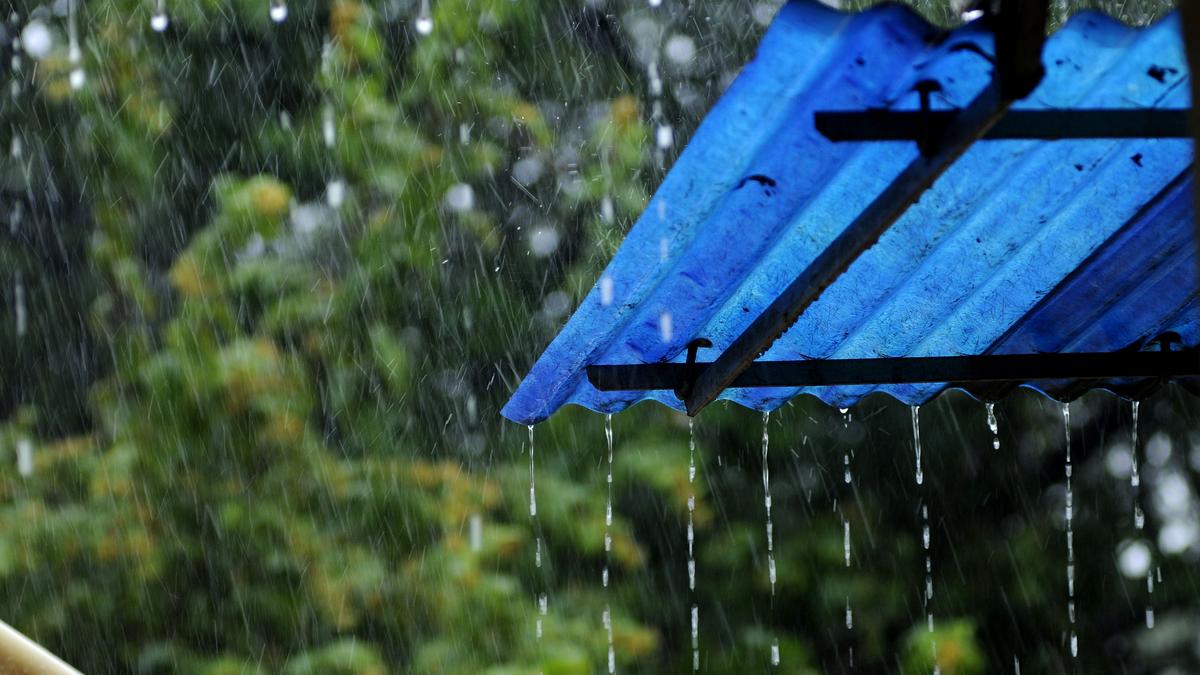
Hyderabad and its surrounding areas have been receiving rain for the past few days. How much of it could have been used for domestic purposes? People working towards rainwater harvesting said that if 25mm rainfall is received, around 2,000 litres can be collected from a rooftop spanning 100 square metres (over 1,000 square feet).
On Friday (May 16, 2025) morning, the highest of 36.6 mm rainfall was received in Golconda, according to data from Telangana Development Planning Society. Stand alone apartments, gated communities, shopping malls and other structures with huge surface area can harvest several thousands litres of rainwater.
Kalpana Ramesh, founder, The Rainwater Project said that a person needs, ideally, 130 litres of water a day. Around 2,000 litres of harvested rainwater would be sufficient for a family of four for at least three days.
The methods to recharge groundwater are under focus as the annual average water level in Greater Hyderabad Municipal Corporation (GHMC) continues to plummet dangerously: from 11.40 metres below ground level (bgl) in 2018-19, it dropped to 8.98 in 2024-25. And it was at 9.05 in 2024-25 till March. It continues to be in the red zone — which is below 20 metres bgl.
The areas with Outer Ring Road where the water table is in the red zone includes Malkajgiri, Bachupally, Dundigal, Serilingampally, Hayatnagar, Abdullapurmet, Saroornagar and Kukatpally mandals.
Vishwanath Srikantahiah from Biome Environmental Trust said that a sump, built to store municipal water, can also be used to store the rainwater. He said it has to be ensured that the roof is clean. When there is a forecast for rain, the roof can be cleaned. Filters costing around ₹3,500 can be used to filter rainwater.
Ms. Kalpana said that inline filters are fitted in rainwater pipes. It weeds out leaves and other debris before collected rainwater is let into a sump or RWH pit.


Anuradha Jonnalagadda took over as in-charge Vice-Chancellor of the University of Hyderabad, focusing on continuity during the transition.

Telangana government awaits committee report on TGSRTC staff absorption, with decisions to be made at an appropriate time.

Telangana's revised pay scale implementation for employees will take timer. The tenure of Pay Revision Commission extended. Govt likely to take decision on reccomendation based on its report.

Vizianagaram's SP A.R. Damodar highlights 20 accident-prone areas and urges drivers to prioritize safety with helmets and seat belts.

Kerala HC stays disqualification of SNDP Yogam leaders, reversing a single judge's order regarding financial and regulatory compliance issues.

Karnataka announces daily supply of 10,000 LPG cylinders to hotels, easing the commercial shortage for the hospitality industry.

Malayalam superstar Mohanlal will be reuniting with filmmaker Priyadarshan, it was announced recently. It will mark the 100th film of Priyadarshan and is backed by Mohanlal’s longtime collaborator, Antony Perumbavoor

Gautham Vasudev Menon loses Madras High Court appeal, ordered to pay ₹4.25 crore to R.S. Infotainment with interest.

AIADMK faces its toughest challenge in 53 years as it prepares for the crucial 2026 T.N. Assembly elections.

Lakmé Fashion Week x FDCI 2026 in Mumbai: What worked and what didn’t

Telangana CM announces underpass beneath Begumpet Airport runway to alleviate traffic congestion in Hyderabad.

Congress leader Ramesh Chennithala claims an alliance between Pinarayi Vijayan, Modi, and Shah aims to undermine UDF in Kerala elections.

CCB arrests Bengaluru couple for running a fake government job scam, cheating over 100 victims out of crores.