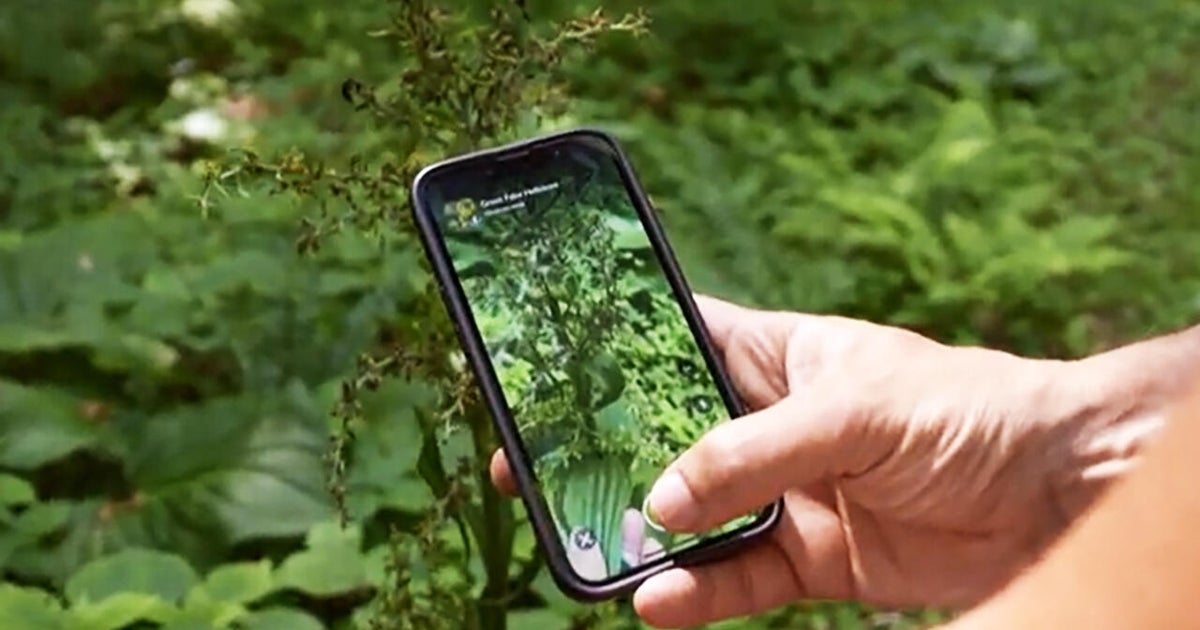
How iNaturalist app users have fun while aiding science
CBSN
We share our planet with maybe 10 million species of plants, animals, birds, fish, fungi and bugs. And to help identify them, millions of people are using a free phone app. "Currently we have about six million people using the platform every month," said Scott Loarie, the executive director of iNaturalist, a nonprofit.
We share our planet with maybe 10 million species of plants, animals, birds, fish, fungi and bugs. And to help identify them, millions of people are using a free phone app. "Currently we have about six million people using the platform every month," said Scott Loarie, the executive director of iNaturalist, a nonprofit.
Has anyone made a cool discovery using the app? "It happens all the time," Loarie said. "Almost every month we get a new species described.
One of his favorites stories involved someone in the Andes whose cabin was invaded by a weasel: "He grabs his camera. The first-ever photographs of these species, and they happen to be sitting on a toilet in this cabin. I'm very proud to say that #ToiletWeasel was trending on Twitter after that!"
But it turns out that this app has a stealth function: It can share your photos with scientists. "It's not just a photo. It has a date, it has a location," said Loarie. "It turns out that most data for most species on the planet now is coming from this little app."
So far, iNaturalist fans have made 300 million sightings in all 197 countries, providing data on hundreds of thousands of species a year. They let scientists see what's happening to life on Earth.


Kendra Duggar was arrested for misdemeanor charges including endangering the welfare of a child and false imprisonment, according to online records. The charges come a day after her husband Joseph Duggar was charged with molestation. In:

At ski resorts across the West this winter, viral images showed chairlifts idling over brown terrain in places normally renowned for their frosty appeal. Iconic mountain towns like Aspen, Colorado, and Park City, Utah, were seen with shockingly bare slopes, as the region endured a historic snow drought that experts warn could bring water shortages and wildfires in the months ahead. In:

The NCAA accused online sportsbook DraftKings of trademark infringement associated with the association's men's and women's basketball tournaments and filed a complaint in federal court seeking an emergency restraining order. In:

Airport delays continue to worsen as a bill to fund the Department of Homeland Security failed to advance in the Senate Friday. In:

Five people who were charged in connection to the Feeding Our Future scheme pleaded guilty to wire fraud this week. In:

Actor Nicholas Brendon, best known for his role as Xander Harris in the popular television series "Buffy the Vampire Slayer," has died, according to his family. He was 54. In:

Washington — The Trump administration has been strategizing methods and options to secure or extract Iran's nuclear materials, according to multiple people briefed on the discussions, as a U.S.-Israel-led military campaign against Tehran enters a more uncertain phase. In:

Colombian President Gustavo Petro is the subject of several ongoing narcotics trafficking investigations being overseen by federal prosecutors in New York, sources told CBS News on Friday. Lilia Luciano, Joe Walsh and Margaret Brennan contributed to this report.

The U.S. Treasury has authorized the purchase of Iranian oil that's already at sea, exempting buyers from the tight sanctions that have restricted the country's oil industry for years — a move aimed at stemming soaring prices amid the U.S.'s war with Iran. In:

A federal judge has struck down some of the Defense Department's strict controls on how journalists with access to the Pentagon are allowed to report — ending a policy that caused many news outlets to leave the Pentagon. In:

A jury has found Elon Musk liable for misleading investors by deliberately driving down Twitter's stock price in the tumultuous months leading up to his 2022 acquisition of the social media company for $44 billion. But it absolved him of some fraud allegations, finding that he did not "scheme" to mislead investors. In:

Washington — The Senate on Friday again failed to move forward with legislation to fund the Department of Homeland Security, extending the shutdown that has snarled air travel around the country. Alan He and Caitlin Huey-Burns contributed to this report.

Muddy floodwaters from severe rains inundated streets, swallowed vehicles and prompted evacuation orders for thousands of residents in towns north of Honolulu on Friday as officials warned of the possible failure of a 120-year-old dam. In: