How Gen Z is powering India’s concert boom
The Hindu
As ticket prices climb and job anxiety looms, India’s Gen Z is budgeting, travelling and cutting back elsewhere
At 3 pm, between sets on the second day of Lollapalooza India, 27-year-old Shivang Verma sat under a large tent, dressed in a grey Linkin Park T-shirt, waiting for the band’s first-ever performance in Mumbai. The software engineer from Lucknow had come for the closing act of the global festival’s fourth Indian edition. Like many others, he was drawn in the moment rumours of Linkin Park headlining the festival were confirmed.
“When I heard the rumours, I started saving up,” says Shivang, who also supports his parents. Attending the festival solo, he spent around ₹10,000 on flights, ₹15,000 on his ticket and another ₹15,000 on accommodation. “I had to be here, no matter what,” he says, adding that like many fans, he misses Chester Bennington but was excited to see the band reunite and release a new album in 2024.
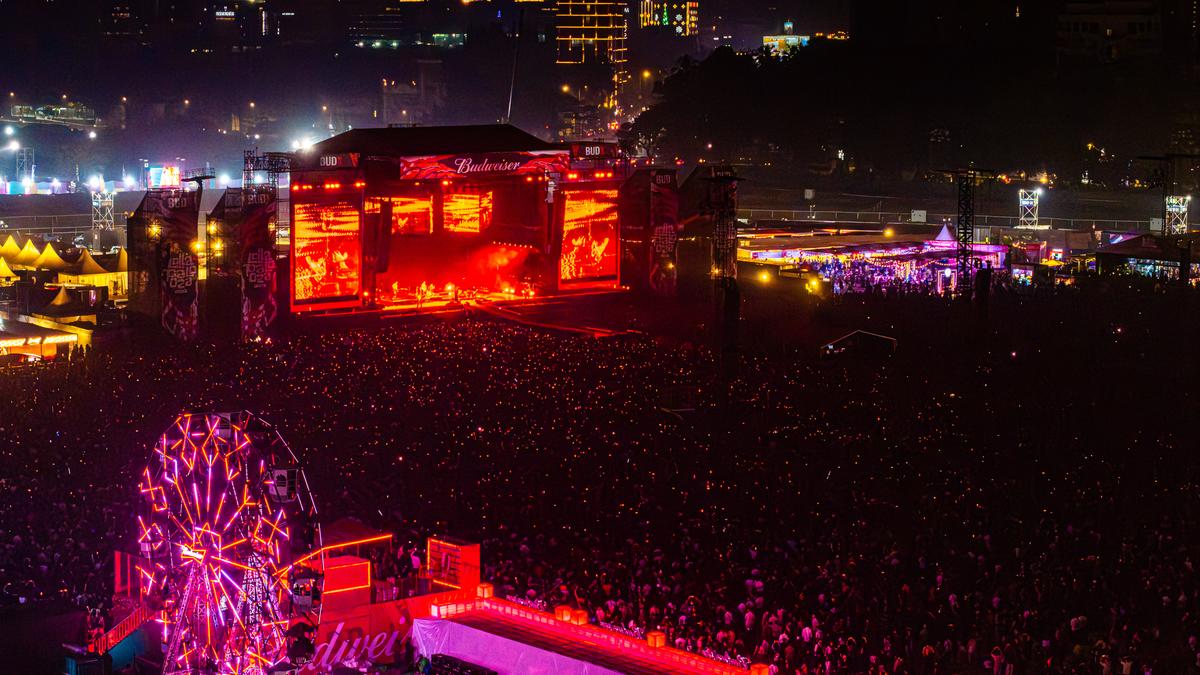
Lollapalooza Day 2, | Photo Credit: Abdulkader
In just a year, India has hosted live performances by global heavyweights such as Coldplay, Guns N’ Roses, Tom Morello and Travis Scott. Lollapalooza’s previous edition featured punk-rock icons Green Day alongside Shawn Mendes and Glass Animals. With Indian artists touring frequently as well, the surge in sold-out concerts, especially those curated for under-35 audiences, largely Gen Z, is unmistakable. Ticket prices, often justified as ‘once-in-a-lifetime’ experiences for die-hard fans, have risen in tandem.
“I don’t spend recklessly on concerts or live experiences,” says Shivang. Many Gen Z attendees I spoke to at Lollapalooza echoed this sentiment, acknowledging the steep ticket prices and exercising restraint on discretionary spending, both at the venue and in everyday life. Yet most also admitted to having felt left out in the past — social-media-driven FOMO, they said, is very real.
“There were concerts I skipped, but after seeing how they played out on social media, I did feel like I missed something,” says 23-year-old Mumbai-based graphic designer Siddharth Dhevar.


Witness the blood moon during the lunar eclipse day in India and other countries, through pictures here.

Discover the fascinating world of hydroxyl megamasers, powerful cosmic lasers revealing secrets of distant galaxies and the universe's evolution.

Discover how India's unique resources could lead to groundbreaking advancements in global cancer care and research.

Discover groundbreaking research on Mars lightning, innovative smart materials, and a universal ageing marker in just one minute.

A launch vehicle’s ascent battles gravity to gain orbital velocity, while re-entry is a controlled struggle against the atmosphere to systematically shed that immense kinetic energy through aerobraking, thermal protection and precise guidance within the re-entry corridor. Operating as a semi-ballistic body, the crew module performs a deorbit burn, manages communication blackout, and deploys a three-stage parachute system to ensure a safe splashdown.

The Nissan Gravite is a budget-friendly seven-seater MPV designed for practical family use in India. Sharing its platform with the Renault Triber, it offers flexible 2-to-7 seating, a removable third row, generous boot space, and a fuel-efficient 1.0-litre petrol engine delivering around 19 km/l. With features such as a floating touchscreen, wireless connectivity, digital instrument cluster, and six airbags as standard, the Gravite blends affordability, safety and everyday usability in a compact footprint tailored to urban and small-family needs.

Discover the dedication of Tamil Nadu's teenage cyclists competing at the Track Asia Cup, balancing sport and academics.

Explore how Salar de Pajonales in Chile serves as a vital Mars analogue for studying microbial life and ancient fossils.

NASA revamps its Artemis lunar program to address delays and ensure a Moon landing by 2028.