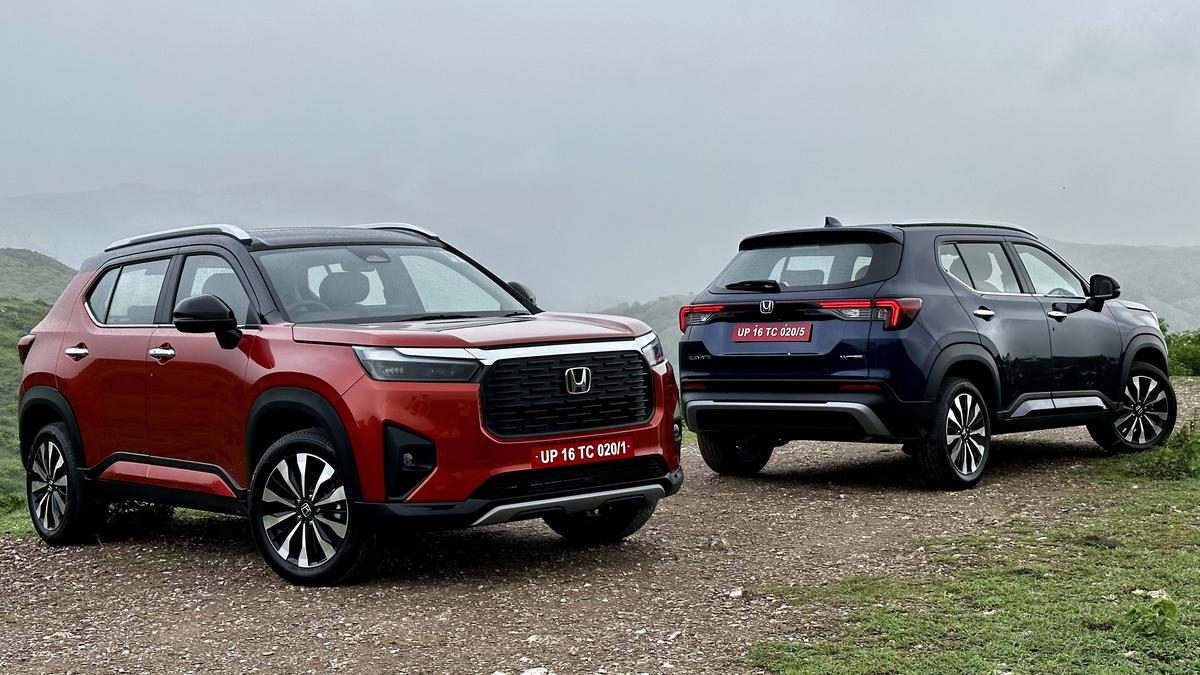
Honda to roll out 5 SUVs in India by 2030; enters high selling mid-sized segment with Elevate
The Hindu
Honda Cars India plans to introduce five SUVs by 2030, starting with the mid-sized Elevate. The model competes with other popular SUVs and has received great response since bookings began in July. Honda has ramped up production capacity to 660 units/day and is planning to increase it further. The manual variants are priced between ₹10.99-14.9 lakh and the automatic trims between ₹13.2-15.99 lakh. The model is powered by a 1.5 litre petrol engine with a 6-speed manual and 7-speed CVT, offering fuel efficiency of 15.31-16.92 kmpl.
Honda Cars India plans to introduce five sports utility vehicle in the country by 2030 as it looks to have a strong presence in the robustly growing segment, according to a top company executive.
The company, a wholly-owned subsidiary of Japanese auto major Honda Motor Company, on Monday made a foray into the mid-sized SUV segment with an all-new product — Elevate — priced between ₹10.99-15.99 lakh (ex-showroom Delhi).
The model will compete with the likes of Hyundai Creta, Maruti Suzuki Grand Vitara, Kia Seltos and Toyota's Urban Cruiser Hyryder, among others.
"Our focus is now on the SUV segment. Starting from Elevate we are going to introduce five SUVs by 2030," Honda Cars India President & CEO Takuya Tsumura told PTI in an interaction.
It is very important for the company to be in the SUV segment which has become the leading vertical in terms of volumes, he added.
The contribution of the SUV segment in the overall passenger vehicle sales in the country has risen to over 48% this year from 43% in FY23.
Honda sells City and Amaze sedans in the country.


Nvidia chief Jensen Huang on Monday said the leading artificial intelligence chip maker is heading for space with a goal of powering orbiting data centres.

Meta Platforms shares rose nearly 3% on Monday after a Reuters report that the social media giant plans to lay off 20% or more of its workforce to offset heavy spending

Wholesale price inflation hits 11-month high at 2.13%, driven by rising crude prices and increased costs across various sectors.

Kerala's wellness sector faces uncertainty due to the West Asian crisis, impacting tourism and threatening economic stability.

Experts link Punjab's distress migration to economic stagnation and job mismatches, highlighting systemic failures in political leadership.

India's merchandise exports remain flat in February, with Commerce Secretary warning of a potential dip in March due to trade constraints.

Hard Rock International closes 10 outlets in India, including three cafes in Bengaluru, while Goa hotel remains open.

The booming market for artificial intelligence servers brought Taiwan's Foxconn a 24 percent jump in annual net profit, the company said

In a statement on its website, Adobe said it has in recent years streamlined its sign-up and cancellation processes and made them more transparent.

Stock markets recover as Sensex and Nifty bounce back following a three-day slump, driven by value-buying in blue-chip stocks.

U.S. President Donald Trump’s administration is set to receive a roughly $10 billion fee from investors in the recently completed deal to take control of TikTok’s U.S. business, the Wall Street Journal reported

Meta is planning sweeping layoffs that could affect 20% or more of the company, three sources familiar with the matter told Reuters

Learn how to choose the best personal loan lender by evaluating eligibility, interest rates, and borrowing experience.