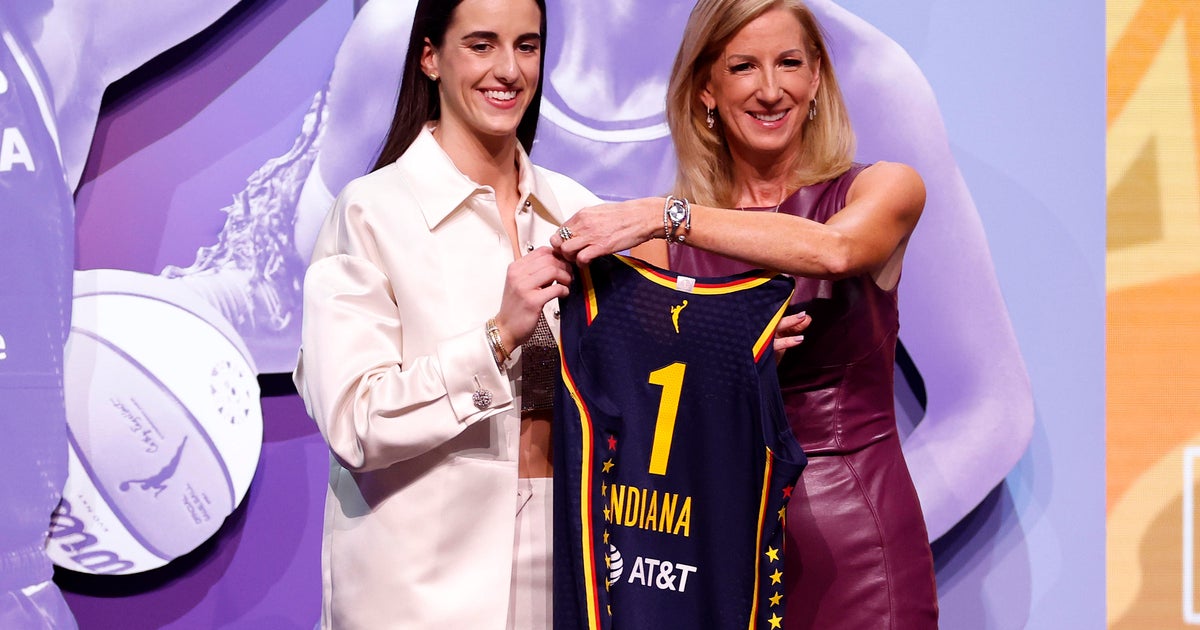
Here's how much Caitlin Clark will make in the WNBA
CBSN
College basketball sensation Caitlin Clark will earn less than six figures in her rookie season with the Indiana Fever, reigniting debate over whether professional women athletes in the U.S. are fairly paid.
Clark, this year's No. 1 draft pick in the WNBA, will have a starting salary of $76,535 and earn roughly $338,000 over the four-year contract she signed with the Fever. The second, third and fourth picks in this year's draft will also earn $76,535 their first year, according to the league's collective bargaining agreement. The base annual pay for all four athletes will see only a modest rise over the next few years — $78,066 in 2025, $85,873 in 2026 and $97,582 in 2027.
Lower-ranked WNBA draft picks earn less, according to a wage scale outlined in the players' agreement with the league. Players are also eligible for bonuses at the end of the season, based on performance. For example, the "Rookie of the Year" award comes with a $5,150 bonus.


Fentanyl was found inside Barbie doll packages being sold at a discount store in Missouri, police said on Saturday. In:

CBS News contributor Arthur C. Brooks is the author of a new book, "The Meaning of Your Life: Finding Purpose in an Age of Emptiness." This morning, he's charting an unlikely path to happiness:

When gauging a war, Americans consider at least two important things: what the goals are overseas and its impact back home. In:

The peace and tranquility of Muir Woods, just north of San Francisco – home to 500+ acres of old-growth redwoods – make it just about the last place you'd expect to find a fight brewing. "The fact that they're taking down whole groups of signs about climate change and our nation's history is disappointing, and embarrassing," said retired U.S. Park Ranger Lucy Scott In:

We share our planet with maybe 10 million species of plants, animals, birds, fish, fungi and bugs. And to help identify them, millions of people are using a free phone app. "Currently we have about six million people using the platform every month," said Scott Loarie, the executive director of iNaturalist, a nonprofit.

Washington — As voters gear up for the midterm elections in November that will decide control of the House and Senate, the Supreme Court is set to weigh Monday whether states can count mail ballots that are postmarked by, but arrive after, Election Day.

It was in June 2020 when Linda Dane learned the disturbing circumstances of how her long-lost brother Gary Herbst's skull had been found by a dog in rural Barron County, Wisconsin. In:

A possible meteorite crashed into a Houston area house on Saturday night, tearing through the roof and two stories of the home, officials said. In:

The Senate on Saturday blocked an amendment that would ban transgender athletes from playing in women's sports, rejecting one of President Trump's priorities as he pressures Congress to act on a broad voting bill.

Robert Mueller, a former FBI director who led the investigation into allegations of Russian meddling in the 2016 election, has died, multiple sources told CBS News on Saturday. He was 81. In:

Kendra Duggar was arrested for misdemeanor charges including endangering the welfare of a child and false imprisonment, according to online records. The charges come a day after her husband Joseph Duggar was charged with molestation. In:

At ski resorts across the West this winter, viral images showed chairlifts idling over brown terrain in places normally renowned for their frosty appeal. Iconic mountain towns like Aspen, Colorado, and Park City, Utah, were seen with shockingly bare slopes, as the region endured a historic snow drought that experts warn could bring water shortages and wildfires in the months ahead. In:

The NCAA accused online sportsbook DraftKings of trademark infringement associated with the association's men's and women's basketball tournaments and filed a complaint in federal court seeking an emergency restraining order. In: