German government seeks to downplay Elon Musk’s backing of far-right party before election
The Hindu
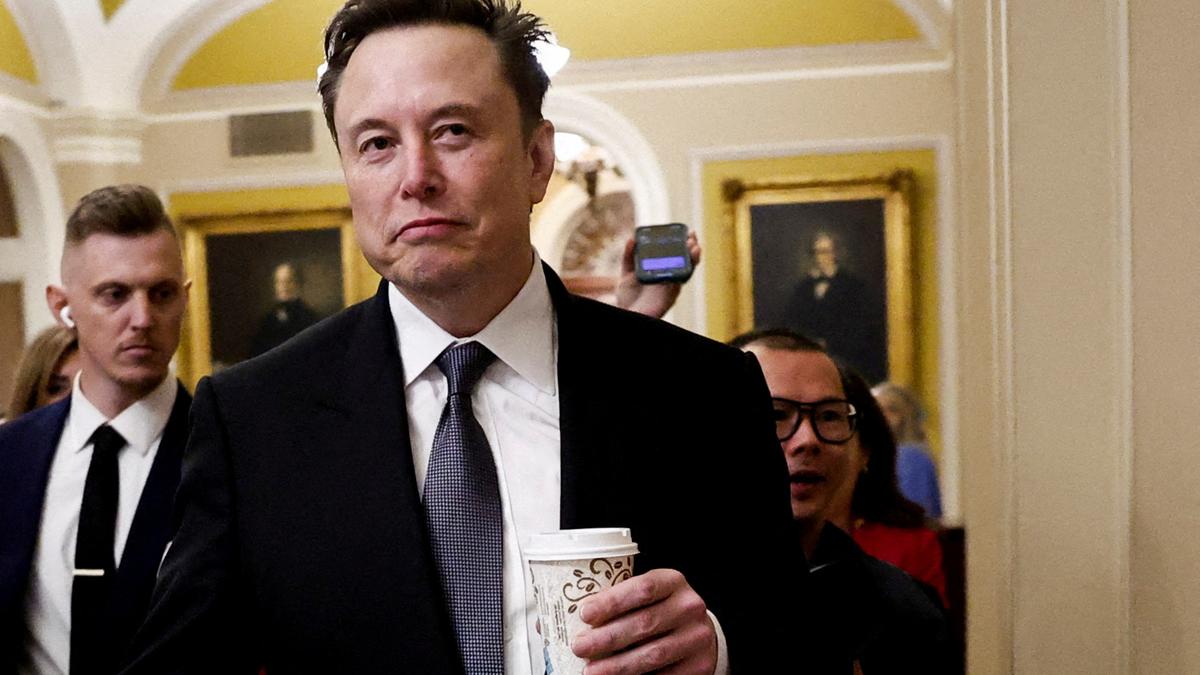
The German government sought to downplay efforts by tech entrepreneur Elon Musk to back the far-right Alternative for Germany, or AfD, party.
The German government on Monday sought to downplay efforts by tech entrepreneur Elon Musk to get involved in the country's general election campaign by again endorsing the far-right Alternative for Germany, or AfD, party.
Musk caused uproar over the weekend after backing the AfD in an opinion piece in a major newspaper, leading to the resignation of the paper’s opinion editor in protest.
“Freedom of expression also includes the greatest nonsense," government spokesperson Christiane Hoffmann said, adding that she wouldn't comment further on Musk's statements.
She did, however, say that “it is indeed the case that Elon Musk is trying to influence the federal election through his statement."
In that context, Hoffmann also pointed out that the AfD is being monitored by Germany's domestic intelligence service on suspicion of being right-wing extremist and that it has already been recognised as such in some individual German states.
Germany is to vote in an early election on February 23 after Chancellor Olaf Scholz’s three-party governing coalition collapsed last month in a dispute over how to revitalize the country’s stagnant economy.
Musk’s guest opinion piece for Welt am Sonntag published in German over the weekend, was the second time this month he had supported Alternative for Germany, or AfD.


IEA suggests working from home and avoiding air travel to mitigate rising energy prices amid the U.S.-Israel conflict with Iran.

NTSB investigates a near-collision between Alaska Airlines and FedEx jets at Newark, raising safety concerns in air traffic control.

Vietnam accelerates its shift to ethanol fuel as rising energy prices from the Iran war impact its economy.

Teenagers sue Musk's xAI, alleging its image-generator created explicit images of them as minors, sparking concerns over AI safety.

Shorts News:Watch: Netanyahu: Israel ‘acted alone’ in Iranian gas field attack

Indonesian billionaire Michael Bambang Hartono, co-founder of Djarum Group, has died at 86, leaving a significant legacy.

European nations, Japan, and Canada unite to ensure safe passage through the Strait of Hormuz and stabilize energy markets.

Some of the estimated 20 billion yuan ($2.9 billion) worth of equipment, including screen-printing production lines, will require export approval from Chinese regulators, according to the people. It wasn't immediately clear how much of the equipment would require approval or how long it would take.

Three men, including a Super Micro VP, charged with smuggling U.S. AI technology to China, threatening national security.

Trump compares U.S. strikes on Iran to Pearl Harbor in meeting with Japan's PM, highlighting the element of surprise.

Iran-Israel war: Follow the latest updates from The Hindu on the West Asia conflict on March 20, 2026

The closure of the Strait of Hormuz disrupts a vital artery of the global economy, triggering price increases and turmoil in energy markets; as supply shocks reshape the geopolitics of energy, countries like India, the U.S., and Russia recalibrate strategies amid shifting oil flows and rising dependence

EU lawmakers advance U.S. trade deal legislation, overcoming delays and adding safeguards amid concerns over compliance from the Trump administration.