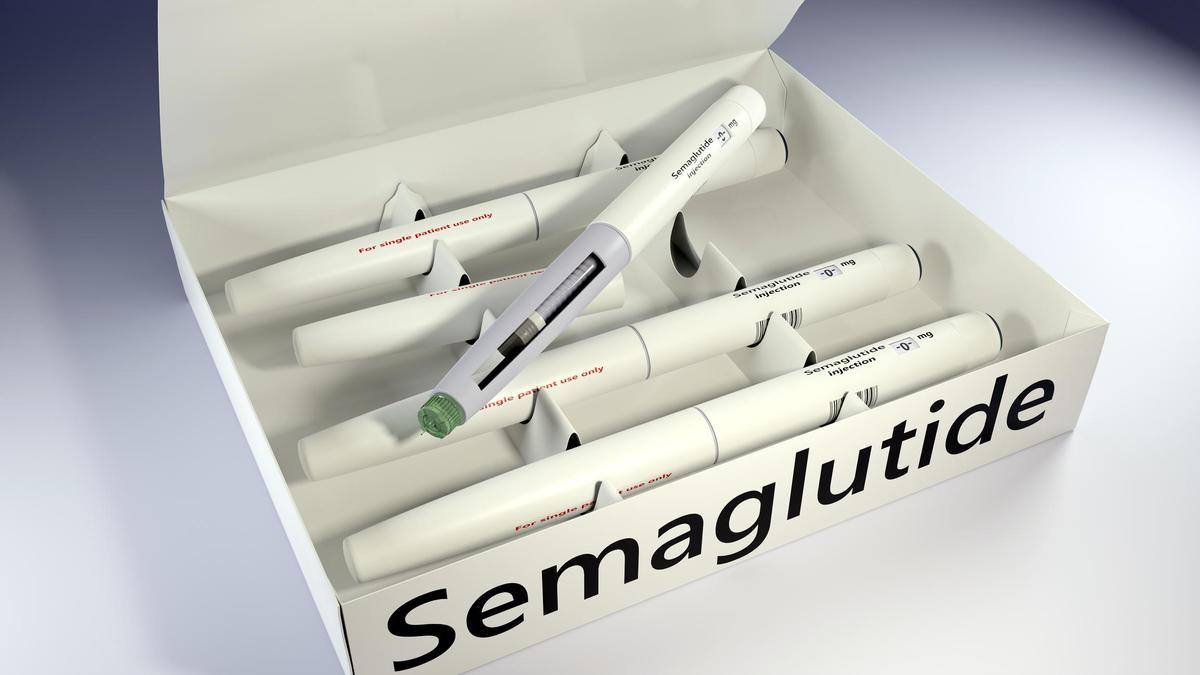
Generic semaglutide widens access, but doctors warn of misuse and quality risks
The Hindu
Generic semaglutide increases accessibility, but doctors caution against misuse and quality concerns
A patient walks into a clinic and asks not about diabetes control, but about weight loss drug. He has seen the results online, heard the name of the drug, and now, with prices falling, wants it. Doctors say such conversations are becoming increasingly common as Indian pharmaceutical companies begin rolling out generic versions of semaglutide, a drug used for type 2 diabetes and obesity, often described as the ‘magic drug’.
With the patent on semaglutide having expired in India, the cost dynamics of the drug are beginning to shift. Earlier, branded versions of semaglutide, primarily marketed by multinational companies, could cost anywhere between ₹8,000 and ₹12,000 per month depending on the dosage and formulation. With domestic pharmaceutical companies introducing generic versions, prices are expected to drop by 30–60% in the initial phase.
For K.V.S. Hari Kumar, endocrinologist and secretary of the Endocrine Society of India, said the impact of the generic entry is likely to be more gradual than widely assumed. He noted that semaglutide was already being used by a significant number of patients despite its higher price. “It is not that it was accessible only to a very small population. The market itself was sizable,” he said.
At the same time, Dr. Kumar raised concerns about manufacturing quality and supply chain requirements. As a protein-based drug similar to insulin, semaglutide requires strict cold chain maintenance and high manufacturing standards. “If substandard products enter the market, patients may face more harm than benefit, and the entire ecosystem could be affected,” he said. He expects that the initial influx of multiple players may stabilise over time. “In a year or two, only those with the ability to manufacture and maintain quality will remain. Others may exit,” he said.
Vijay Shekar Reddy, Professor and Head of Endocrinology at Gandhi Hospital, Secunderabad, cautioned against viewing the drug as a simple or standalone solution. “It is not a medication that should be bought and used casually. We have to monitor patients, educate them on how to take it, and ensure regular follow-up,” he said. He also flagged the need for long-term evidence when newer versions enter the market. “We do not look at efficacy alone. Safety and long-term outcomes are equally important,” he said.
Pharmacies in Hyderabad said generic versions had already begun reaching the market. “The drugs have been available for the last two days, but the impact on demand and whether more people are opting for the generic versions will become clearer from today [Monday, March 23, 2026],” said Neelesh Kanodia, who runs Yash Agencies in Ameerpet. He added that assessment of early demand was limited as most larger pharmacies had remained shut over Id followed by Sunday (March 22, 206).


Eight TSPC Maoists arrested in Hazaribag, Jharkhand, with weapons and ammunition seized during a police operation.

Four ambulances of a Jewish community service in London were set ablaze in a suspected antisemitic hate crime.

Gautham Manohar hopes his photographs serve as reminders of the Earth’s delicate beauty

Thousand Lights faces parking chaos and traffic congestion despite its political significance and ongoing development efforts.

Generic semaglutide increases accessibility, but doctors caution against misuse and quality concerns

Haryana Police removes 857 links to Badshah's 'Tateeree' for objectionable content, ensuring a safer digital environment.

Congress criticises Modi for not leveraging the upcoming BRICS+ Summit to address the West Asia crisis amid U.S. tensions.

Nagapattinam faces underdevelopment and resource challenges, impacting its rich heritage and the livelihoods of its fishing community.

One of the best games of 2025 makes it over to the PC, with a harder mode and bristling with new graphic tech

Air Force employee arrested for espionage, allegedly sharing sensitive information with Pakistani handlers since 2023 for money.

Four killed and several injured in a Bengaluru–Mysuru Expressway crash; driver arrested for alleged negligence.

Four injured in SUV collision with a stranded goods carrier on Narsingi ORR, causing significant traffic congestion.

Parliament Budget Session LIVE: Follow The Hindu's latest updates on the Parliament Budget Session on March 23, 2026.