Gender, agriculture and climate change Premium
The Hindu
Explore the vital role of women in agriculture, their challenges, and strategies for empowerment amidst climate change on International Women's Day.
Each year, March 8 is celebrated as International Women’s Day. This year, its significance has increased manifold as 2026 has been declared as the ‘International Year of the Woman Farmer’, a global initiative led by the Food and Agriculture Organisation. This is to recognise the vital role of women in food systems, raise awareness of their challenges, and promote policies for their empowerment and gender equality. The year aims to tackle issues such as unequal access to resources and decision-making, ultimately accelerating gender equality in agriculture.
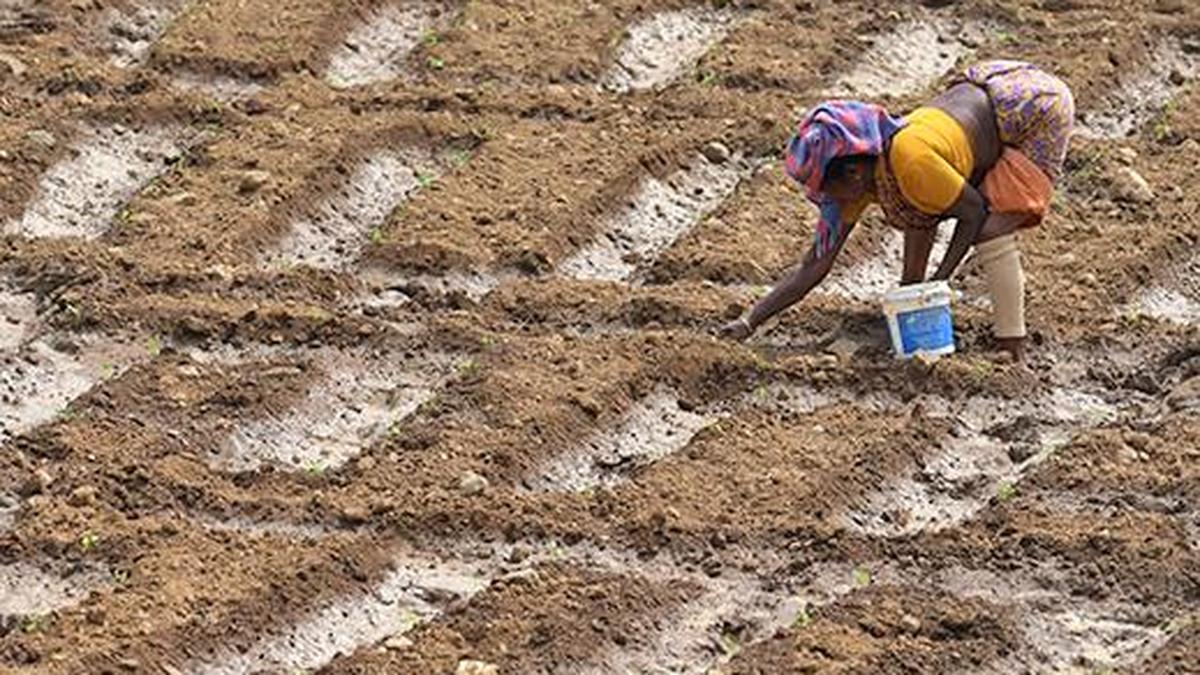
Around 64% of India’s agriculture workforce and about 70% of all farm tasks are being handled by women. In fact, around 80% of the rural women are engaged in agriculture. As per the Indian Council of Agriculture Research (ICAR) report of 2020, their participation is 75% in crop production, 79% in horticulture, 51% in post-harvest work and 95% in animal husbandry and fisheries. Migration of men for work is another factor in the feminisation of agriculture in certain regions. Women members left behind are burdened towards managing agriculture and domestic responsibilities with less family labour, further exacerbating their vulnerability. In fact, empirically, women are found to adapt less to climate change due to gendered limitations around access to information, technology and decision-making processes as well as the increased workloads.
Also Read: Rights, justice, action for India’s women farmers
Further, only 13.9 % of land holdings (agriculture) are in the name of women. This impacts them in multiple ways, including hampering their enrolment under various schemes such as Pradhan Mantri Kisan Samman Nidhi, Kisan Credit Card (KCC), Pradhan Mantri Fasal Bima Yojana (PMFBY), etc. Furthermore, the critical decisions regarding selection of crop, purchase of seed and selling the crop are taken by men while the back-breaking work, such as sowing, weeding, and harvesting of the crop, is performed by women. Thus, decisions regarding income from agriculture and how to spend this income are mainly taken by men. This is a paradox considering that income earned by women is mainly invested in the nutrition of family and education of children.
The Government of India and the States have been sensitive to the above and have taken a number of steps to empower women. These include reduced stamp duty for women on registration of land, registration of houses in the name of women under, 30% women beneficiaries under sub-mission on agriculture mechanisation, and the Namo Drone Didi scheme, etc. Further, Deendayal Antyodaya Yojana - National Rural Livelihoods Mission (DAY-NRLM), a dedicated programme of the Ministry of Rural Development for the rural women, is playing a stellar role in this. Around 10 crore households have been mobilised into 91 lakh self-help groups (SHGs), which have been further federated into 5.35 lakh village organisations (VOs) and 33,558 cluster-level federations (CLFs) under the programme.
The DAY-NRLM has not only enabled institutions of the poor and financial inclusion for the rural women, but it has also taken up a number of initiatives to improve the livelihoods of the SHG members. Accordingly, in the farm livelihoods, the initiatives taken up are Mahila Kisan Sashaktikaran Pariyojana (MKSP), a sub-scheme under the programme, universalisation of farm livelihoods through State Rural Livelihood Mission (SRLM), annual action plans, and value chain development interventions. The results have been highly encouraging with the adoption of sustainable agriculture, sustainable Non-Timber Forest Products (NTFP) collection and harvesting practices, and, most importantly, giving women the identity and status as ‘farmer’.


NDA announces candidates for 12 Kozhikode seats in Kerala Assembly polls 2026 as UDF and LDF ramp up campaigning.

As India formulates its next steps in the Israel-U.S.-Iran war, it is necessary to consider not only what it will mean for the whole region but also its own ties with each neighbour

CITU criticizes the Centre's privatization efforts for VSP, alleging employee removal over production increase and financial mismanagement.

Visakhapatnam Customs House's short film "Right Turn" wins Honourable Jury Mention at the 10th Indian World Film Festival.

Economist Arvind Subramanian advises CM Revanth Reddy on strengthening Telangana's finances during a meeting in Hyderabad.

Supreme Court emphasizes stakeholder consultation for legal education reforms, hesitant to change five-year law course duration.

Authorities in Andhra Pradesh are set to tranquillise a roaming tiger near Annavaram temple for safety and conservation.

MEA criticizes USCIRF for bias, urging focus on vandalism of Hindu temples in the U.S. over selective criticism of India.

Bengaluru's Urban Development aims to beautify underutilized flyover spaces, enhancing city aesthetics and improving green cover initiatives.

Indian Navy warships escort merchant vessels in the Gulf of Oman, ensuring safe passage amid regional tensions under Operation Sankalp.

A rare crab species exhibiting both male and female traits was discovered in Silent Valley, revealing unique biological characteristics.

Gujarat court convicts five in 2016 Una flogging case; punishment announcement scheduled for March 17, 2026.

The Greater Bengaluru Authority (GBA) has extended the deadline for citizens to submit claims and objections to the revised draft voters’ list for the upcoming elections to five city corporations under its jurisdiction until March 20.