Future of work: India’s youth under the new Codes
The Hindu
The four Labour Codes aim to promote formalisation of employment and improve ease of doing business; gap in coverage of benefits is a major challenge
India’s Labour Codes came into force in November 2025, marking the most significant labour law reform since Independence. By consolidating 29 central laws into four Codes, the reform aims to simplify compliance, universalise minimum wages, expand social protection, and modernise workplace regulation. Policy debates often portray the Codes as a balancing act between labour flexibility and worker protection.
Prior to the consolidation, India’s labour regime was fragmented across multiple Central and State laws governing wages, industrial relations, social security, and working conditions. With labour on the Concurrent List, this resulted in uneven enforcement and wide inter-State variation. Crucially, most protections applied only to the formal sector, leaving informal, contract, and casual workers, who form the bulk of the workforce, outside the scope of regulation. Against this backdrop, the government introduced four Labour Codes between 2019 and 2020.
In 2024, India’s median age was under 30, compared to around 40 in China and 50 in Japan. With nearly half the population still young, understanding how these changes affect youth employment is critical.
Despite its demographic advantage, India faces a pronounced youth employment crisis. According to the Periodic Labour Force Survey (PLFS) 2023-24, labour force participation among those aged 15-29 stood at 46.5%, far below the 76.4% observed among those aged 30-59. Youth unemployment is 10.2%, compared to less than 1% for older adults.
Gender disparities further widen these gaps. Only 28.8% of young women participate in the labour force, compared to 63.5% of young men. In urban areas, unemployment among young women reached 20.1%.
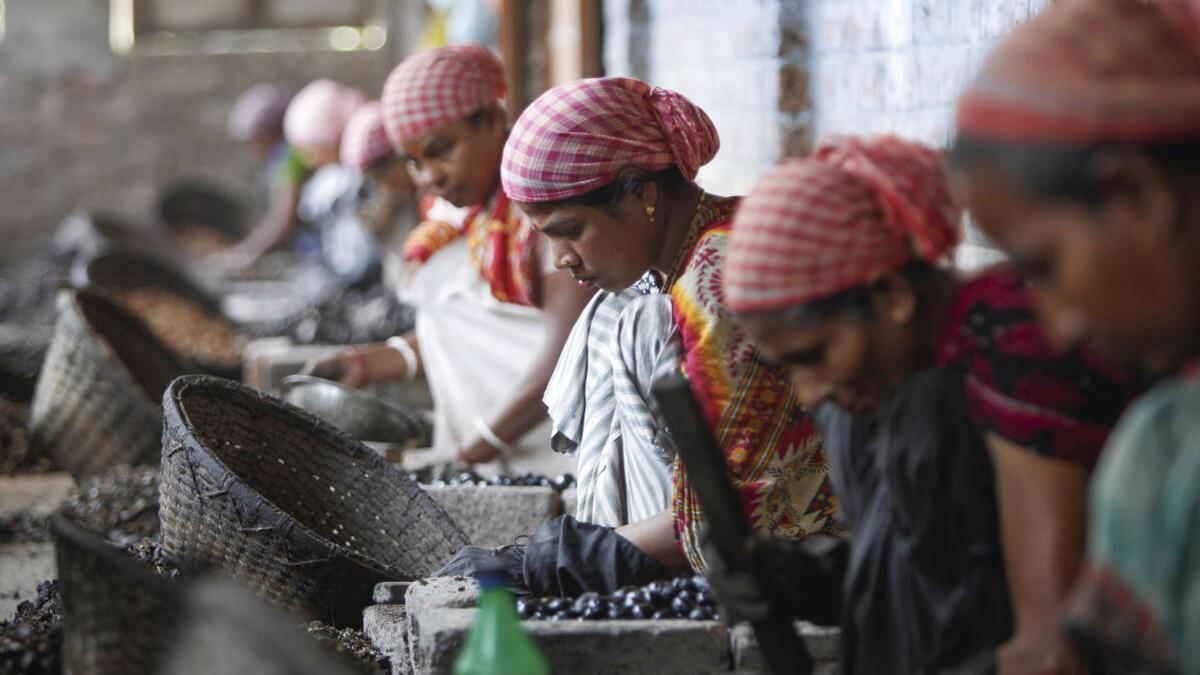
Across all PLFS rounds, young workers are more likely than adults to be unpaid family workers within self-employment. They are disproportionately concentrated in informal employment. In 2023-24, nearly 90% of young workers were informally employed. Even within regular salaried jobs, 60.5% of young regular workers lacked social security, compared to 50.5% among workers above 30.


Supreme Court seeks fresh HC hearing after convict flags unfair 20-year bail and reduced prison term
Supreme Court orders fresh High Court hearing after convict challenges 20-year bail and reduced prison term as unfair.

OnePlus on Thursday launched the new wireless earbuds, the OnePlus Nord Buds 4 Pro, in India. The Nord Buds 4 Pro comes with spatial audio and real-time active noise cancellation (ANC) and claims to block up to 55 decibels of noise

Guillotine in Lok Sabha fast-tracks approval of pending Demands for Grants by voting on all simultaneously during budget sessions.

Shashi Tharoor affirms UDF's Kerala poll strategy favors elected MLAs for CM amid strong anti-incumbency against LDF.

How restaurants that don't need LPG to function are thriving during the current crisis

Puducherry's upcoming elections test the NDA's governance model amid opposition rifts and promises of stability and welfare delivery.

India appoints Vikram K. Doraiswami, current U.K. High Commissioner, as new Ambassador to China.

Discover Ajanta’s ancient Buddhist murals and hidden stories in Ashwin Prabhu’s engaging children’s book, Magnificent Murals.

Kerala Assembly polls: BJP announces second list of 39 candidates; Kummanam to contest from Aranmula
BJP announces second list of 39 Kerala Assembly candidates, including Kummanam from Aranmula and C.C. Mukundan from Nattika.

TMC's Derek O'Brien criticizes the Transgender Persons Bill 2026 as draconian and urges its withdrawal due to rights concerns.

Delhi court rejects Lalu Prasad Yadav's plea for unrelied documents, emphasizing fair trial without procedural delays.

Delhi experiences cloudy weather with light rain, 17.6°C minimum temperature, and moderate air quality, says IMD and CPCB.

Kunal Kemmu, who made his directorial debut in 2024 with ‘Madgaon Express’ and is known for his work in movies such as ‘99’ , ‘Zakhm’ and ‘Go Goa Gone’, said the new venture marks a step toward creative independence.