From field to screen: the changing landscape of ecology research Premium
The Hindu
Explore how AI and technology are transforming ecology research from traditional fieldwork to innovative data-driven approaches.
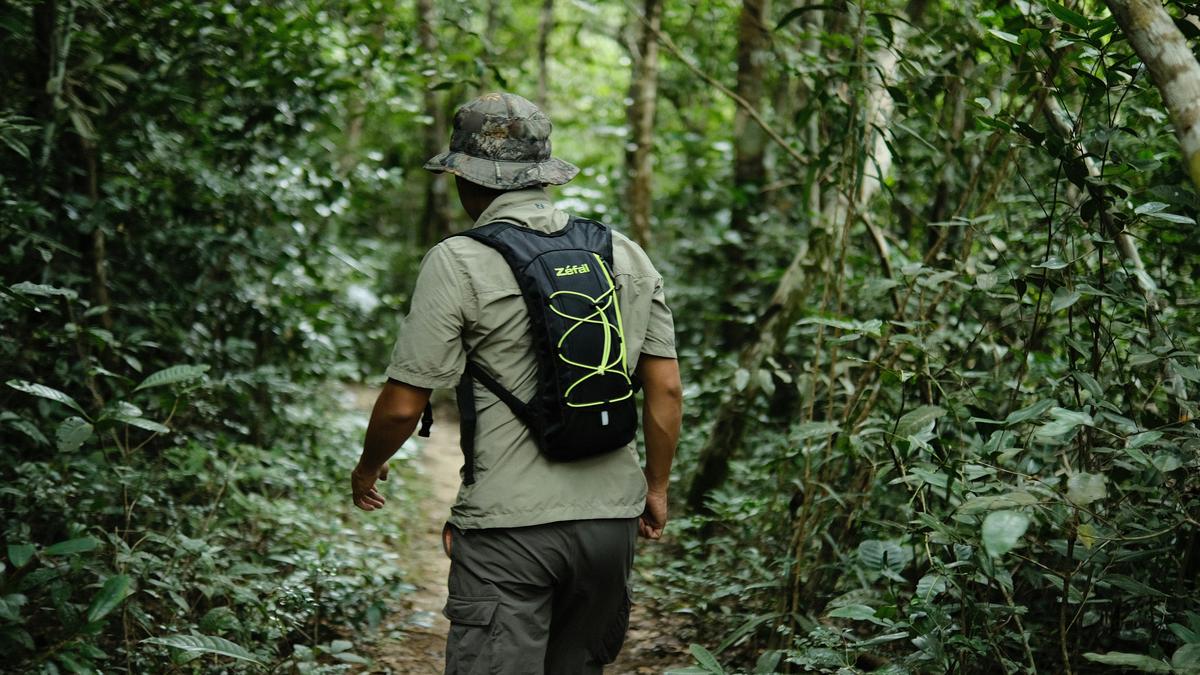
For centuries, ecology and biology have been built on muddy boots, mosquito bites and long days spent in forests, wetlands and oceans. Fieldwork was not just a method; it was an identity. To be an ecologist meant to be outdoors, immersed in nature, observing life in its raw, unpredictable complexity. But the age of artificial intelligence is quietly — and decisively — redrawing this relationship. Today, fieldwork is increasingly transforming into in silico work, carried out on computer screens, powered by algorithms, sensors, and automated systems.
The shift is neither accidental nor trivial. It is driven by an unprecedented explosion of data. More than a billion natural history specimens have been digitised globally, many linked with genetic information. Citizen scientists upload millions of observations to platforms such as iNaturalist, while satellites, drones, camera traps, acoustic sensors, and environmental DNA samplers stream data continuously from land, sea, and air. AI systems now classify species, track migration, model distributions, and even predict ecological futures — which are all tasks that once demanded years of painstaking field observations.
In this context, the romantic ideal of physically walking through forests to document biodiversity begins to look inefficient, even unnecessary. Why trek through dense jungles, risking logistics, health and carbon emissions, when sophisticated robotic cameras can sit silently for years, capturing images day and night? Why manually count insects when AI-enabled camera traps can identify thousands of species automatically? And why rely on sporadic human visits when sensors never sleep?
Robotic and automated systems do offer clear advantages. They reduce human disturbance to sensitive habitats. They can operate in extreme or inaccessible environments — including the deep ocean and from amid dense canopies — and where human presence is limited or dangerous. They generate standardised, high-resolution data across vast spatial and temporal scales, something no individual researcher could ever achieve. In many cases, insisting on physical presence may add little scientific value while consuming time and resources better spent analysing the data.
Indeed, the very idea that ecological understanding must come from direct bodily immersion is being challenged. Some of the most influential ecological insights of recent years have emerged from computer-based analyses rather than hands-on field studies. Researchers studying flowering times, invasive species or insect declines increasingly work indoors, writing code rather than field notes. For practical purposes their ecosystems of interest now exist as abstract objects on the screen.
From this perspective, physically going to a forest can appear almost irrelevant. Forests today are already saturated with technologies: camera traps fixed to trees, microphones recording soundscapes, drones scanning canopies, satellites tracking phenology from space. AI does not merely supplement fieldwork but replaces large parts of it. The forest, in effect, comes to the scientist as streams of data. What matters is not where the scientist stands but how intelligently she is able to interpret the data.


Witness the blood moon during the lunar eclipse day in India and other countries, through pictures here.

Discover the fascinating world of hydroxyl megamasers, powerful cosmic lasers revealing secrets of distant galaxies and the universe's evolution.

Discover how India's unique resources could lead to groundbreaking advancements in global cancer care and research.

Discover groundbreaking research on Mars lightning, innovative smart materials, and a universal ageing marker in just one minute.

A launch vehicle’s ascent battles gravity to gain orbital velocity, while re-entry is a controlled struggle against the atmosphere to systematically shed that immense kinetic energy through aerobraking, thermal protection and precise guidance within the re-entry corridor. Operating as a semi-ballistic body, the crew module performs a deorbit burn, manages communication blackout, and deploys a three-stage parachute system to ensure a safe splashdown.

The Nissan Gravite is a budget-friendly seven-seater MPV designed for practical family use in India. Sharing its platform with the Renault Triber, it offers flexible 2-to-7 seating, a removable third row, generous boot space, and a fuel-efficient 1.0-litre petrol engine delivering around 19 km/l. With features such as a floating touchscreen, wireless connectivity, digital instrument cluster, and six airbags as standard, the Gravite blends affordability, safety and everyday usability in a compact footprint tailored to urban and small-family needs.

Discover the dedication of Tamil Nadu's teenage cyclists competing at the Track Asia Cup, balancing sport and academics.

Explore how Salar de Pajonales in Chile serves as a vital Mars analogue for studying microbial life and ancient fossils.

NASA revamps its Artemis lunar program to address delays and ensure a Moon landing by 2028.