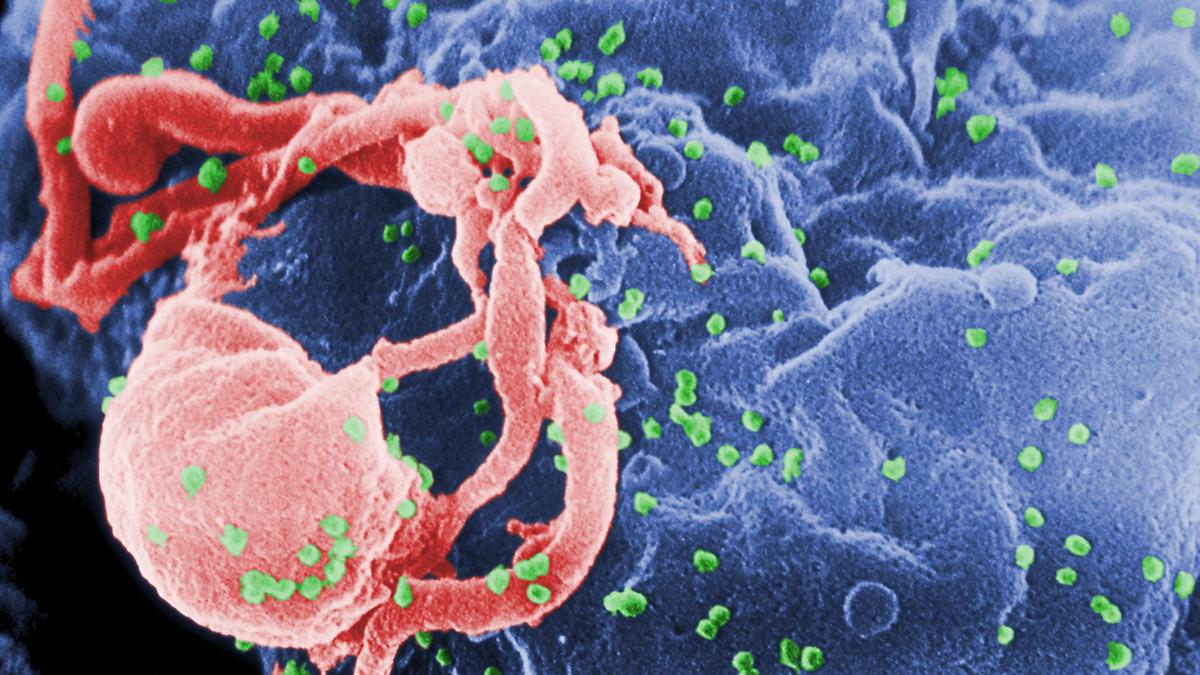
Four new studies report progress towards long-awaited HIV vaccine Premium
The Hindu
Researchers at the Scripps Research Institute and the Massachusetts Institute of Technology have outlined two promising nanoparticle-based vaccine candidates: N332-GT5 and eOD-GT8. They have shown that these novel vaccines could help the body make two classes of broadly neutralising antibodies to attack HIV.
In early 1981, Michael Gottlieb, an assistant professor at the University of California Los Angeles Medical Centre, wanted to teach some tenets of immunology to a post-doctoral fellow in his laboratory. Dr. Gottlieb asked the post-doc to select a patient from the hospital who displayed some immunological features that they might find interesting. The post-doc found a patient who had a relatively rare infection called pneumocystis pneumonia and had been admitted after sudden, unexplained weight loss.
During the course of their discussion, the hospital doctors referred four more patients with the same infection. Dr. Gottlieb published a paper detailing these five cases in a small American journal called Morbidity and Mortality Weekly. At the time, Dr. Gottlieb had no idea his paper was about to change the field of immunology forever.
That paper was the first report of acquired immunodeficiency syndrome (AIDS).
Today, nearly half a century after Dr. Gottleib’s landmark publication, AIDS still has no vaccine or cure. This anomaly in humanity’s otherwise remarkable track record in tackling major infectious diseases is a result of several factors. Chief among them is that the replication of the human immunodeficiency virus (HIV), which causes AIDS, is an incredibly error-prone process that results in multiple variants of the virus circulating.
The sheer number of all the different strains circulating in the world is in fact the biggest challenge to an HIV vaccine today.
To put it in perspective, HIV has more variants circulating in a single patient at any given point of time than influenza cumulatively generates in one year in all influenza patients around the world combined. And influenza is the second-best virus in terms of genetic variation.
When the immune system encounters a virus, one of its responses is to produce antibodies highly specific to proteins on the virions’ surface. Each antibody is unique to a small piece of a given protein, and the immune system can generate antibodies against any given fragment of any protein.


Discover the Minor Planet Centre, the key hub for tracking and verifying observations of small solar system bodies.

In this week's Science for All newsletter, XX explains

Test your knowledge with the quiz on Science films at the Oscars through history

Set between the Siwalik hills and the plains, Butwal offers travellers a mix of regional cuisine, pilgrimage trails to Lumbini and the comfort of Hyatt’s new hospitality landmark

Explore 2026's wallpaper trends in India, highlighting botanicals and handmade designs that enhance modern homes with nature-inspired aesthetics.

Mercedes-Benz CLA 250+ with EQ Technology review: design, performance, range and features explained. Discover how the new electric CLA combines advanced AI, long range, fast charging and futuristic styling for the next generation of luxury EVs.

AI tool for sparrow conservation

BTS’s comeback with ‘Arirang’ marks a major global music event. When does the album release, and where can you watch their concert live stream? We have all the details

The 2026 U.S. cholesterol guidelines urge starting screening and treatment at 30 to prevent cardiovascular disease effectively.

Olam Festival 2026 in Thiruvananthapuram returns March 27-29 with 120+ vendors, music, art, and cultural zones.

A few storytellers in Thiruvananthapuram share their journeys, challenges, and evolving methods on World Storytelling Day, inspiring young minds.

76-year-old Kurian Jacob from Kerala triumphs with seven medals, including five golds, at the Open Masters Games in Abu Dhabi.

Explore the nature of the human mind as an emergent property of brain activity and complex neural interactions.