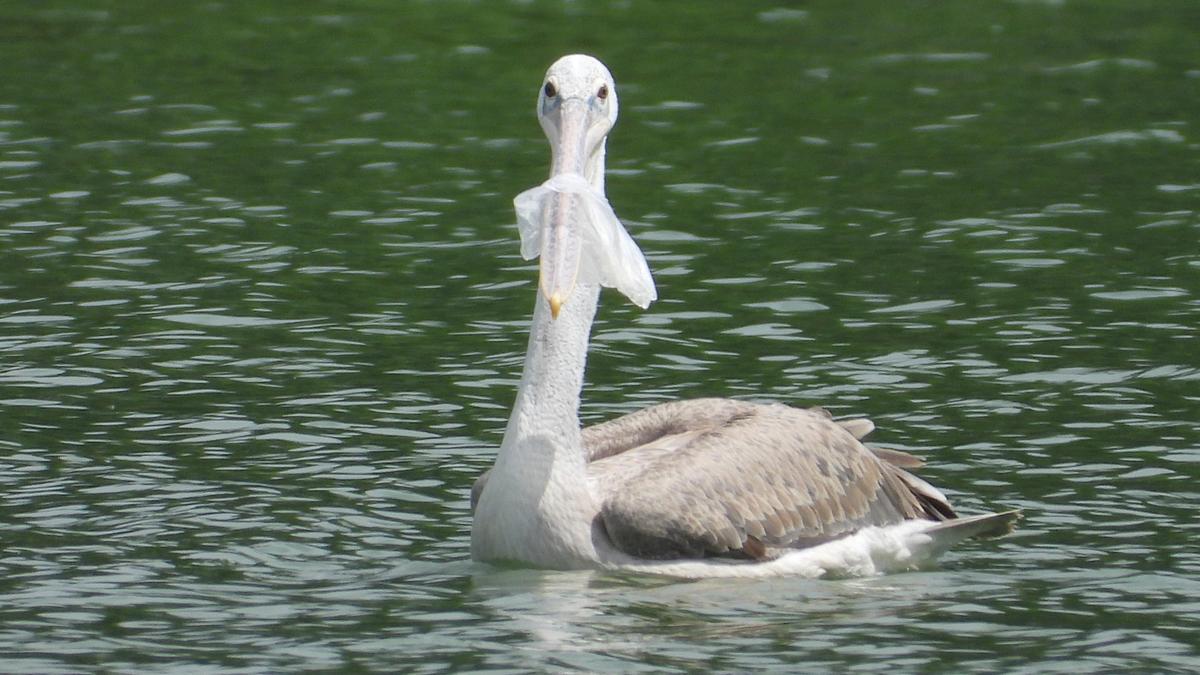
Fishnets, discarded plastics in tanks pose threat to water birds, finds census
The Hindu
Threat to native bird species from fishnets in irrigation tanks highlighted during Tamirabharani Water Bird Census 2025.
Native bird species and migratory birds, which are facing serious thereat from pollution and encroachments of waterbodies, are now facing yet another threat, that of fishnets spread in irrigation tanks for netting fishes.
This threat has been spotted during the 15th Tamirabharani Water Bird Census held recently by ATREE’s Agasthyamalai Community Conservation Centre in Manimutharu here as cormorants and a few other water birds were found entangled in discarded fishnets, plastics and clothes.
India is home to three common species of cormorants: the Little Cormorant (Microcarbo niger), the Indian Cormorant (Phalacrocorax fuscicollis), also known as the Indian Shag, and the Great Cormorant (Phalacrocorax carbo). These birds can be distinguished by their size, head shape, and behavior. Their presence is crucial for wetland ecosystems as they influence fish populations and interact with other water birds.
Cormorants, a medium to large-sized, black-colored water birds, are expert fish hunters and are known for their cooperative fishing behavior as groups of cormorants often work together, diving underwater to herd and catch fish. When one bird dives, others follow, creating a synchronized hunting pattern. After capturing the prey, they surface and swallow the head of the fish first. This cooperative fishing activity often attracts other birds like Terns, Gulls that take advantage of the stirred-up fish.
Traditionally, fishing in wetlands involved methods like hand netting, hook and line fishing, and seine netting. Seine nets were typically used at the end of the season when wetlands dry up, minimizing stress on fish populations. This is allowed for a balance where cormorants and other water birds could coexist with human fishing activities, as their food supply remains largely unaffected, and the birds face minimal risks from fishing nets.
“However, with increasing human population pressures, fishing practices in wetlands have drastically changed. To meet the rising demand for fish, fishing activities have intensified. Multiple seine nets are now used simultaneously, and fishing often takes place during the day, fully covering the tanks and leaving little to no fish for cormorants and other water birds. This aggressive fishing not only depletes the birds’ food sources but also poses direct threats to the safety of water birds,” A. Thangivaivel, Research Associate ATREE – ACCC, told The Hindu.
Cormorants, which choose nesting sites based on fish availability and safety, are at risk due to this fishing practice even during the day. They often nest in thorn trees inside tanks and require abundant fish during the breeding season to feed their chicks. With the depletion of fish and the frequent presence of nets, cormorants often become entangled while hunting, leading to injuries or even death. Chicks in the nests may starve if their parents are caught in nets for extended periods, he says.


Abhishek Banerjee challenges BJP's Suvendu Adhikari in Nandigram, pledging community health initiatives if Trinamool Congress wins.

Rising LPG shortages in Karnataka boost firewood demand, reviving an informal market as households and hotels seek alternatives.

Against the backdrop of intense poll activity, a 400-metre stretch of an arterial road in the outskirts of Chennai (technically in Madurapakkam panchayat under Tambaram assembly constituency) presents a salute to the idea of res publica, which underpins India’s system of governance, where citizens have a say, at least before a government is securely ensconced in the seat of power. A Republic Day initiative shines bright every night

Fadnavis claims zero FIR in Ajit Pawar crash is a defamation attempt by Karnataka against Maharashtra's investigation efforts.

Set to unfold as a one-day pop-up on April 5, the Easter Sadya brings together both vegetarian and non-vegetarian menus, offering a peek into the food traditions of the Syrian Christian (Nasrani) community. While the traditional Sadya is often associated with dishes such as sambar, avial, and rice, this version expands to include community-specific festive dishes.

BJP nominates mother of R.G. Kar victim Abhaya to contest from Panihati in West Bengal Assembly elections.

Veteran Malayalam actor-director E.A. Rajendran passes away at 71, leaving behind a rich legacy in the film industry.

Dakshina Kannada Zilla Panchayat has rolled out digital mode of water bill generation and collection in 23 gram panchayats on a pilot basis for the first time in Karnataka. This is set to be extended to the remaining 200 panchayats shortly, according to the Zilla Panchayat Chief Executive Officer Narwade Vinayak Karbhari.

Bengaluru police questioned a man carrying ₹6 lakh for medical expenses at Vidhana Soudha, later releasing him after verification.

BJP accuses Bengaluru's Congress government of corruption in e-Khata issuance, halting infrastructure projects due to financial mismanagement.

Misinformation in Hyderabad sparks panic buying, causing disruptions as residents react to unfounded rumors of an impending lockdown.

Bengaluru Metro extends services until 2 a.m. on March 28 for IPL match, ensuring convenient travel for spectators.

A bus truck-collision in Andhra Pradesh's Markapuram district, killing several. Catch LIVE updates here!