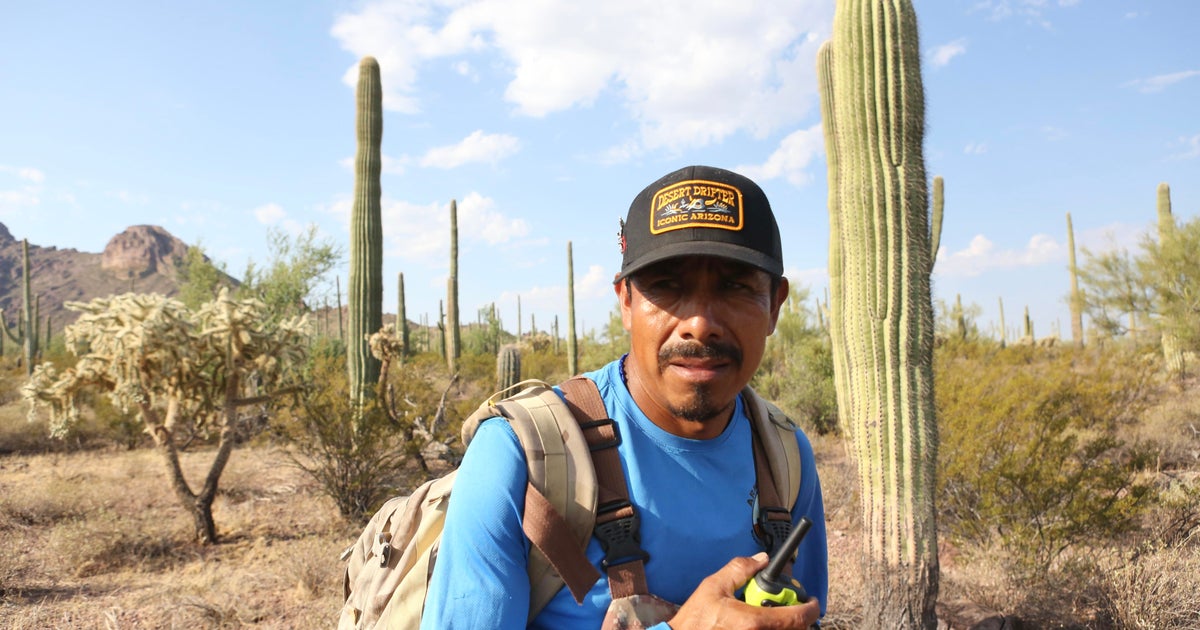
Finding missing migrants along the U.S.-Mexico border, the world's deadliest land migration route
CBSN
Ajo, Arizona — The search began with a prayer in the early morning hours, as the sun emerged from the mountains that adorn this picturesque, yet often deadly, landscape near the U.S.-Mexico border.
It was the third search that a grassroots group of volunteers known as the Armadillos had embarked on this summer with the hopes of finding José Salinas Pineda, a 21-year-old Mexican migrant who had been missing since early June.
Back in their homes in southern California, the volunteers are construction workers, gardeners and cablemen. Like the people they look for, most are also immigrants. But in the desolate Arizona desert, the volunteers share a humanitarian mission: to offer some closure to distraught families by finding the remains of their loved ones.


We share our planet with maybe 10 million species of plants, animals, birds, fish, fungi and bugs. And to help identify them, millions of people are using a free phone app. "Currently we have about six million people using the platform every month," said Scott Loarie, the executive director of iNaturalist, a nonprofit.

Washington — As voters gear up for the midterm elections in November that will decide control of the House and Senate, the Supreme Court is set to weigh Monday whether states can count mail ballots that are postmarked by, but arrive after, Election Day.

It was in June 2020 when Linda Dane learned the disturbing circumstances of how her long-lost brother Gary Herbst's skull had been found by a dog in rural Barron County, Wisconsin. In:

A possible meteorite crashed into a Houston area house on Saturday night, tearing through the roof and two stories of the home, officials said. In:

The Senate on Saturday blocked an amendment that would ban transgender athletes from playing in women's sports, rejecting one of President Trump's priorities as he pressures Congress to act on a broad voting bill.

Robert Mueller, a former FBI director who led the investigation into allegations of Russian meddling in the 2016 election, has died, multiple sources told CBS News on Saturday. He was 81. In:

Kendra Duggar was arrested for misdemeanor charges including endangering the welfare of a child and false imprisonment, according to online records. The charges come a day after her husband Joseph Duggar was charged with molestation. In:

At ski resorts across the West this winter, viral images showed chairlifts idling over brown terrain in places normally renowned for their frosty appeal. Iconic mountain towns like Aspen, Colorado, and Park City, Utah, were seen with shockingly bare slopes, as the region endured a historic snow drought that experts warn could bring water shortages and wildfires in the months ahead. In:

The NCAA accused online sportsbook DraftKings of trademark infringement associated with the association's men's and women's basketball tournaments and filed a complaint in federal court seeking an emergency restraining order. In:

Airport delays continue to worsen as a bill to fund the Department of Homeland Security failed to advance in the Senate Friday. In:

Five people who were charged in connection to the Feeding Our Future scheme pleaded guilty to wire fraud this week. In:

Actor Nicholas Brendon, best known for his role as Xander Harris in the popular television series "Buffy the Vampire Slayer," has died, according to his family. He was 54. In:

Washington — The Trump administration has been strategizing methods and options to secure or extract Iran's nuclear materials, according to multiple people briefed on the discussions, as a U.S.-Israel-led military campaign against Tehran enters a more uncertain phase. In: