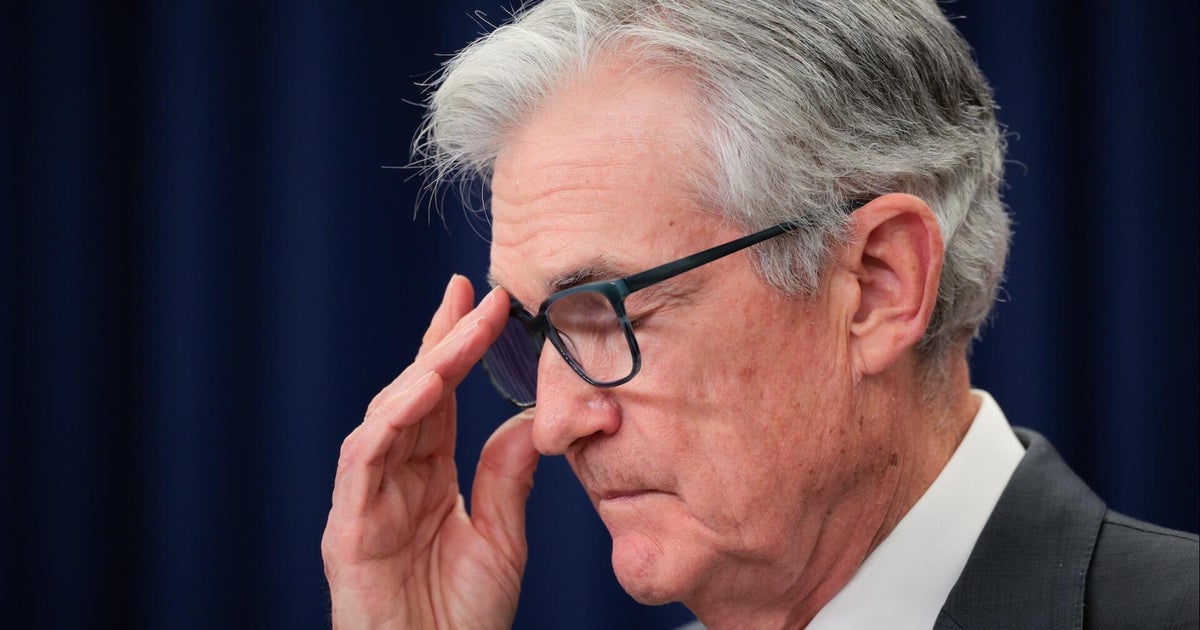
Federal Reserve holds interest rates steady, citing elevated economic uncertainty
CBSN
The Federal Reserve on Wednesday left its benchmark interest rate unchanged, marking the central bank's second consecutive pause in 2026. In its policy statement, the Fed said U.S. economic uncertainty remains elevated, adding that the impact of the Iran war also remains unclear. Edited by Alain Sherter In:
The Federal Reserve on Wednesday left its benchmark interest rate unchanged, marking the central bank's second consecutive pause in 2026. In its policy statement, the Fed said U.S. economic uncertainty remains elevated, adding that the impact of the Iran war also remains unclear.
The Fed maintained the federal funds rate — what banks charge each other for short-term loans — in its current range of 3.5% to 3.75%. The decision to keep rates steady was widely expected by investors.
Fed officials indicated they still expect to cut their key rate once in 2026, the same projection as in December. By keeping their forecast for a rate cut this year and next, policymakers appear to expect that the spike in energy prices from the Iran war will have a transitory effect on inflation and the economy.
The central bank is facing a murkier economic outlook for the U.S., with the Iran war causing energy prices to spike and threatening to drive up inflation. Before the start of the war on February 28, economists had penciled in the next rate cut for the Fed's June meeting, but the probability of that happening is now seen as slim, according to CME FedWatch, which monitors trader sentiment.
"The Fed is choosing to look through the fog of conflict, for now. A dual mandate Federal Reserve is not going to rock the interest rate boat during a supply shock," said Jamie Cox, managing partner for Harris Financial Group, in an email after the Fed's decision.


We may receive an affiliate commission from anything you buy from this article. In:

Companies in the U.S. that paid tariffs invalidated by the Supreme Court in February are legally entitled to refunds, a federal judge ruled on Wednesday. In:

Target will invest another $2 billion in its business this year to spruce up stores, remodel locations and invest in workers, the retailer said Tuesday as it outlined plans to try to reverse a persistent sales malaise and reclaim its footing in fashion and home categories. In:

Defense Secretary Pete Hegseth deemed artificial intelligence firm Anthropic a "supply chain risk to national security" on Friday, following days of increasingly heated public conflict over the company's effort to place guardrails on the Pentagon's use of its technology. Jo Ling Kent contributed to this report. In: