Venezuela's new gold rush moves at "Trump speed," but ignores a $25 million question
CBSN
On the day that marks 13 years since the death of Venezuelan socialist strongman Hugo Chávez and two months after the Jan. 3 U.S. operation that captured Nicolás Maduro, the scene in Caracas looks strikingly different from the anti-U.S.-imperialism rhetoric that founded Chavismo and was echoed by his successor. In:
On the day that marks 13 years since the death of Venezuelan socialist strongman Hugo Chávez and two months after the Jan. 3 U.S. operation that captured Nicolás Maduro, the scene in Caracas looks strikingly different from the anti-U.S.-imperialism rhetoric that founded Chavismo and was echoed by his successor.
On the ground, a new era marked by promises of gold, critical mineral mining and oil extraction is rolling out fast. Dozens of oil and mining executives, invited by the White House and warmly received by the Venezuelan interim government, are crowding Caracas' U.S. Embassy-recommended hotels and heading out on excursions to explore Venezuela's vast resource potential.
The U.S. Department of State and the Bolivarian Republic of Venezuela jointly announced Thursday the restoration of diplomatic ties, broken in 2019 during President Trump's first term. The statements promise the move will "facilitate joint efforts to promote stability, support economic recovery, and advance political reconciliation in Venezuela." Caracas expressed confidence the process "will contribute to strengthening understanding and opening up opportunities for a positive relationship and shared benefit."
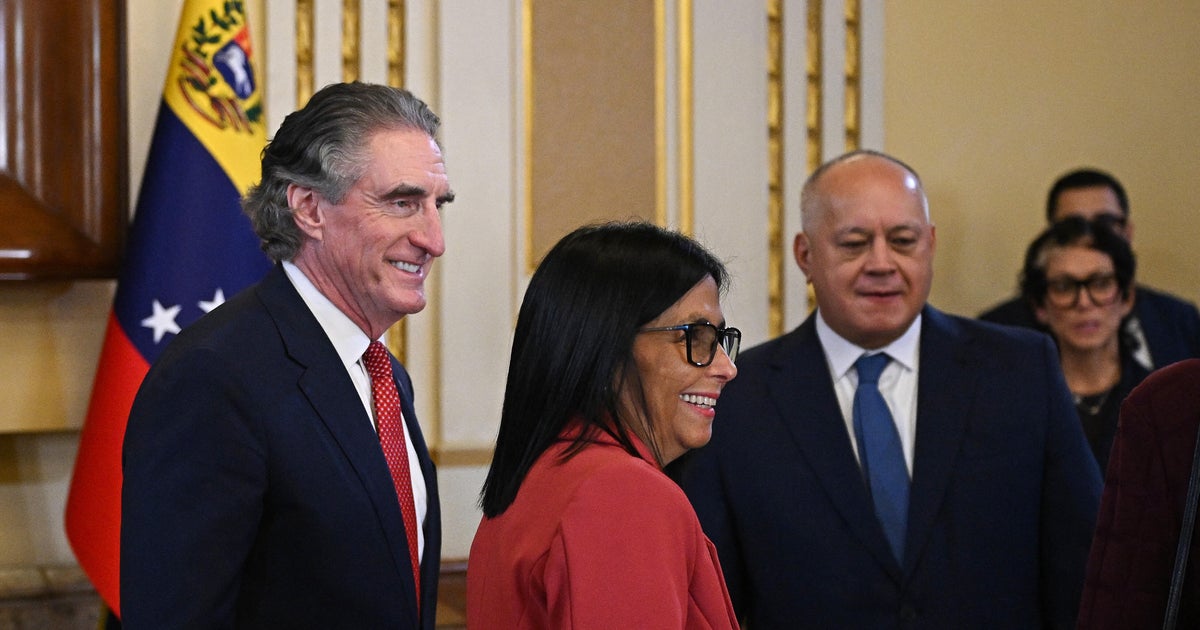
U.S. Secretary of the Interior Doug Burgum wrapped a two-day visit to Caracas on Thursday, saying, "We've just come off a fantastically positive, constructive two days of meetings. We had dozens of companies here from the United States that were interested in investing in Venezuela, coming back to Venezuela."
Burgum thanked "Madam President" Delcy Rodríguez and her brother, Dr. Jorge Rodríguez, president of the National Assembly, for moving at "Trump speed," passing a law on hydrocarbons, key parts of petroleum and natural gas, that "improves transparency, consistency and cuts red tape" and "creates an environment where companies feel comfortable that they want to be able to reinvest and come back here."


Defense Secretary Pete Hegseth deemed artificial intelligence firm Anthropic a "supply chain risk to national security" on Friday, following days of increasingly heated public conflict over the company's effort to place guardrails on the Pentagon's use of its technology. Jo Ling Kent contributed to this report. In: