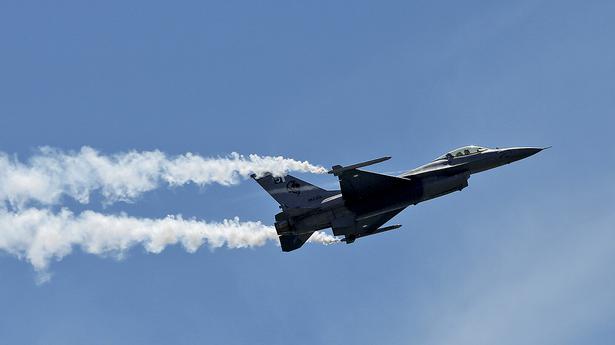
F-16 programme an important part of U.S.-Pakistan bilateral relationship: U.S.
The Hindu
“Pakistan’s F-16 programme is an important part of a broader U.S.-Pakistan bilateral relationship, and this proposed sale will sustain Pakistan’s capability to meet current and future counterterrorism threats,” said U.S. State Department Spokesperson Ned Price
The F-16 programme is an important part of a broader US-Pakistan bilateral relationship and this fleet will allow the country to support counterterrorism operations, the Biden administration has said, defending its decision to provide a $450 million worth of military sustenance programme to Pakistan.
On September 8, the Biden administration approved a $450 million F-16 fighter jet fleet sustainment programme to Pakistan to help it meet current and future counterterrorism threats, in Washington’s first major security assistance to Islamabad in four years.
ALSO READ: Three to tangle: On U.S. refitting Pakistan F-16s
“We did recently notify Congress of a proposed foreign military sale valued at $450 million for maintenance and sustainment services for the Pakistani Air Force's F-16 programme,” State Department Spokesperson Ned Price told reporters at his daily news conference on Tuesday.
“Pakistan is an important partner in a number of regards, an important counterterrorism partner. And as part of our longstanding policy, we provide lifecycle maintenance and sustainment packages for U. S.-origin platforms,” he said in response to a question.
“Pakistan's F-16 programme is an important part of a broader U.S.-Pakistan bilateral relationship, and this proposed sale will sustain Pakistan's capability to meet current and future counterterrorism threats by maintaining the F-16 fleet,” Mr. Price said.
“Now, this is a fleet that allows Pakistan to support counterterrorism operations, and we expect Pakistan will take sustained action against all terrorist groups,” said the Spokesperson.


Iran rejects a U.S. ceasefire proposal, outlining five conditions for peace amid ongoing conflict with Israel.

Gulf states warn the UN of an existential threat from Iran's strikes, calling for condemnation and monitoring of the situation.

Matt Brittin, ex-Google executive, appointed as BBC's new director general amid ongoing $10 billion lawsuit from Trump.

Pakistan's PM Sharif briefs Saudi Crown Prince on mediating U.S.-Iran talks and reaffirms support amid regional tensions.

Iranian military ridicules Trump's ceasefire claims, asserting U.S. negotiations are merely self-deceptions amid strategic failures.

Denmark's recent election results leave Prime Minister Mette Frederiksen's future uncertain amid a fragmented parliamentary landscape.

An explosion at Valero's Port Arthur refinery caused a temporary shutdown but resulted in no reported injuries.

Anduril and Palantir Technologies are working together to develop software for U.S. President Donald Trump’s Golden Dome antimissile shield initiative, a source familiar with the matter said

A federal judge weighing the merits of the Pentagon’s designation of rising Silicon Valley star Anthropic as a security threat repeatedly questioned the government’s reasons for vilifying the company

When the conflict in West Asia, which began with the U.S. and Israel’s attack on Iran on February 28, escalated into a regional war, analysts said that the war would last as long as Iran had missiles or until the Gulf nations ran out of interceptors. However, with “emergency” military sales, piling monetary costs and a strained supply chain, is the U.S. becoming too constrained in its effort to keep the war going — both militarily and monetarily?

U.S.-Israel war on Iran LIVE: Follow The Hindu for updates on the West Asia conflict on March 25, 2026

Jair Bolsonaro to serve his sentence at home due to health issues, monitored by police, with a review in 90 days.

A New Mexico jury finds Meta liable for harming children's mental health, marking a significant shift in accountability for tech companies.