Experts slam India’s colonial mindset in tiger protection policy
The Hindu
Why are tribals prosecuted for tiger deaths, never the urban ‘white-collared’ poacher? The recent Madhya Pradesh poaching incident explains this attitude.
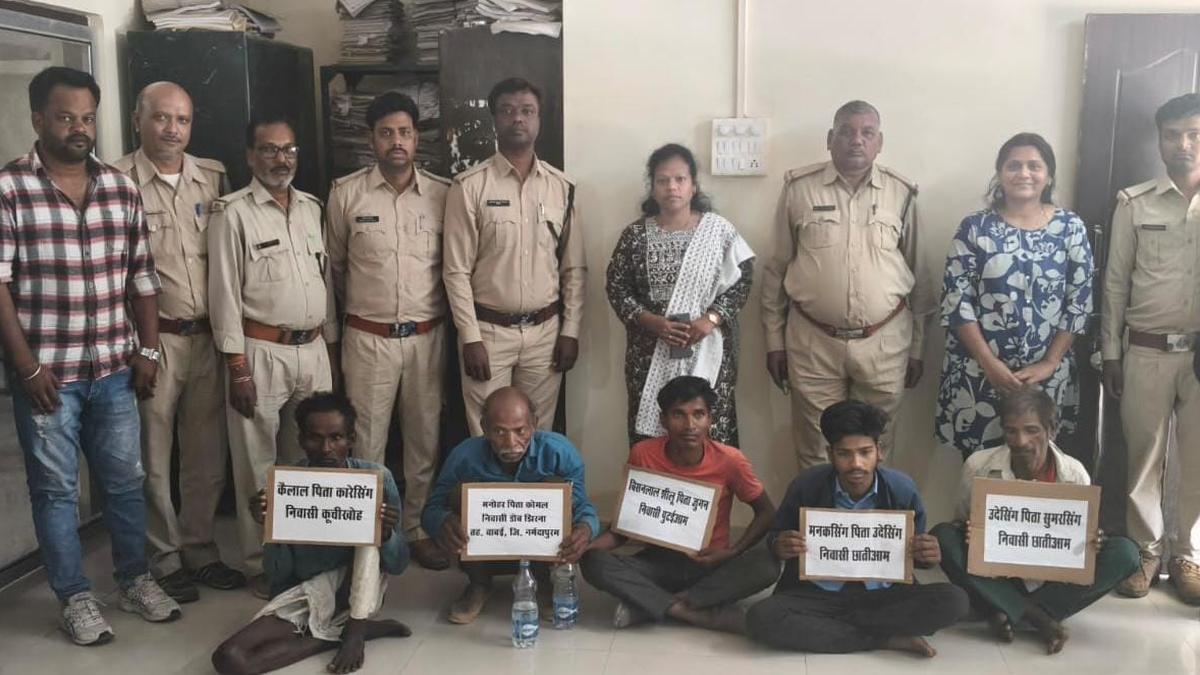
Five men from a tribal community in Madhya Pradesh, were made to squat on the ground, as forest officials stood around them: the prime accused and his friends who had been arrested for tiger poaching (he allegedly poisoned the tiger that had preyed on his livestock). They were also made to hold up placards with their names boldly printed on them, for the cameras. This time they weren’t shackled with chains as is often norm. This was a trophy for the forest department: tribal tiger poachers nabbed.
The carcass of the tigress, radio-collared, buried in a pit near the Satpura Tiger Reserve (STR) in Madhya Pradesh, was unearthed by forest officials on March 27 this year. The tigress had died nearly a month earlier.
Also read| Out of the fortress: On protecting India‘s tigers
Now it comes to light that in 2025, Madhya Pradesh, a State with the country’s largest tiger population, recorded 55 tiger deaths, the highest number since Project Tiger was launched in 1973. Of these, 15 were “unnatural deaths” — those caused by human intervention, such as poaching, poisoning, electrocution, or road and rail accidents — accounting for a significant 27% of the total deaths.
The strange story behind the death of this particular tigress has been the discourse among several conservations across the country lately. Ajay Dubey, an environment activist doesn’t buy the argument that it was retaliatory killing by forest dwellers for livestock loss, but that it was the opium syndicate (the carcass was found near an opium field).
In a PIL he filed before the Madhya Pradesh High Court, Mr. Dubey said that the deaths in the State’s tiger reserves are “shocking… and shows that these incidents have happened because of the negligence on the part of officers concerned.” Tigers are dying “under mysterious and often suspicious circumstances, raising serious questions about protection, enforcement, and accountability,” the PIL stated.


Nineteen new Rajya Sabha members, including Sharad Pawar, took oath in a ceremony attended by key officials on April 6, 2026.

Supreme Court allows tunnel project in Kerala's Western Ghats, citing national importance to alleviate severe traffic congestion.

Kerala's LDF government claims 97% of its 2021 manifesto promises fulfilled, highlighting key achievements in social welfare and infrastructure.

Watch The Hindu's webinar exploring the potential of creative work as a viable career path with industry experts.

Residents near Noida airport risk injury daily while navigating dangerous slopes for inadequate bus services to essential destinations.

Delhi University's Ramjas and Miranda colleges evacuated after receiving bomb threats via email; no suspicious objects found.

Telangana's Health Minister warns of rampant food adulteration in urban eateries, highlighting health risks and government enforcement measures.

Kerala's Aranmula faces a tense three-way election battle in 2026, with candidates from LDF, UDF, and NDA vying for victory.

BJP's Rajeev Chandrasekhar claims Congress and CPI(M) have a secret alliance, countering allegations of collusion with the BJP.

Panchaloha idols made without a drop of gold: Madras High Court stays case before Kancheepuram court
Madras High Court stays proceedings against officials accused of misusing gold donations for Kancheepuram temple idols.

Why are tribals prosecuted for tiger deaths, never the urban ‘white-collared’ poacher? The recent Madhya Pradesh poaching incident explains this attitude.

Maharashtra government to investigate CDR leak and assets of godman Ashok Kharat, says Chief Minister Fadnavis.

Panchaloha idols made without a drop of gold: Madras High Court stays case before Kancheepuram court
Madras High Court stays proceedings against officials accused of misusing gold donations for Kancheepuram temple idols.