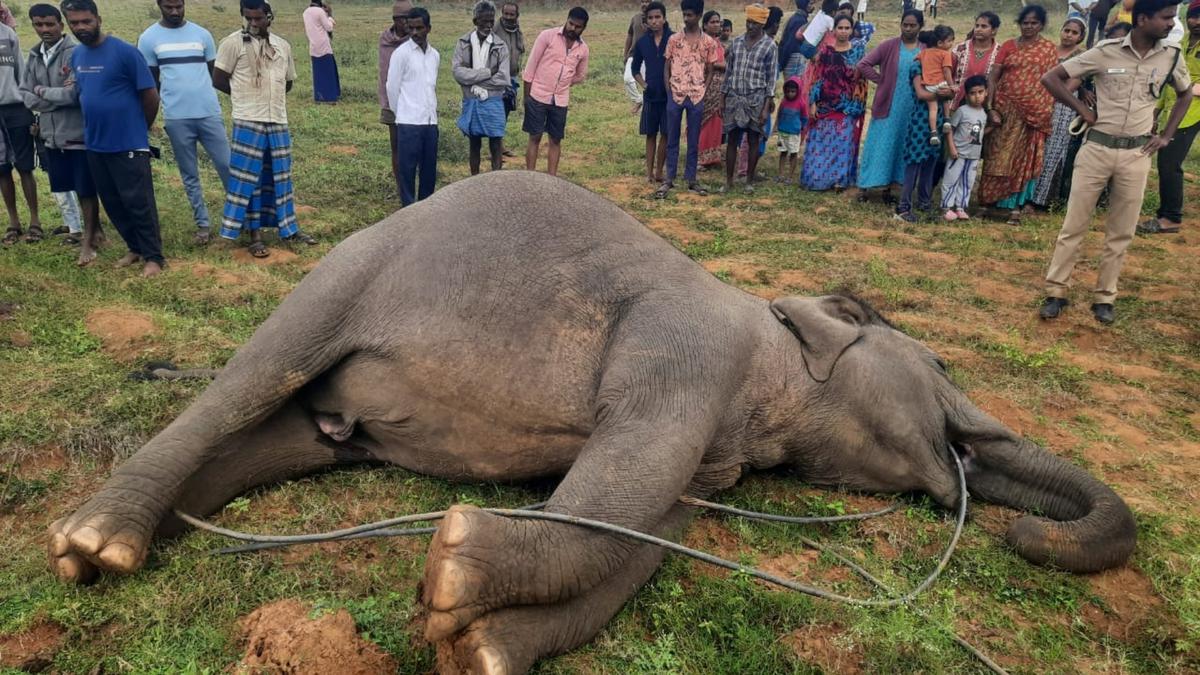
Electrocution major cause of elephant deaths in Tamil Nadu
The Hindu
Elec. deaths in TN higher than old age/starvation combined: data from Forest Dept's Elephant Death Audit Framework shows 10.5% of 1,505 deaths since 2010 due to humans/human-related activities, primarily electrocution (76 cases intentional). Elephants in TN at risk of electrocution due to laxity of TN Elec. Board in installing electric fences/overhead power cables.
In Tamil Nadu, an elephant has a higher chance of dying of electrocution than of old age and starvation put together, according to the data made public by the Forest Department from its Elephant Death Audit Framework.
The framework prescribes a standard protocol for conducting post-mortem to determine the reasons for death and is aimed at understanding the circumstances in cases of preventable and unnatural deaths. According to the data, unnatural causes, primarily electrocution, were behind more than one in every 10 elephant deaths. Since 2010, 128 animals have died of electrocution — with 76 cases of electrocution being “intentional” — which occurred as the result of negative interactions with humans. The other unnatural causes are poaching, poisoning, gunshots as well as train and road accidents.
The data show that 1,505 elephant deaths have been recorded since 2010, and 159 of them, or 10.5% of all mortalities, were caused by humans or human-related activities.
The primary threat to the life of an Asian elephant that uses the landscape comes from disease, with 802 deaths, followed by electrocution. In contrast, only 27 deaths, or 1.7% of all mortalities, were caused by old age and 24 deaths, or 1.6%, were brought on by starvation.
Senior officials of the Forest Department say that while this figure seems startling, a cursory reading of the data could lead to the erroneous inference that Asian elephants in the State were not likely to survive till old age. “This would be a misinterpretation of the data. It has to be remembered that when an animal gets older, it becomes more prone to diseases, predation, and starvation. This means that while old age may not have killed an elephant, it would have played a part in its mortality due to disease, predation, starvation, or other causes.”
“The statistics only indicate the cause of death as recorded during the time of postmortem, and are organised under broad categories. So, the nuances of the death of each animal and the causes thereof can be skewed, if the data are taken at face value,” said the official.


Telangana's revised pay scale implementation for employees will take timer. The tenure of Pay Revision Commission extended. Govt likely to take decision on reccomendation based on its report.

Vizianagaram's SP A.R. Damodar highlights 20 accident-prone areas and urges drivers to prioritize safety with helmets and seat belts.

Kerala HC stays disqualification of SNDP Yogam leaders, reversing a single judge's order regarding financial and regulatory compliance issues.

Karnataka announces daily supply of 10,000 LPG cylinders to hotels, easing the commercial shortage for the hospitality industry.

Malayalam superstar Mohanlal will be reuniting with filmmaker Priyadarshan, it was announced recently. It will mark the 100th film of Priyadarshan and is backed by Mohanlal’s longtime collaborator, Antony Perumbavoor

Gautham Vasudev Menon loses Madras High Court appeal, ordered to pay ₹4.25 crore to R.S. Infotainment with interest.

AIADMK faces its toughest challenge in 53 years as it prepares for the crucial 2026 T.N. Assembly elections.

Lakmé Fashion Week x FDCI 2026 in Mumbai: What worked and what didn’t

Telangana CM announces underpass beneath Begumpet Airport runway to alleviate traffic congestion in Hyderabad.

Congress leader Ramesh Chennithala claims an alliance between Pinarayi Vijayan, Modi, and Shah aims to undermine UDF in Kerala elections.

CCB arrests Bengaluru couple for running a fake government job scam, cheating over 100 victims out of crores.

The enduring legacy of Araiyar Sevai

Telangana integrates with the 'Vahan' platform and eliminates 2% tax on second vehicles, enhancing transport services and transparency.