Education: Strong foundation, steady expansion, and some striking signals Premium
The Hindu
Several deemed universities have evolved into global hubs, attracting students and faculty from across India and abroad, with cutting-edge infrastructure and laboratories rivalling those of national institutions.
A successful legacy is not determined by what is bequeathed, but by what is built by the inheritor. This axiom largely holds true for Tamil Nadu’s knowledge economy. The State today stands at the cusp of modern education and remains a forerunner in the field in the country. Its strong foundations were laid in Madras by the British and were subsequently strengthened by the Justice Party’s rational and forward-looking policies rooted in the principles of social equity and access. In post-Independence India, successive State governments consistently adapted and improvised upon these early gains to take education to the masses. Policy continuity — despite changing political pole positions at Fort St. George, the seat of power, over several decades — is what has catapulted Tamil Nadu to an enviable position in the constantly expanding knowledge sector.
Over three centuries ago, the first English-medium school in Asia was established in Madras. In 1715, Rev. William Stevenson, the chaplain of St. Mary’s Church at Fort St. George, started the St. Mary’s Church Charity School with 30 students belonging to the Anglo-Indian community, including 12 girls. Over the course of the next century, the institution moved locations within the State capital, eventually being rechristened as St. George’s School and Orphanage in 1954. Christian missionaries went on to establish numerous such institutions across the State, providing a platform for early access to Anglo-Saxon school education.
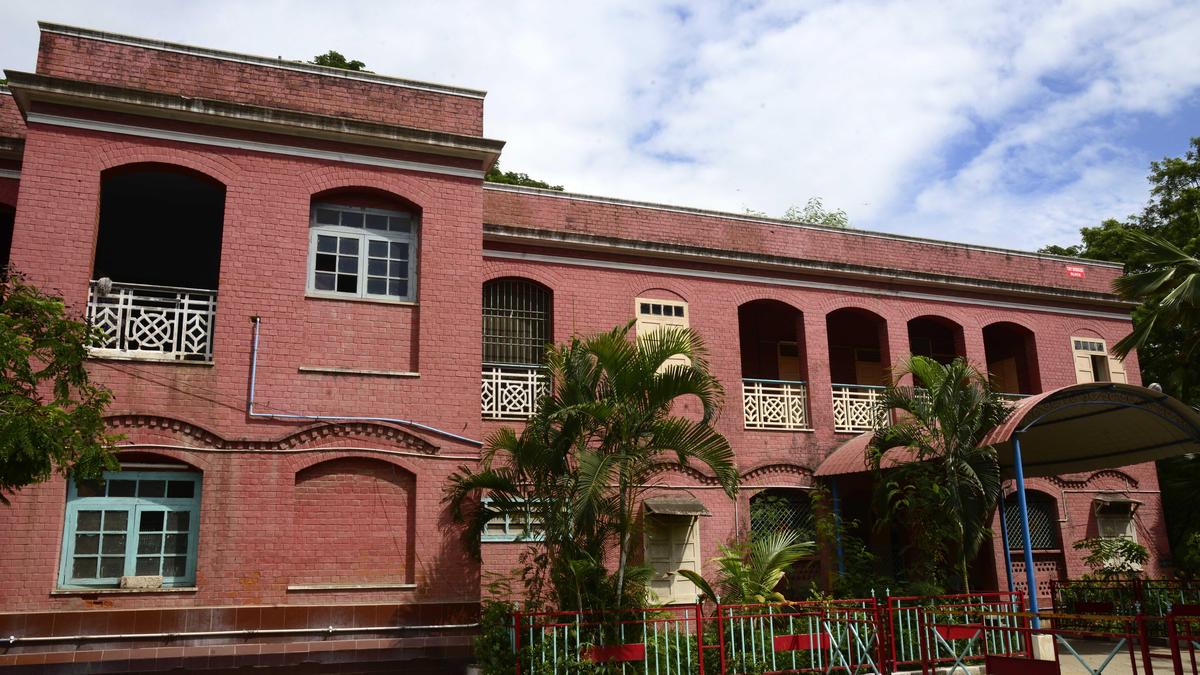
Insofar as higher education is concerned, it is significant that the advent of technical and medical education in Madras predated the arts and science streams. In fact, the first technical school outside Europe came into existence in Madras as early as 1794. Michael Topping established the Survey School at Fort St. George with eight students drawn from an orphanage. This institution eventually evolved into the globally reputed College of Engineering, Guindy (CEG), which later became the fulcrum of the prestigious Anna University, established in 1978.
Likewise, a private medical hall founded in 1835 by the Superintendent of the Government General Hospital, D. Mortimer, first took shape as the Madras Medical School and later became the Madras Medical College in 1850. From the hallowed portals of this institution emerged Dr. Muthulakshmi Reddy, who went on to become a renowned social reformer and earned the distinction of being the first woman doctor in India.
Some 45 years after the formation of the Survey School, Lord Elphinstone, the Governor of Madras, proposed that “it is expedient that a Central Collegiate Institution or University should be established at Madras.” This idea gave birth to Presidency College on the Marina beachfront in 1840, which produced illustrious alumni, including Nobel Prize winners C.V. Raman and Subrahmanyan Chandrasekhar. Subsequently, the University of Madras was established in September 1857, within months of the unveiling of the Universities of Calcutta and Bombay.
Beyond traditional courses, the State also has the distinction of hosting the country’s first Agricultural School, established in Saidapet, Madras, in 1868. This institution has since evolved into the Tamil Nadu Agricultural University in Coimbatore.


A massive fire in Bachupally gutted 15 furniture sheds, no casualties or injuries were reported.

Anthropic's moral stand on U.S. military use of artificial intelligence is reshaping the competition between leading AI companies

Kerala’s 2026 Assembly elections may reveal whether the tectonic shifts rumbling beneath Kerala’s seemingly stable bipolar order are real or overstated.

Stranded travelers in Dubai pay exorbitant prices for private flights as demand surges amid airport closures due to the Israel-Iran conflict.

Congress to seal seat-sharing pact with DMK on Wednesday in significant breakthrough in negotiations
Congress and DMK set to finalize seat-sharing agreement today, marking a key breakthrough in Tamil Nadu election negotiations.

Explore the growing disparity between teacher demands and institutional support in India's educational landscape, highlighting urgent reform needs.

India's Rafale jet procurement marks a pivotal shift in defense strategy, balancing assembly capabilities with the need for technological autonomy.

The initiative, called 'Barandaye Roddur' (Sunshine on the balcony), a structured learning initiative impacting first-generation learners, operates from the Women’s Police Station of Howrah City Police.

Discover how Aniket and Rupankar transform water hyacinth into eco-friendly paper, boosting tourism and livelihoods in Assam.

Kaziranga National Park now features an orchid park, showcasing over 1,600 species, enhancing Assam's tourism appeal.

Nishant Kumar, son of Bihar CM Nitish Kumar, is set to enter active politics, according to JD(U) leaders.

Explore the deadly consequences of sanitation work due to regulatory gaps and the plight of unrecognized manual scavengers.

Trinamool cries foul over tea garden workers struck off electoral rolls or kept in adjudication list
Trinamool Congress alleges BJP's conspiracy as thousands of tea garden workers face electoral roll exclusions ahead of elections.