Doping charge: Karnataka High Court sets aside four-year ban imposed on national level basketball player Shashank Rai
The Hindu
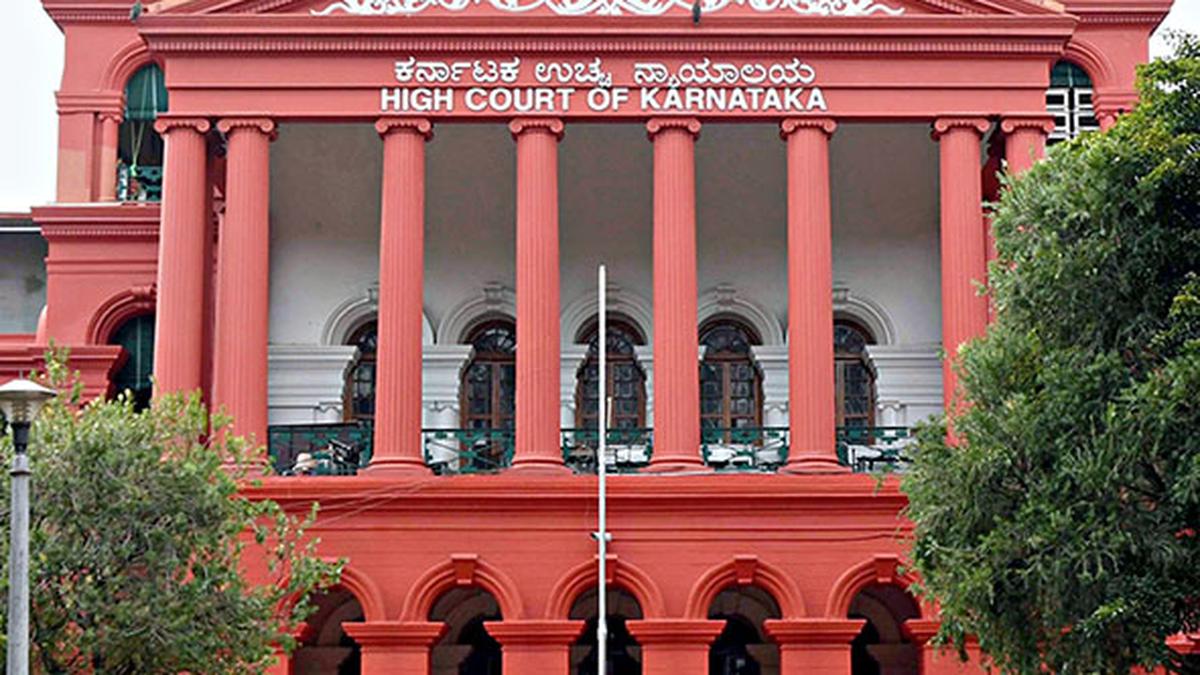
Terming the actions of anti-doping agencies “a classic illustration of breach of sample integrity” and absence of fair hearing, the High Court of Karnataka set aside the four-year ban imposed on State’s national-level basketball player Shashank J. Rai in 2022 after he tested positive of a prohibited drug in a dope test.
Terming the actions of anti-doping agencies “a classic illustration of breach of sample integrity” and absence of fair hearing, the High Court of Karnataka set aside the four-year ban imposed on State’s national-level basketball player Shashank J. Rai in 2022 after he tested positive of a prohibited drug in a dope test.
Justice M. Nagaprasanna passed the order recently while allowing a petition filed by Mr. Rai, a national-level basketball player, who is a Deputy Range Forest Officer in the State.
Mr. Rai was banned from basketball for four years in October, 2022, and the Anti-Doping Appellate Authority (ADAA) in April, 2024, rejected his appeal against the ban.
The court said that the agencies, including ADAA had failed to apply their mind in the manner known to law on the claim of the player, who presented his case with vital material rooted in plausible biochemical explanation.
The player claimed that he is a regular pork eater, and exogenous traces of 19-Norandrosterone (19-NA) substance detected in his urine were consistent with the ingestion of meat from un-castrated male pigs and not attributable to anabolic steroid abuse, the court said, while pointing out that ADAA had “neither called for further investigation nor explained its rejection of the material produced by the player” in support of his claim.
The court said that it is mindful that anti-doping adjudication operates under a regime of strict liability but that “does not mean that strictness in liability does not mandate callousness in process”.
“The foundational requirements of principles of natural justice cannot be sacrificed projecting administrative expediency,” the court said, while pointing out that results of the initial dope test were not disclosed to the player either in the notice of charge or in the order of ban, but was disclosed only before the ADAA. This was in violation of Section 22(8) of the Act, which mandates fair hearing and reasoning, the court said.


TGSRTC plans to cut CO2 emissions by 1,200 tons daily through the adoption of electric buses, enhancing sustainable public transport.

Parliamentary panel urges a review of EPF pensions, highlighting ₹1,000 is insufficient amid rising living costs.

ECI reshuffles 19 senior police officers in West Bengal ahead of upcoming Assembly elections, ensuring transparent and fair polls.

Rajasthan’s employment offices report no government job placements in five years, with over 22 lakh registered job seekers.

In a post shared in his X account, the actor also wrote about his emotional attachment to the State

NIA charges six in Puducherry BJP leader Senthil Kumaran's murder case for attempting to sabotage trial by threatening witnesses.

Bollywood star Hrithik Roshan’s HRX Films has teamed up with Prime Video for ‘Mess’ after the thriller series ‘Storm’. The latest series is directed by Rajesh A Krishnan

Bengaluru NGO PfA Wildlife Hospital replenishes water sources in Turahalli forest to protect urban wildlife from dehydration and human-animal conflict.

Bengaluru NGO PfA Wildlife Hospital replenishes water sources in Turahalli forest to protect urban wildlife from dehydration and human-animal conflict.

Andhra Pradesh Upa Lokayukta orders ₹50.24 lakh payment of EPF and ESI dues to KGBV outsourcing staff in Srikakulam.

Former Puducherry Congress MLA V. Vizeaveny joins BJP

Bajaj Electricals acquires Morphy Richards brand rights in India and South Asia, enhancing innovation and market strategy.

CPI(M) insists on contesting more seats in the 2026 Tamil Nadu Assembly elections amid ongoing seat-sharing negotiations with DMK.