Tamil Nadu Assembly election 2026: CPI(M) firm on its demand for more seats
The Hindu
CPI(M) insists on contesting more seats in the 2026 Tamil Nadu Assembly elections amid ongoing seat-sharing negotiations with DMK.
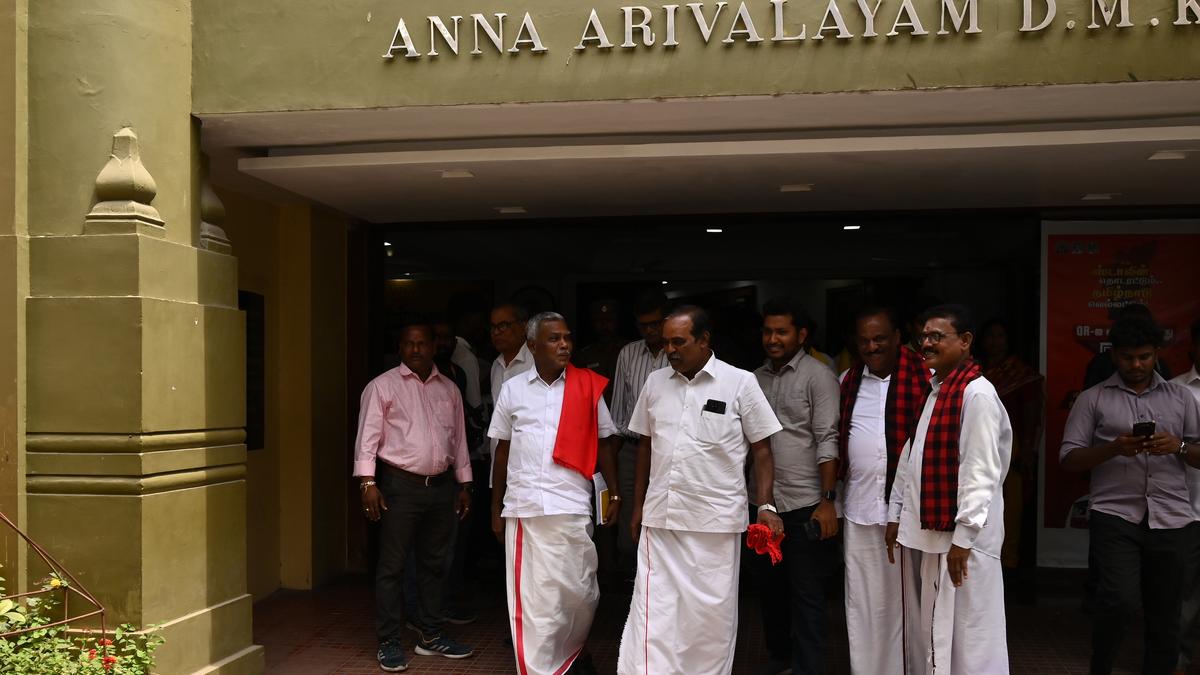
P. Shanmugam, the State secretary of the Communist Party of India (Marxist), on Tuesday (March 17, 2026), said the party was firm in its stand that it would contest more seats than the six it did in the 2021 Assembly polls.
Talking to reporters at ‘Anna Arivalayam’ the headquarters of the Dravida Munnetra Kazhagam (DMK) in Chennai, where seat-sharing talks were held, Mr. Shanmugam said the CPI(M) would not accept the suggestion that it should scale down its claims since more parties had joined the DMK alliance.
The CPI(M) was allotted six seats in the 2021 polls, but the DMK leadership is offering only five now. The party is not ready to accept the offer in the third-round of talks held on Tuesday.
“Delay is inevitable when there are more parties in an alliance, but we will continue to make efforts to secure more seats for our party,” he said. He also disagreed with the view that there was a deadlock in the seat-sharing talks. “It may be settled tonight or tomorrow,” he said.
Mr. Shanmugam said each party was holding talks individually with the DMK, the leader of the alliance. “It is the right of a political party to get seats proportionate to its strength. We have no objection to the Congress or other parties getting more seats. We are demanding seats commensurate with our strength and will continue our efforts,” he said, when asked about Tamil Nadu Congress Committee president K. Selvaperunthagai’s remark that allies should not complain about the allocation of more seats to the Congress.
“It is our demand that we contest in more seats than we did in the previous election. Talks are continuing and we are pressing our demand,” he said.


Bajaj Electricals acquires Morphy Richards brand rights in India and South Asia, enhancing innovation and market strategy.

CPI(M) insists on contesting more seats in the 2026 Tamil Nadu Assembly elections amid ongoing seat-sharing negotiations with DMK.

Kerala's Film Policy recognizes cinema as an industry, promoting gender justice and sustainable growth through various strategic reforms.

Bengaluru airport launches Connections by BLR for a seamless transfer experience, enhancing passenger convenience and airport efficiency.

Telangana focuses on enhancing public transport and electric vehicle adoption at the National Mobility Summit 2026.

Supreme Court rules adoptive mothers entitled to 12 weeks maternity leave, regardless of child's age, and calls for paternity leave recognition.

Karnataka II PU students in Belur receive incorrect question papers, raising concerns about their exam results and fairness.

Food supply jitters could trigger WFH, impact hostel occupancy, warns IT corridor hostel association
Hyderabad's IT Corridor Hostels Association warns food supply issues may prompt firms to shift to remote work, impacting hostel occupancy.

Prismforce Skill Management Platform Now Available on SAP® Store

ECI orders immediate transfer of officials in Kerala for April Assembly polls, restricting their involvement in election-related tasks.

South Western Railway introduces special express trains for Ugadi festival to manage increased passenger demand and ease travel congestion.

Udupi's Sri Lakshmi Express bus service halts after owner’s death, disrupting travel for hundreds, including students during II PUC exams.

Madras High Court defers ruling on tender disputes for live webcasting in Tamil Nadu Assembly elections 2026, affecting surveillance companies.