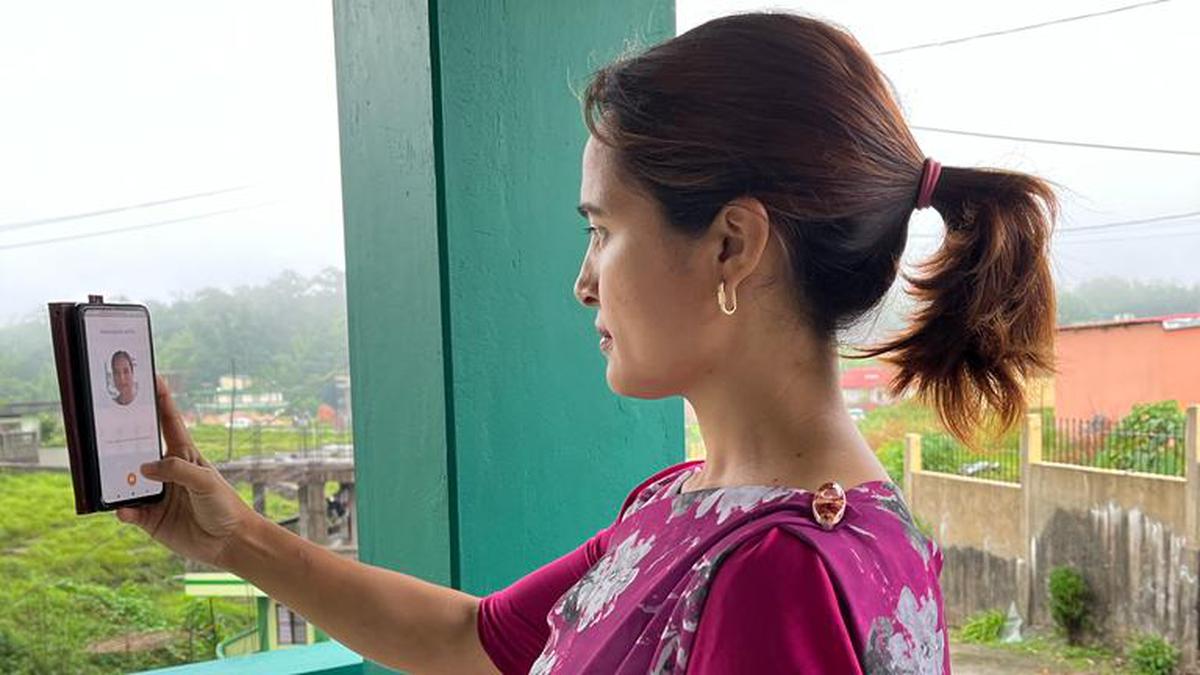
Digital eye deters proxy attendance among Meghalaya’s teachers Premium
The Hindu
Complaints about the poor quality of teaching and teacher absenteeism from parents and educational activists had made the East Jaintia Hills district authority engage digital experts to work on an integrated attendance system.
The school was familiar, but the teachers were not. Something was wrong, Clive Suchiang thought, after visiting the Saipung Secondary School, in the East Jaintia Hills district, a few days ago. It took some asking around for the social activist to find out things, for a change, were right.
“Some of the teachers I knew seemed to have been replaced overnight. Then I learnt these strangers were the real teachers appointed by the government long ago. They only turned up for duty recently because of a new digital attendance system,” he said.
The “teachers” Mr. Suchiang was acquainted with turned out to have been “appointed” by the genuine teachers for a fraction of their monthly pay, to take classes on their behalf while they pursued other work, ran businesses, or simply stayed home.
Saipung is one of the remotest areas of the 2,040 sq. km. district, one of 11 in the State. With its rounded hills and abandoned mines, the East Jaintia Hills were once the hub of Meghalaya’s rat-hole coal mining banned by the National Green Tribunal in April 2014.
But accessibility and proximity to Khliehriat, the district headquarters, was no insurance against the problem of proxy teachers and absenteeism in many of the district’s lower primary, upper primary, and secondary schools. One such school used to be the Lad Rymbai B Lower Primary School, about 8 km from Khliehriat.
“The parents are happy that their children are now going to school because the actual teachers are taking classes. Most children used to skip classes even a fortnight ago, before the digital attendance stopped the khushi-khushi (according to one’s whims) system,” Jasper Bareh, the headman of Lad Rymbai B village said.


Police warn against downloading APK files and clicking suspicious links to avoid falling victim to cyber fraud.

CM A. Revanth Reddy reviews Bhadrachalam temple development plans, targeting completion by March 2027 while adhering to Agama Shastra.

First-half blitz helps Punjab FC drub Kerala Blasters FC

Vellore Mayor Sujatha Anandakumar and a councillor face legal action for violating the Model Code of Conduct by distributing sports equipment.

Supreme Court judge Justice Nagarathna highlights government's role in court backlog, urging judicial reforms for effective litigation management.

Kerala LDF ministers declare assets nearing ₹2 crore each amid upcoming elections, revealing financial details and legal challenges.

Indiaspora, a San Francisco-based non-profit organisation which connects leaders of the Indian diaspora, is holding its 2026 Indiaspora Forum on March 22-24 and also a Global AI Summit on March 25, 2026, at JW Marriott Prestige Golfshire Resort in Bengaluru.

Special prayers mark Eid-ul-Fitr celebrations in Madurai

India’s gem and jewellery industry continues to demonstrate remarkable resilience and a spirit of innovation, said Kirit Bhansali, chairman of the Gem and Jewellery Export Promotion Council (GJEPC), at the inauguration of the 4th edition of IIJS Bharat-Tritiya 2026 at Bengaluru International Exhibition Centre (BIEC) here on Saturday, March 21.

HYDGEN dispatches eight modular green hydrogen systems to Surat, enhancing on-site industrial hydrogen generation and operational efficiency.

Fight is between AIADMK and DMK, says Rajan Chellappa

Two habitual offenders arrested in Miyapur for wine shop burglary; police recover stolen cash and bike.

Tiruchi's Smart City projects face underutilisation despite completion, raising concerns about planning, execution, and revenue generation.