Could global warming impede weather and climate forecasting? Premium
The Hindu
Record warming in 2023-2024 reveals global climate extremes, prompting questions about the future of weather and climate predictions.
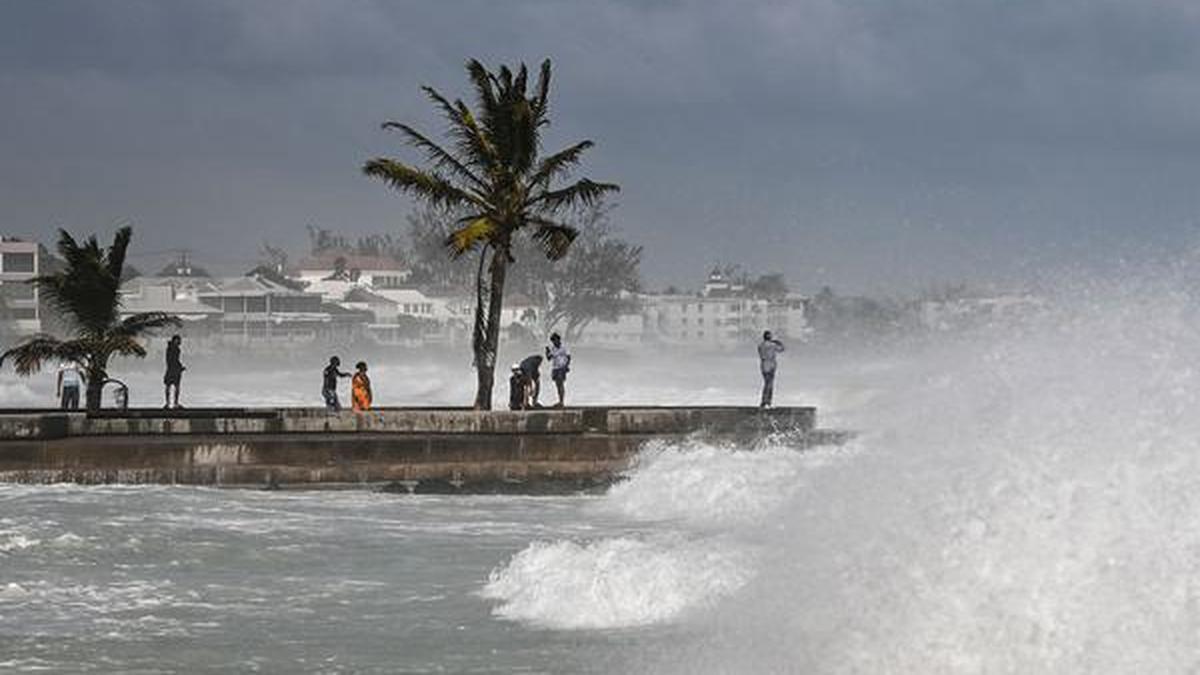
With the record warming of 2023-2024, we are getting a clearer picture of what global warming does. The medley of extremes strewn across the planet have covered the gamut from deadly heatwaves to devastating cyclones and floods, from droughts to wildfires.
According to some estimates, the world has already crossed the 1.5º C warming threshold. (That is, the earth’s average surface temperature has increased by more than 1.5º C over the pre-industrial average.) The caveat is that global temperatures are an estimate produced from a combination of data and climate models. Because the 1.5º C limit is part of a demand by the Alliance of Small Island and Developing States, scientists have built models to predict what environmental disturbances crossing this threshold could invite.
However, and more importantly, it is not yet clear how long the warming has to remain above the threshold for the projected impacts to materialise.
The spectacular show that nature has put up during 2023-2024 is also a stark reminder that we are far from able to predict the weather and the climate with the requisite skills and spatial-temporal scales to manage disasters effectively. The loss of lives, livelihoods, property, and infrastructure continues to traumatise humanity, especially the poor, who remain very vulnerable to extreme events.
Meteorologists predicted the 2023 El Niño as early as in the spring of that year, which is remarkable. But the level of warming during 2023-2024 has caught them, and the public, by surprise because it was much higher than expected from the addition of the so-called mini-global warming by the El Niño to the ongoing background warming. We speculate that water vapour thrown up by the underwater volcano Hunga Tonga–Hunga Haʻapai during 2022 and carbon dioxide emitted by the wildfires exacerbated the warming.
The 2023 monsoon was deficit but it did not qualify as an El Niño drought, the reasons for which researchers are yet to diagnose. Predictions from nearly all major weather centres earlier promised a strong La Niña in late 2024. Now this seems less likely. Perhaps nature has another googly in waiting.
Similarly, weather forecasts have called for the most intense hurricane season in decades but which has yet to step beyond normal.


Discover efficient pressure cooking techniques to save up to 50% on fuel. OPOS B Ramakrishnan tells you how

Mercedes-Benz CLA 250+ with EQ Technology review: design, performance, range and features explained. Discover how the new electric CLA combines advanced AI, long range, fast charging and futuristic styling for the next generation of luxury EVs.

Pi Day is celebrated every year on March 14, honouring the significance of the mathematical constant π and its applications in mathematics.

Discover how sculptural interior design transforms modern spaces, blending creativity and functionality to evoke emotion and identity.

A study reveals that certain antibiotics can cause long-lasting changes in gut microbiome diversity for up to eight years.

Indian scientists and international experts are divided over a study questioning the viability of a nuclear reactor fuel called HALEU-thorium; while critics cite safety risks, proponents argue the technology is vital to achieve national energy goals.

ISRO and AIIMS partner to enhance space medicine research, focusing on human health during long-duration space missions.

A practical guide to induction setups for students, families, and home food businesses as India’s LPG supply faces its biggest disruption in years

Explore the electrifying Oscars 2026 race, featuring standout films, baffling nominations, and memorable performances amid a cinematic transition.

Zai and Rom Whitaker’s latest book for young readers, The Book of Indian Snakes, tackles common misconceptions surrounding snakes, highlighting their utility to humans

Discover PC Mahalanobis's pivotal role in India's statistical revolution and his lasting influence on modern statistics in this episode.

Explore why nothing can exceed light speed and the paradoxes that arise if it were possible.

Scientists have engineered bacteria to produce designer proteins by smuggling artificial amino acids, enabling precise drug delivery and multifunctional applications.