Centre misusing UGC for political gains: Chennithala
The Hindu
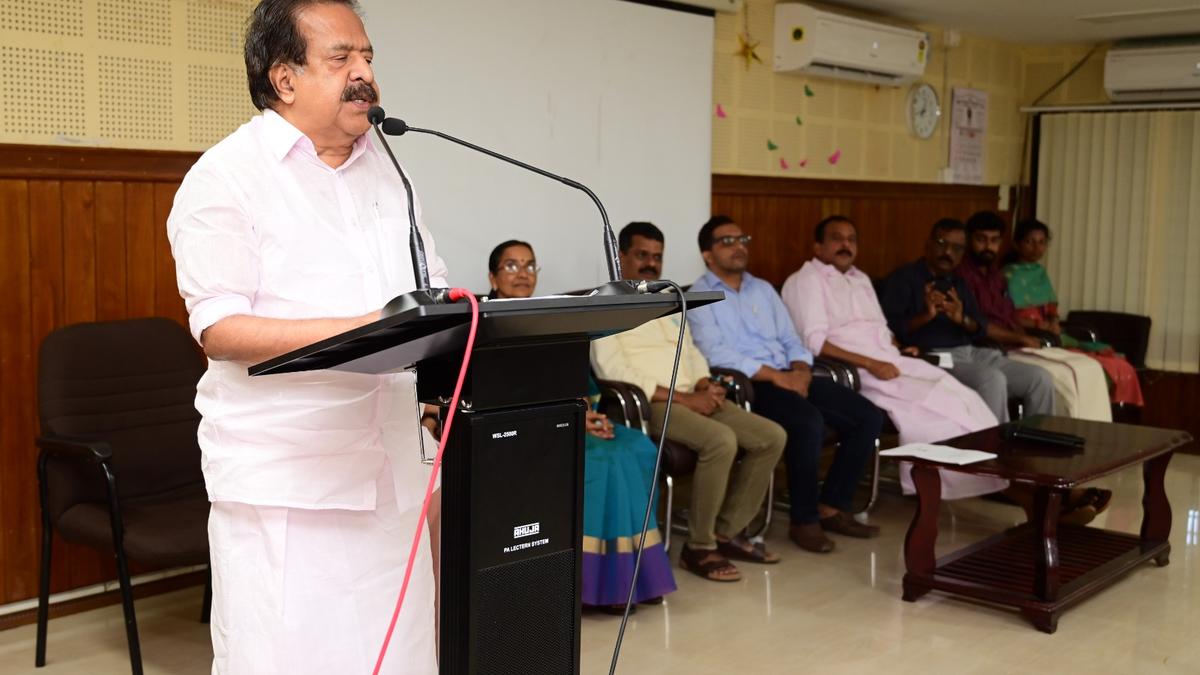
The Congress leader delivers the Dr. Manmohan Singh memorial lecture organised by KUTO
Senior Congress leader Ramesh Chennithala has accused the Centre of using the University Grants Commission (UGC) as an intermediary to push its political agenda and control the higher education sector for political gains. The trend, he said, poses a serious threat to the nation’s education system.
He was delivering the Dr. Manmohan Singh memorial lecture organised by the Kerala University Teachers Organization (KUTO) at the university campus on Tuesday.
Mr. Chennithala highlighted that the United Progressive Alliance (UPA) governments had established numerous universities and research institutes, which have been contributing positively to the country’s education landscape. However, the current BJP-led government is undermining these advancements, particularly through its controversial National Education Policy (NEP), 2020.
He also charged the Left Democratic Front (LDF) government in Kerala with facilitating the Central government’s agenda by swiftly implementing the NEP, contrary to the interests of academic autonomy.
The Congress leader also drew attention to Congress-ruled States Telangana and Karnataka, which have expressed strong opposition to the NEP. “Attempts made to undo the transformative changes in education introduced during Dr. Manmohan Singh’s tenure should be resisted. He argued that governments must refrain from interfering with the autonomy of universities, a cornerstone of academic freedom,” he said.
He also released a study report prepared by KUTO that analysed the draft UGC Regulations, 2025. Syndicate member Y. Ahmed Fazil was among those who attended.


Abhishek Banerjee challenges BJP's Suvendu Adhikari in Nandigram, pledging community health initiatives if Trinamool Congress wins.

Rising LPG shortages in Karnataka boost firewood demand, reviving an informal market as households and hotels seek alternatives.

Against the backdrop of intense poll activity, a 400-metre stretch of an arterial road in the outskirts of Chennai (technically in Madurapakkam panchayat under Tambaram assembly constituency) presents a salute to the idea of res publica, which underpins India’s system of governance, where citizens have a say, at least before a government is securely ensconced in the seat of power. A Republic Day initiative shines bright every night

Fadnavis claims zero FIR in Ajit Pawar crash is a defamation attempt by Karnataka against Maharashtra's investigation efforts.

Set to unfold as a one-day pop-up on April 5, the Easter Sadya brings together both vegetarian and non-vegetarian menus, offering a peek into the food traditions of the Syrian Christian (Nasrani) community. While the traditional Sadya is often associated with dishes such as sambar, avial, and rice, this version expands to include community-specific festive dishes.

BJP nominates mother of R.G. Kar victim Abhaya to contest from Panihati in West Bengal Assembly elections.

Veteran Malayalam actor-director E.A. Rajendran passes away at 71, leaving behind a rich legacy in the film industry.

Dakshina Kannada Zilla Panchayat has rolled out digital mode of water bill generation and collection in 23 gram panchayats on a pilot basis for the first time in Karnataka. This is set to be extended to the remaining 200 panchayats shortly, according to the Zilla Panchayat Chief Executive Officer Narwade Vinayak Karbhari.

Bengaluru police questioned a man carrying ₹6 lakh for medical expenses at Vidhana Soudha, later releasing him after verification.

BJP accuses Bengaluru's Congress government of corruption in e-Khata issuance, halting infrastructure projects due to financial mismanagement.

Misinformation in Hyderabad sparks panic buying, causing disruptions as residents react to unfounded rumors of an impending lockdown.

Bengaluru Metro extends services until 2 a.m. on March 28 for IPL match, ensuring convenient travel for spectators.

A bus truck-collision in Andhra Pradesh's Markapuram district, killing several. Catch LIVE updates here!