Can international patent law handle a permanent space presence?
The Hindu
Explore the challenges of international patent law in regulating innovation amid a permanent human presence in outer space.
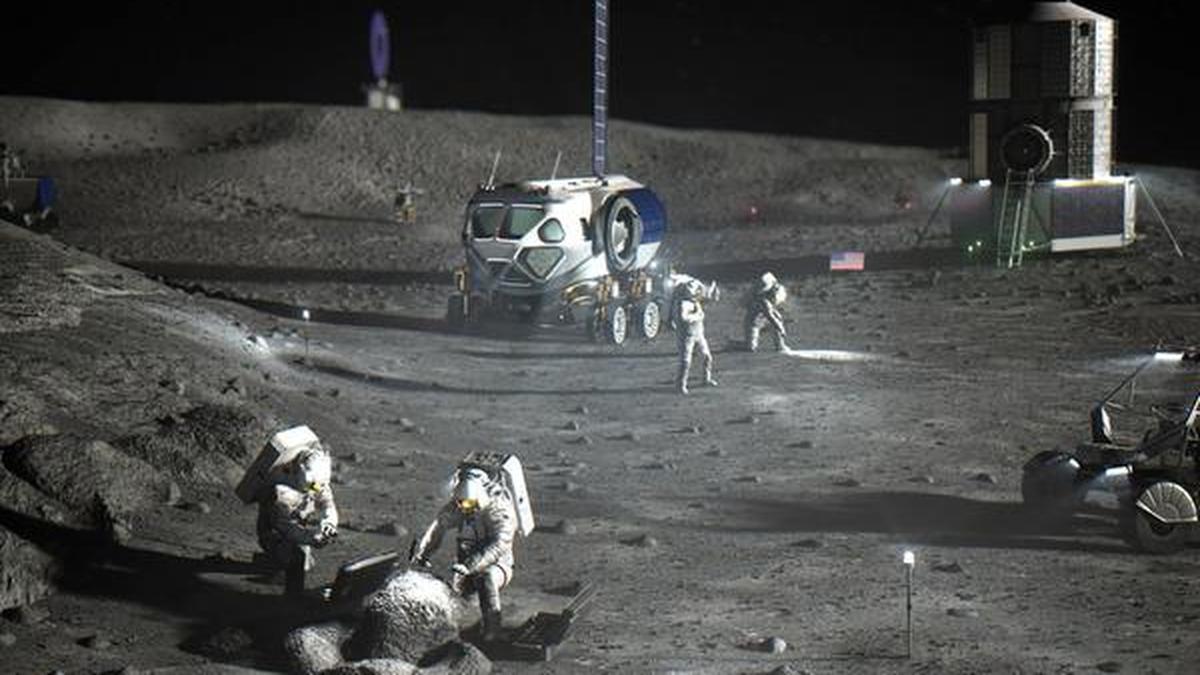
Space stations, lunar bases, and Mars missions have moved from humans’ imagination to engineering reality. In these environments, innovation emerges through collaboration rather than isolation.
Living on the moon or Mars will depend on continuous technological innovation, including on systems that extract water, generate energy and recycle waste and which can adapt to harsh and unpredictable conditions. Innovation in space is the condition for survival, and isn’t optional.
Longer habitation means shared habitats, shared infrastructure, and multinational crews working together over extended periods. Scientists, engineers, and technicians from different jurisdictions have to collaborate closely, refining technologies in real time as operational needs evolve.
And when such innovation takes place beyond Earth, a simple question arises: who owns it? Which patent system governs an invention created in a place where no state may claim sovereignty?
These questions expose a growing mismatch between the realities of sustainable human presence in space and intellectual property law, which remains built around territorial boundaries that space itself does not recognise.
Patent law rests on the principle of territoriality. Exclusive rights are granted to patent holders within specific jurisdictions, and authorities assess infringement by locating where acts such as making, using or selling have occurred. On the earth, this framework works because innovation takes place within geographically bounded spaces subject to a singular legal authority.


Anna University partners with Ramco Systems to create an advanced ERP lab for enhanced industrial engineering education.

NDA announces candidates for 12 Kozhikode seats in Kerala Assembly polls 2026 as UDF and LDF ramp up campaigning.

As India formulates its next steps in the Israel-U.S.-Iran war, it is necessary to consider not only what it will mean for the whole region but also its own ties with each neighbour

CITU criticizes the Centre's privatization efforts for VSP, alleging employee removal over production increase and financial mismanagement.

Visakhapatnam Customs House's short film "Right Turn" wins Honourable Jury Mention at the 10th Indian World Film Festival.

Economist Arvind Subramanian advises CM Revanth Reddy on strengthening Telangana's finances during a meeting in Hyderabad.

Supreme Court emphasizes stakeholder consultation for legal education reforms, hesitant to change five-year law course duration.

Authorities in Andhra Pradesh are set to tranquillise a roaming tiger near Annavaram temple for safety and conservation.

MEA criticizes USCIRF for bias, urging focus on vandalism of Hindu temples in the U.S. over selective criticism of India.

Bengaluru's Urban Development aims to beautify underutilized flyover spaces, enhancing city aesthetics and improving green cover initiatives.

Indian Navy warships escort merchant vessels in the Gulf of Oman, ensuring safe passage amid regional tensions under Operation Sankalp.

A rare crab species exhibiting both male and female traits was discovered in Silent Valley, revealing unique biological characteristics.

Gujarat court convicts five in 2016 Una flogging case; punishment announcement scheduled for March 17, 2026.