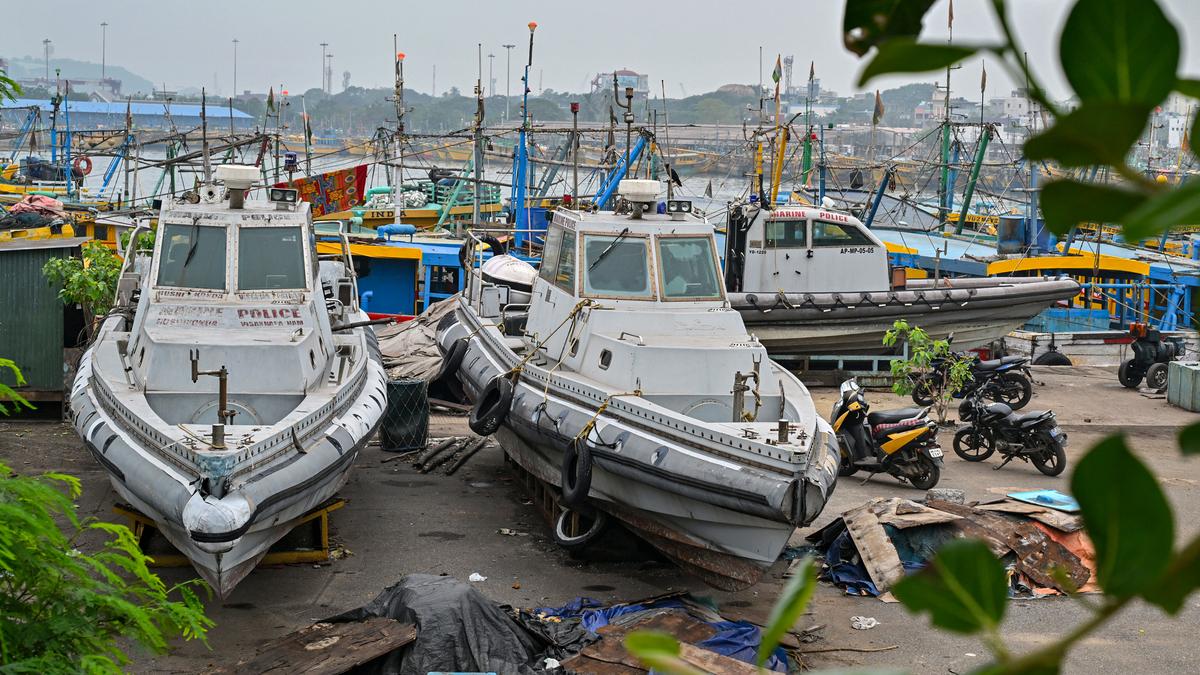
Bare borders: A.P. Coastal Security Police left adrift without boats or backing
The Hindu
Once a vigilant coast that helped sink Pakistani submarine PNS Ghazi, Andhra’s shoreline now lies exposed with defunct boats, short-staffed stations and key proposals gathering dust.
Just days before the mysterious sinking of Pakistan’s submarine PNS Ghazi off Visakhapatnam coast during the India-Pakistan War of 1971, an unusual sighting by local fishermen hinted at secrets lurking beneath the sea — secrets that would soon shape a dramatic chapter in naval history.
In the early hours of December 5, 1971, fishermen heading out in their traditional boats spotted a massive black object, shaped like a pointed gourd, rising from the depths near the coast. Frightened and uncertain, they rushed back to shore and reported the strange sight to local authorities. This unexpected encounter became a vital intelligence clue for the Indian Navy, confirming that the elusive Ghazi was operating close to Visakhapatnam’s harbour.
But that was only the beginning. Soon after, villagers spotted tall, bearded men clad in lungi, speaking Hindi, buying large quantities of provisions, and paying in Indian rupees. Who were these mysterious visitors, and what was their true purpose?
Former Naval officers believe the fishermen’s first sighting was the submarine surfacing to recharge its batteries, while the second involved enemy crew members secretly restocking supplies ashore. Yet, beneath these accounts lay deeper stories, ones that revealed more than just wartime manoeuvres.
Both sightings provided crucial intelligence to the Eastern Naval Command, led by Vice-Admiral N. Krishnan, enabling a coordinated strike based on multiple inputs. While there are various accounts of Ghazi’s sinking, the official Indian version credits INS Rajput, an R-class destroyer, with sinking the submarine using depth charges.
Andhra Pradesh’s long, porous coastline makes it vulnerable, and the local fishermen community plays a vital role in providing key intelligence to safeguard the coast. Recognising this, securing the shoreline became a national priority.
After the 1999 Kargil War, a Union Government ministerial panel was tasked with revamping coastal security. Their solution: every coastal State should have a dedicated special force to patrol and protect its waters.


The government plans to amend the FCRA, introducing new regulations for NGO asset management and accountability for key functionaries.

The draft policy for “Responsible Digital Use Among Students”, released on Monday by the Department of Health and Family Welfare, has recommended that parents set structured routines with clear screen-time rules and prioritise privacy, safety, and open conversation with children on digital well-being.

Police Observer Sushant Kumar Saxena conducts surprise inspection at Shencottai police station, reviewing warrants and security arrangements ahead of elections.

Andhra Pradesh government to launch key projects in April, focusing on industrial growth and infrastructure development, says Nara Lokesh.

Lok Sabha refers the Corporate Laws (Amendment) Bill to a JPC amid opposition concerns over CSR provisions dilution.

SHG members in Kanniyakumari use snakes and ladders to raise election awareness and boost voter turnout.

Government accelerates consultations for early implementation of the Women’s Reservation Act to ensure women’s representation in 2029 elections.

CM A. Revanth Reddy distributes ₹1 crore insurance cheques to families of deceased Electricity department employees, enhancing financial security for workers.

The Bengaluru Traffic Police (BTP) registered 634 cases of drunk driving during a week-long special enforcement drive conducted across the city between March 16 and March 22.

GHMC intensifies action against property tax defaulters, seizing properties and offering a One Time Settlement scheme for payments.

CCB arrests three drug peddlers in Mangaluru, seizing ₹2.5 lakh worth of MDMA and other valuables.

TVK's 28 candidates in Puducherry include former BJP MLAs, a sitting Independent, and a retired police IG.

BRS submits notice on private member bill to Speaker