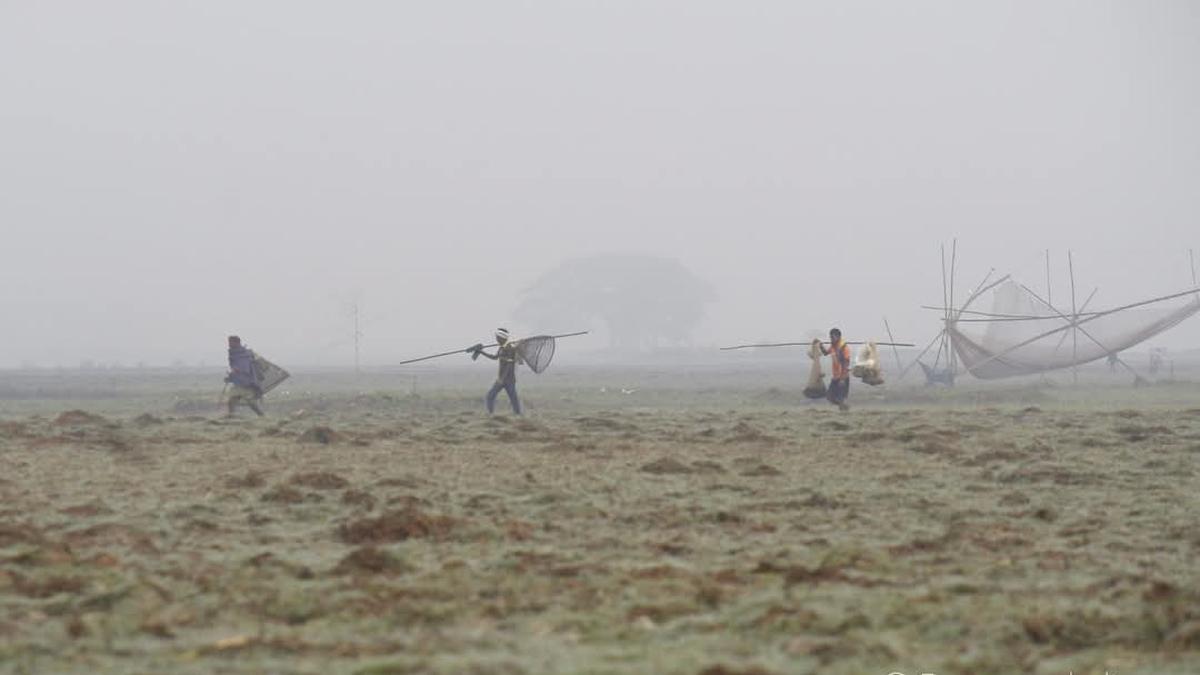
Assam villagers oppose transfer of wetland grazing field for logistics park
The Hindu
Livestock farmers oppose Assam government's plan to convert grazing land near Guwahati into logistics park, threatening livelihoods and environment.
Livestock farmers of 21 villages near Guwahati have opposed the Assam government’s move to transform a large chunk of grazing land adjoining an ecologically fragile wetland into a logistics park.
On April 7, the Kamrup District Commissioner’s office issued a notification proposing the acquisition of 150 bighas, or 49.59 acres, of the Dorabeel grazing field located in Palashbari revenue circle. The Assam Industrial Development Corporation (AIDC) Limited intends to hand over the land to a Kolkata-based company for the establishment of a logistics park.
“This village grazing land is the only one of its kind in this part of the State and serves as a critical lifeline for the livelihoods of the residents of 21 surrounding villages. Various social organisations and indigenous communities strongly oppose this move, which threatens their existence,” said Ashwini Mazumdar of the Dorabeel Village Grazing Field Protection Convening Committee, representing the villagers to be affected by the logistics park.
According Kanak Chandra Das who is a member of the committee, more than 3,000 families dependent on this grazing land for livestock rearing would be severely affected by the move.
“During the monsoon, the grazing land merges with the Dorabeel (wetland), supporting fish production that sustains some 2,000 families from 10 villages. This project will disrupt their livelihoods,” he said.
Another panel member, Abinash Kalita, said some 500 families from 12 villages rely on the superior soil of this land for pottery. “The construction of the park will destroy their means of sustenance while some 1,000 families engaged in farming on the surrounding fertile land will lose their source of earning,” he said.
The committee members said the existing industries close to Dorabeel have already polluted the soil, water, and air. Further construction will exacerbate environmental degradation and adversely impact public health.


Anuradha Jonnalagadda took over as in-charge Vice-Chancellor of the University of Hyderabad, focusing on continuity during the transition.

Telangana government awaits committee report on TGSRTC staff absorption, with decisions to be made at an appropriate time.

Telangana's revised pay scale implementation for employees will take timer. The tenure of Pay Revision Commission extended. Govt likely to take decision on reccomendation based on its report.

Vizianagaram's SP A.R. Damodar highlights 20 accident-prone areas and urges drivers to prioritize safety with helmets and seat belts.

Kerala HC stays disqualification of SNDP Yogam leaders, reversing a single judge's order regarding financial and regulatory compliance issues.

Karnataka announces daily supply of 10,000 LPG cylinders to hotels, easing the commercial shortage for the hospitality industry.

Malayalam superstar Mohanlal will be reuniting with filmmaker Priyadarshan, it was announced recently. It will mark the 100th film of Priyadarshan and is backed by Mohanlal’s longtime collaborator, Antony Perumbavoor

Gautham Vasudev Menon loses Madras High Court appeal, ordered to pay ₹4.25 crore to R.S. Infotainment with interest.

AIADMK faces its toughest challenge in 53 years as it prepares for the crucial 2026 T.N. Assembly elections.

Lakmé Fashion Week x FDCI 2026 in Mumbai: What worked and what didn’t

Telangana CM announces underpass beneath Begumpet Airport runway to alleviate traffic congestion in Hyderabad.

Congress leader Ramesh Chennithala claims an alliance between Pinarayi Vijayan, Modi, and Shah aims to undermine UDF in Kerala elections.

CCB arrests Bengaluru couple for running a fake government job scam, cheating over 100 victims out of crores.