Apartments are allowed to be dangerously hot in Toronto. City still studying options
CBC
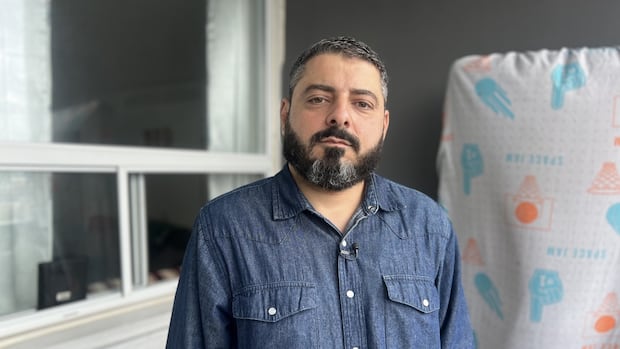
Monique Gordon's second-floor apartment in Rexdale is sweltering hot all year-round — even in the winter.
She keeps track of the temperature in her home with a small digital thermometer and records it as proof. Recently, on a cool, rainy 20 C afternoon, her unit was 27.3 C, an indoor temperature that's unsafe to live in, health experts and environmental advocates say.
Gordon, who is chair of ACORN's Etobicoke chapter, has lung granulomas. Paired with the heat, it makes it difficult to breathe.
"Thank God, I don't have any asthma because I don't think I'd be able to make it through with the heat," Gordon told CBC Toronto.
She says she's tried in the past to hook up an air conditioner, but every time it ran, it tripped the fuse. Last week, she told city officials about the lack of temperature control in her building during a tour.
Gordon, like many tenants across Toronto, is bracing for yet another hotter-than-usual summer, while the city continues looking into implementing a maximum indoor temperature standard for apartments.
City officials chose not to endorse a standard because of financial and technical barriers in 2018. Then, in June 2023, city council voted in favour of exploring the feasibility of a maximum temperature standard as a way to ensure no residential unit becomes dangerously hot. That led to another motion that was approved last December, where council endorsed the idea and asked for recommendations.
"They just need to make the decision and then just enforce it," Gordon said.
Toronto Heat Safety, a coalition of tenant advocacy groups, health experts and environmental organizations, came together last year to demand that the city establish a 26 C max temperature to prevent residents from developing any health problems from heat, including heart and breathing problems.
With weather and climate modelling showing extreme heat days will increase in the city, Canadian Environmental Law Association lawyer Jacqueline Wilson, whose organization is part of Toronto Heat Safety, says sweltering apartments are an urgent health and safety concern.
She says the onus shouldn't be on tenants.
"It's kind of a core fundamental right to be safe in your home," Wilson said.
"We're seeing that if you don't have the infrastructure in place to cool, that you're not safe in your home."
In an emailed statement, city spokesperson Shane Gerard said recommended next steps toward implementing a maximum indoor temperature standard will be released in a fourth quarter staff report, as requested by city council last December.


Some century-old churches on P.E.I. are renovating to become more accessible, which includes updates to accommodate many different kinds of needs.

Toronto police headed to school zones Monday as part of a safety blitz following March Break.

WARNING: This story details experiences at residential schools.

The N.W.T. Coroner Service has identified the Nunavut man who died in RCMP custody in Yellowknife last Thursday.

The Liberal government's nominee to be the next fiscal watchdog insists she'll run an independent and non-partisan ship — even though her candidacy has created a political rift.

Two years after Calgary city council held its longest public hearing in the city's history, another marathon session began on Monday to tackle the same contentious subject: blanket rezoning.

Quebec resident Antoine Forest was one of the pilots killed in the Sunday night crash at New York's LaGuardia airport, according to Radio-Canada sources.

Ontario Premier Doug Ford's cellphone records took centre stage as the provincial legislature resumed sitting Monday for the first time since December, with the opposition accusing the premier of having something to hide.

The P.E.I. Museum and Heritage Foundation hosted its annual heritage awards, recognizing Islanders who help maintain the island's culture and traditions.

A new independent review of Yukon’s education system is receiving pushback from advocates.

The RCMP has not recruited enough new officers or effectively assigned its members to meet its operational needs, according to a new report from the auditor general — raising concerns about public safety across the country.

Oil prices fell Monday morning after President Donald Trump said the U.S. would hold off on striking Iran’s energy infrastructure amid productive talks between the two countries.

Premier Doug Ford says his government plans to give Toronto's Billy Bishop Airport special designation that would allow the province to bypass municipal and provincial laws as it pushes to expand the runway downtown.