An atomic tug of war Premium
The Hindu
After the 12-day war between Israel and Iran in June 2025, which also saw American B2 bombers attacking Iran’s nuclear facilities and Iranian missiles targeting the American military base in Qatar, Israel declared a ‘historic victory’.
After the 12-day war between Israel and Iran in June 2025, which also saw American B2 bombers attacking Iran’s nuclear facilities and Iranian missiles targeting the American military base in Qatar, Israel declared a ‘historic victory’. U.S. President Donald Trump claimed that American strikes had “obliterated” the Iranian nuclear facilities. The Iranians kept tactical silence about the impact of the strikes on their nuclear plans, including the Fordow facility, which is built deep underground, beneath a mountain.
However, early assessments by the U.S. intelligence community, which were leaked to American media, claimed that Iran’s nuclear programme had not been destroyed by U.S. strikes, but set back by “a few months”. Even if the nuclear facilities were destroyed, there is no certainty that Iran’s stockpile of highly enriched uranium and all advanced centrifuges have been destroyed. There were reports, based on European intelligence assessments, that Iran had dispersed its enriched uranium well before the Israeli-American strikes. According to Rafael Mariano Grossi, head of the International Atomic Energy Agency (IAEA), the UN’s nuclear watchdog, Iran has the industrial and technological capacity to resume enriching uranium in a few months. This leaves the Iranian nuclear programme unresolved, at least from an Israeli point of view
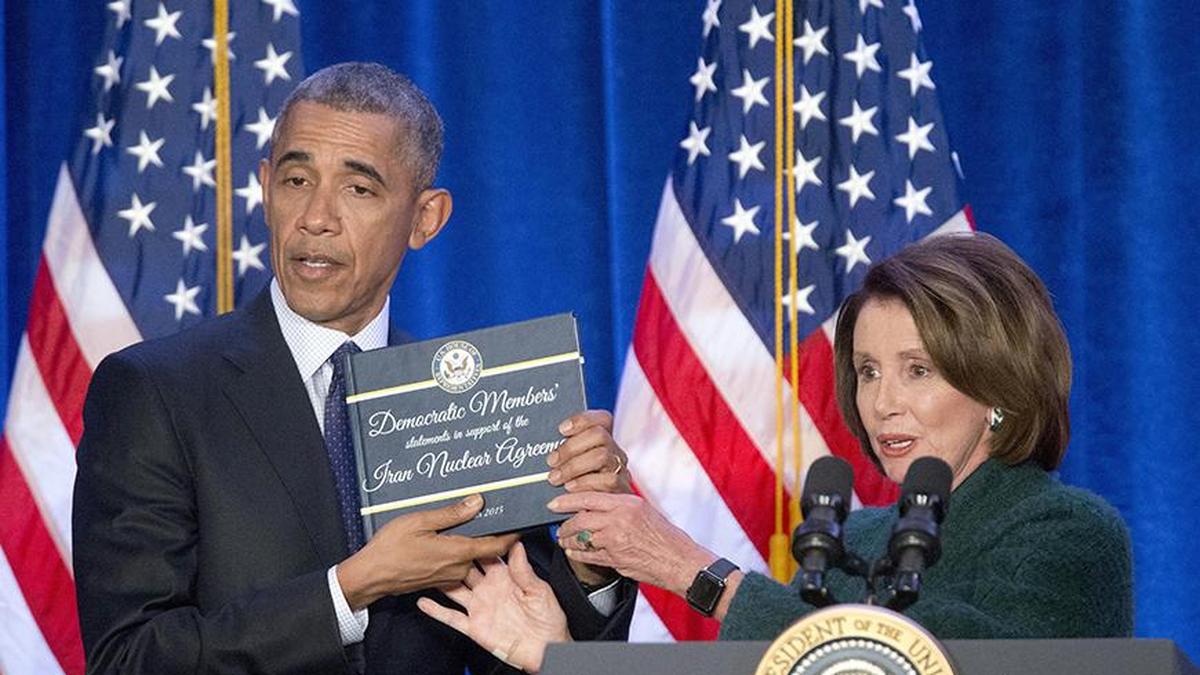
After Mr. Trump, in his first term, unilaterally withdrew the U.S. from the 2015 nuclear deal, officially known as the Joint Comprehensive Plan of Action ( JCPOA), Iran had maintained that it would not hold direct talks with the U.S. There were multiple rounds of indirect talks in Vienna after Joe Biden became President in 2021, but those efforts were inconclusive. Iran, in this period, substantially accelerated its nuclear programme. In 2024, Iran came under increasing pressure — its so-called axis of resistance was humbled by Israel, it lost an ally in Syria when the regime of President Bashar al-Assad fell, and its economy was in serious trouble.
This article is from The Hindu e-book. Iran: Revolution in retreat
As the heat on Iran rose, Mr. Trump offered dialogue. “We can’t let Iran have a nuclear bomb,” he said in April. Faced with the threat of war in a moment of weakness, Iran agreed to engage the Americans diplomatically. However, Israel struck Iran on June 12, when Iran was technically in talks with the U.S. The attack has set back the diplomatic efforts. And Iran’s nuclear programme remains one of the most dangerous disputes in West Asia as tensions between Iran and Israel are heating up again.
Iran, a signatory of the Nuclear Non-Proliferation Treaty (NPT), ceased to cooperate with the IAEA after the 1979 revolution that brought down the Shah’s monarchy and led to the establishment of the Islamic Republic.


Nepal elections 2026: Follow the latest updates on March 5, 2026

Nepal votes in its first general election since last year's Gen Z protests, with over 18.9 million eligible voters.

Anti-war activist Brian C. McGinnis arrested after injuring three Capitol Police officers during a protest against U.S. military action.

Mark Carney urges Canada and Australia to unite against great power hegemony for global security and prosperity.

Iran-Israel war: Follow the latest updates on the West Asia war, on March 5, 2026

Trump is consulting advisors on the U.S. role in Iran post-conflict amid mixed public support for military action.

Senate Republicans reject a war powers resolution to halt U.S. military action against Iran, highlighting deep partisan divisions.

Nepal's March 5 election aims to restore democracy amid recent protests and regional geopolitical tensions.

Russia accuses Ukraine of using sea drones to attack and sink a tanker carrying liquefied natural gas in the Mediterranean.

Nepal deploys over 300,000 security personnel for the March 5 polls, ensuring safety and minimal invalid ballots through voter education.

U.S. military strikes Iranian warship off Sri Lanka, prompting rescue operations for sailors amid escalating tensions.

Explore the escalating Iran-Israel conflict, detailing key events and retaliatory actions over the first five days of war.

Thailand's election commission certifies results, paving the way for a new parliament and government formation.