Amaravati: time for swift, decisive action
The Hindu
Amaravati gains legal clarity, but execution remains the real challenge.
Referring to the timelines of the proposed capital city Amaravati, Andhra Pradesh Chief Minister N. Chandrababu Naidu once remarked, “Rome was not built in a day.” When he first conceptualised Amaravati in 2015, he envisioned a world-class capital comprising nine cities along the banks of the Krishna River. However, the journey has been turbulent, and significant challenges remain.
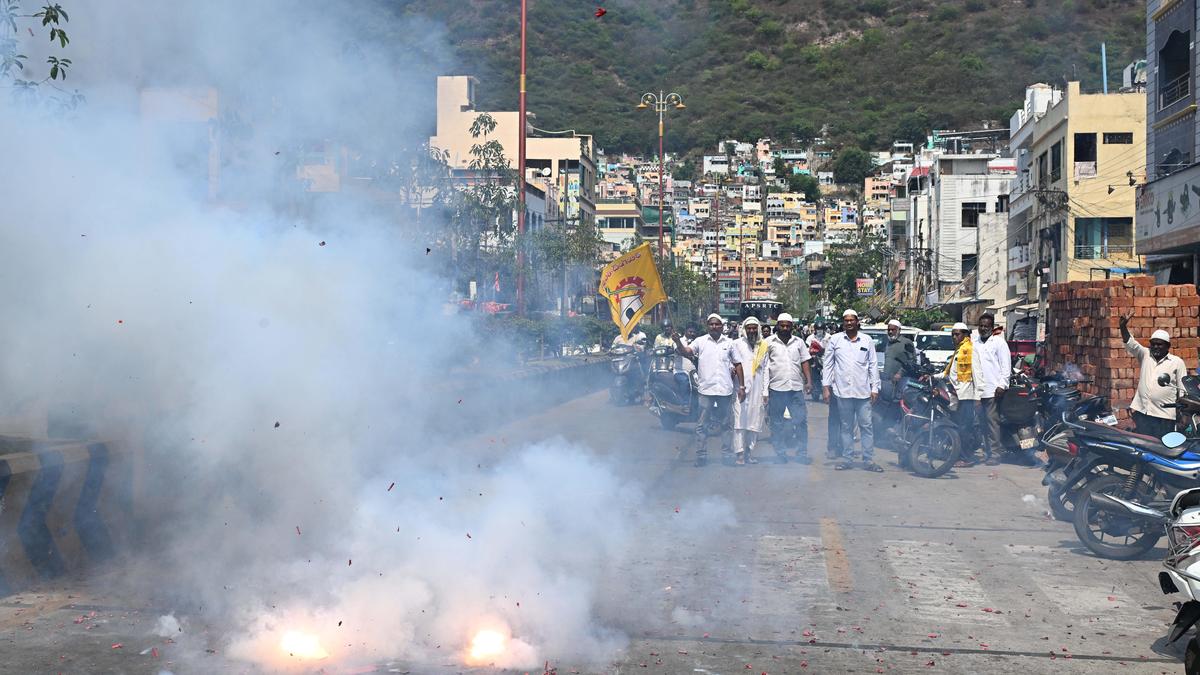
April 2026 marked a turning point, bringing long-awaited clarity. Following a resolution by the State Assembly, the Andhra Pradesh Reorganisation (Amendment) Bill was passed by both Houses of Parliament, granting Amaravati legal status as the State’s sole capital, effective June 2, 2024.
Mr. Naidu described the development as a ‘historic moment,’ stating that it ended the ambiguity created during the previous government led by Y. S. Jagan Mohan Reddy and the YSR Congress party. While the NDA supported the Bill unanimously, the YSR Congress opposed it, raising concerns and staging a walkout in Parliament.
A decade earlier, Amaravati was launched with great ambition, envisioned as a city surpassing Hyderabad, which Mr. Naidu helped transform into a major IT and infrastructure hub. Around 34,000 acres of land were pooled from over 30,000 farmers across 29 villages near Vijayawada, Guntur, Tenali, and Mangalagiri. Under a unique land pooling scheme, farmers were promised developed residential and commercial plots along with annual payments for 10 years. The vision was to create a self-sustaining, modern capital capable of generating economic opportunities and fostering entrepreneurship.
Despite favourable conditions and a strong mandate, progress slowed considerably, particularly in the latter half of Mr. Naidu’s 2014-19 term. Delays in planning and execution hindered development and contributed to political setbacks in the 2019 elections. Although Mr. Naidu initiated the project with support from international consultants, including firms from Singapore, the U.K., and Germany, the capital remained incomplete by the end of his tenure.
The subsequent YSR Congress government halted Amaravati’s development and proposed a three-capital model: Visakhapatnam as the executive capital, Amaravati as the legislative capital, and Kurnool as the judicial capital. This plan faced legal and administrative challenges and ultimately failed to materialise.


Nineteen new Rajya Sabha members, including Sharad Pawar, took oath in a ceremony attended by key officials on April 6, 2026.

Supreme Court allows tunnel project in Kerala's Western Ghats, citing national importance to alleviate severe traffic congestion.

Kerala's LDF government claims 97% of its 2021 manifesto promises fulfilled, highlighting key achievements in social welfare and infrastructure.

Watch The Hindu's webinar exploring the potential of creative work as a viable career path with industry experts.

Residents near Noida airport risk injury daily while navigating dangerous slopes for inadequate bus services to essential destinations.

Delhi University's Ramjas and Miranda colleges evacuated after receiving bomb threats via email; no suspicious objects found.

Telangana's Health Minister warns of rampant food adulteration in urban eateries, highlighting health risks and government enforcement measures.

Kerala's Aranmula faces a tense three-way election battle in 2026, with candidates from LDF, UDF, and NDA vying for victory.

BJP's Rajeev Chandrasekhar claims Congress and CPI(M) have a secret alliance, countering allegations of collusion with the BJP.

Panchaloha idols made without a drop of gold: Madras High Court stays case before Kancheepuram court
Madras High Court stays proceedings against officials accused of misusing gold donations for Kancheepuram temple idols.

Why are tribals prosecuted for tiger deaths, never the urban ‘white-collared’ poacher? The recent Madhya Pradesh poaching incident explains this attitude.

Maharashtra government to investigate CDR leak and assets of godman Ashok Kharat, says Chief Minister Fadnavis.

Panchaloha idols made without a drop of gold: Madras High Court stays case before Kancheepuram court
Madras High Court stays proceedings against officials accused of misusing gold donations for Kancheepuram temple idols.