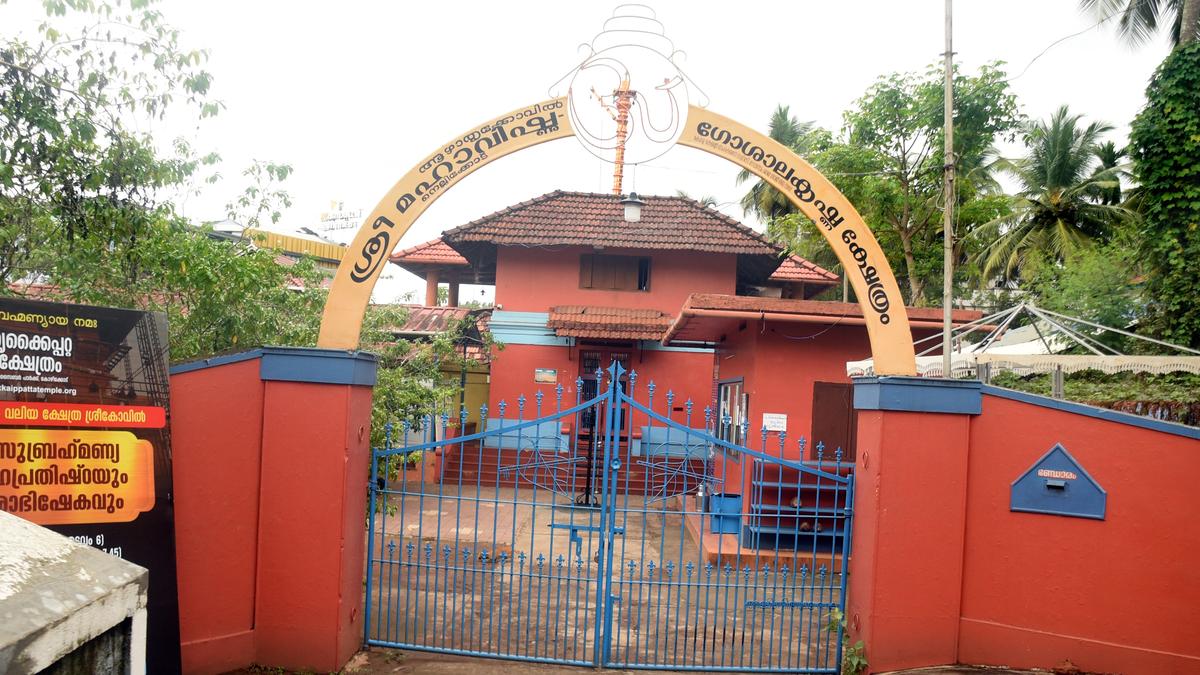
A temple in Zamorin’s Calicut may have played host to Srirangam idols
The Hindu
A lesser known temple in Nellikode, near here, could shed light on the presence of a Vaishnavite settlement on the outskirts of Zamorin’s Calicut, and also link it with Mohammed bin Tughlaq’s invasion of the Srirangam temple in Tamil Nadu in the 14th Century AD. Functionaries of the Calicut Heritage Forum, a Kozhikode-based group of history enthusiasts who work to preserve the city’s cultural past, have come to this conclusion after going through temple records, historical data, and land records.
A lesser known temple in Nellikode, near here, could shed light on the presence of a Vaishnavite settlement on the outskirts of Zamorin’s Calicut, and also link it with Mohammed bin Tughlaq’s invasion of the Srirangam temple in Tamil Nadu in the 14th Century AD.
Functionaries of the Calicut Heritage Forum, a Kozhikode-based group of history enthusiasts who work to preserve the city’s cultural past, have come to this conclusion after going through temple records, historical data, and land records.
C.K. Ramachandran, convener of the forum and a former IAS officer, says that Azha Thrikkovil Goshala Vishnu Temple at Nellikode could have been built by Vaishnavite priests from the Srirangam temple who were running away from the Muslim invaders.
In the land records of Nellikode desam, the name of the temple is recorded as Azhvar Trikkovil, a possible reference to the original temple where the Nammalvar idol was installed. In the Tamil Vaishnava tradition, Azhvar means Nammalvar. The land records also show sizeable land grants which existed in the name of the temple. The name Azhvar could have got corrupted to Azha later, he says.
“According to the temple records, the forces of the Delhi Sultanate led by Ulugh Khan, the son and successor of Ghiyasuddin Tughlaq who later assumed the name Mohammed bin Tughlaq, invaded Srirangam in 1323 AD,” Mr. Ramachandran says.
“The priests of the temple, led by Pillai Lokacharya and a few others, escaped with the idol of Lord Ranganatha and that of the two consorts, Sridevi and Bhudevi,” he says.
“They wanted to avoid a repeat of the situation when the forces of the then Delhi Sultan Alauddin Khalji managed to take away the main idol, which is supposed to have some ‘magical powers’, after looting the temple in 1311 AD. The temple authorities had to take a great deal of effort to bring it back,” Mr. Ramachandran says.


Two killed and 23 injured in a sleeper bus accident in central Delhi; investigation ongoing.

Governor Shiv Pratap Shukla inaugurates the 74th All India Police Football Championship in Hyderabad, emphasizing sports' role in policing.

Visakhapatnam police recover ₹66 lakh in property from 54 arrested in February, solving 62 crime cases.

OPS claims EPS's lost credibility will undermine AIADMK's election manifesto, as DMK promises have proven reliable and effective.

Explore Modakkurichi's agrarian challenges, development gaps, and tourism potential as it gears up for the upcoming elections.

The Govindapura police have successfully traced an 84-year-old man suffering from dementia who had gone missing last month, following a sustained 25-day search operation across the city.

First randomisation of EVMs and VVPATs held in Dindigul, Theni districts

Madras High Court permits Dayanidhi Maran to summon Union Telecom Secretary as witness in illegal telephone exchange case.

President of Mysuru District Consumer Disputes Redressal Commission A.K. Naveen Kumari has called upon consumers to check for quality certifications like ISI on products before purchasing them.

Students and women’s self-help groups in Madurai engage in vibrant voter awareness campaigns promoting 100% voting participation.

India pledges 60% non-fossil fuel power by 2035, targeting 47% emissions reduction per GDP unit and enhanced carbon sinks.

Supreme Court rules land acquisition compensation and interest must uphold constitutional guarantees, unaffected by financial burdens.

Election officials accept 23 nominations for Bagalkot bypolls, rejecting three, with polling scheduled for April 9.