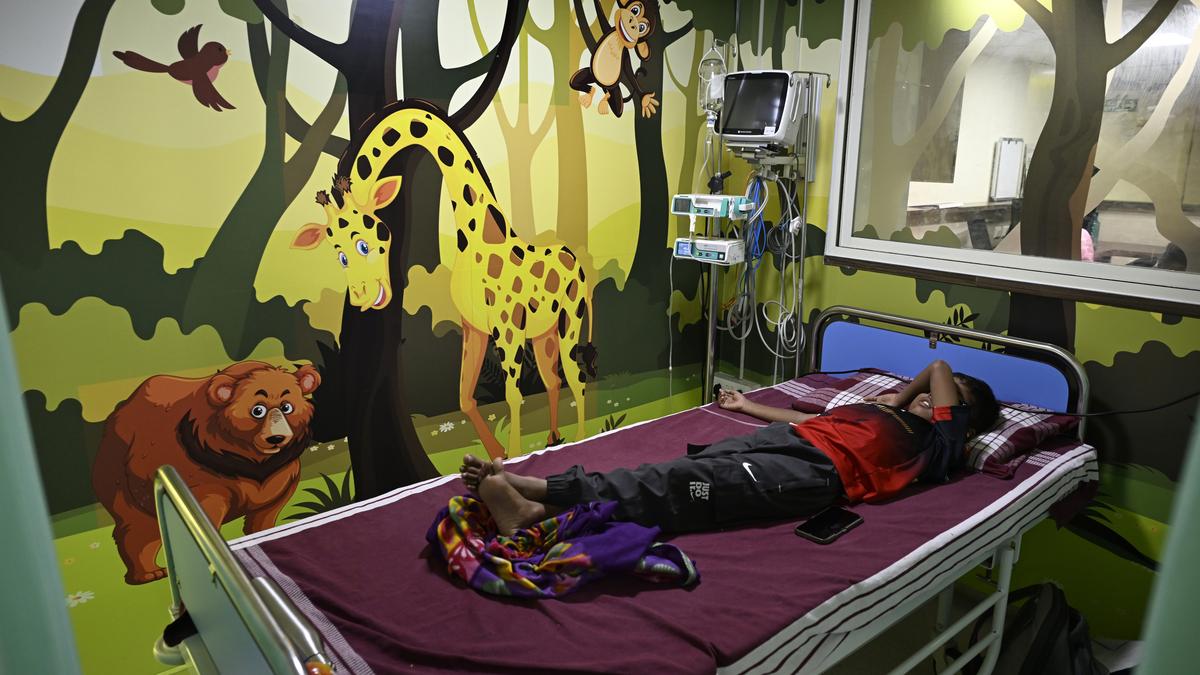
A silent burden: Thalassaemia patients in Karnataka battle disease with hope and hardship Premium
The Hindu
Thalassaemia patients in Karnataka face hope and hardship, battling disease with silent strength and financial struggles.
Her day begins with a quiet prayer and a glance at the faded calendar, marked with yet another hospital appointment. For over two decades, Gowramma’s life has revolved around needles, blood bags, prescriptions, and silent strength.
Gowramma is the mother of two grown-up children — Tarun and Santosh — both living with thalassaemia, an inherited blood disorder characterised by reduced haemoglobin production.
Every few weeks, the children need blood, life-saving transfusions that keep them alive, but slowly poison their bodies with iron. The medicine to fight this iron overload is expensive, and the bills never stop. The family has a small garment shop at Peenya, an industrial area in the northern part of Bengaluru, and is struggling to meet an avalanche of medical expenses. Gowramma has not been able to get the free medicines from the government-run Victoria Hospital for the last four months.
At Sunkadakatte, a semi-urban locality in west Bengaluru, life is a daily struggle for 19-year-old Mubeena Ruqsar, who lives with her parents. She was diagnosed with beta-thalassaemia major at just six months. Since then, blood transfusions every three weeks, countless needles, and a growing pile of medical records have all been part of her routine.
Her father, Rahmathulla, works as a mechanic in a local garage. Her mother, Sakina Banu, once dreamed of becoming a teacher but now dedicates every waking hour to managing Ruqsar’s health — tracking her transfusion schedules and watching for signs of fatigue, fever, or distress. They live in a rented two-room house, and save every extra rupee for hospital visits and medicine. The young adult’s treatment involves not just transfusions but also expensive iron chelation therapy.
These three are among an estimated 10,000 thalassaemia patients in Karnataka, a number that experts say is growing due to the lack of systematic screening and awareness. No government registry is available to document the number of people living with this disorder.
However, despite the growing burden, public health mechanisms remain fragmented. The State established the Karnataka State Blood Cell for the treatment of patients with blood disorders (haemophilia, thalassaemia, and sickle cell anaemia) in 2017. While this Blood Cell — operating under the National Health Mission (NHM) — is coordinating treatment and providing free transfusions in government hospitals, access to quality iron chelation drugs and specialised care remains uneven.


MP M. Sribharat urges collective efforts to revive Visakhapatnam Steel Plant, highlighting key reforms for crucial recovery and growth.

141 candidates have filed nominations for Kozhikode's Assembly elections, with scrutiny on March 24 and campaigning intensifying.

BJP's Vijayendra accuses Congress of using money to influence Bagalkot bypolls, urging voters to reject their tactics.

First randomization of electronic voting machines completed in Tirunelveli and Tenkasi districts for upcoming Assembly elections.

RPF seizes 10.12 kg of unclaimed cannabis worth ₹5.06 lakh from a train in Mangaluru.

Kolar's groundwater levels rise to 50-100 ft due to the K.C. Valley project, ensuring clean water and improved health outcomes.

Three smugglers arrested in Sangareddy with 574 kg of ganja valued at ₹2.87 crore during a police operation.

Mysuru MP urges a 'flex-free Mysuru' by discouraging birthday banners, promoting responsible celebrations to preserve the city's heritage.

Farmers of Kalakudi demand payment for paddy bags procured at DPC

BJP's seal on a 2019 Election Commission letter ignites controversy in Kerala, prompting claims of careless handling by CPI(M).

Transgenders go on rally condemning Transgenders Amendment Bill 2026

Supreme Court dismisses plea challenging Sonam Wangchuk's detention, noting the Centre revoked it on March 14, 2026.

Private medical shops in Telangana government hospitals face eviction due to expired leases and ongoing legal challenges, says Health Minister.